
Bahrain Iran Attack Reports Spark Urgent Regional Security Fears
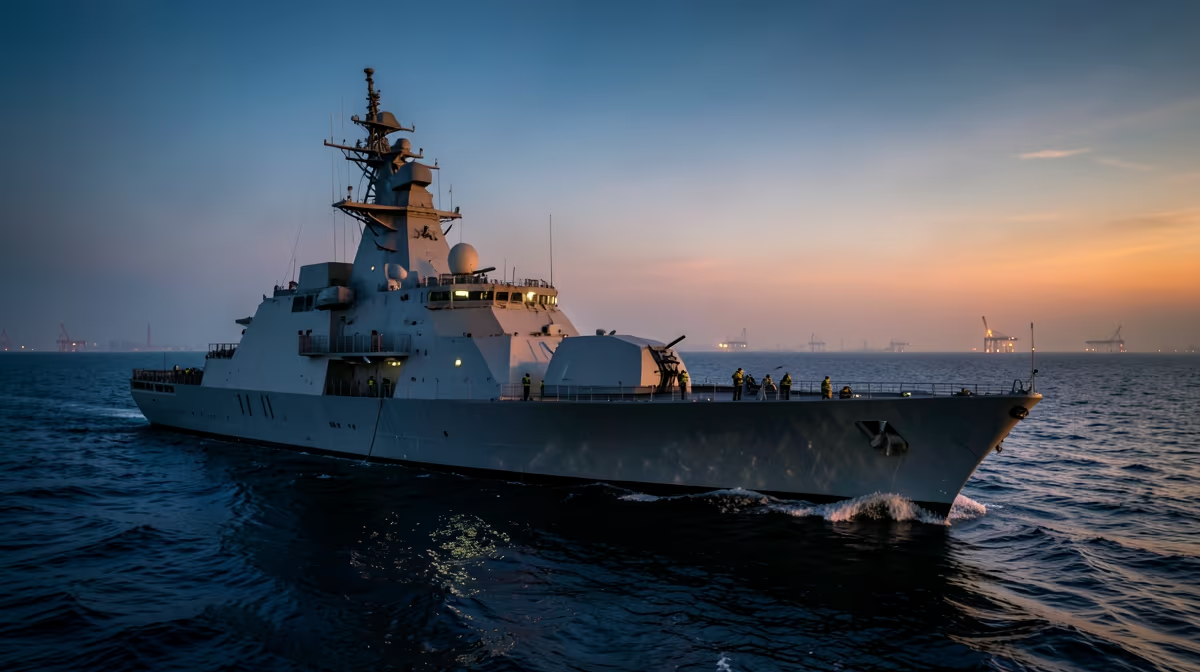
Deep beneath the surface of the Persian Gulf, a delicate status quo is being tested as shifting regional alliances and heightened maritime vigilance collide in one of the world's most critical waterways. The recent reports regarding a potential Bahrain Iran attack have sparked significant concerns over regional stability, placing renewed focus on the fragile state of Bahrain Iran relations and broader Persian Gulf security measures.
What Transpired in the Gulf
Tensions between Bahrain and Iran have reached a critical inflection point following Manama’s strong condemnation of alleged Iranian interference in its internal affairs, prompting urgent diplomatic consultations with United States officials in Washington this week. Bahraini officials have formally accused Iranian-backed actors of orchestrating destabilizing activities within the kingdom, citing intercepted communications and evidence of illicit arms transfers. The allegations come amid a broader regional assessment by the U.S. State Department regarding the efficacy of existing security agreements and the protection of the U.S. Fifth Fleet, which is headquartered in Bahrain.
Washington has responded by reaffirming its commitment to the security of its Gulf partners. While the U.S. has not officially verified a direct, large-scale kinetic attack on Bahraini territory, military analysts suggest that the persistent threat of maritime disruption and cyber warfare constitutes a significant escalation in hybrid aggression by regional proxies. Regional experts argue that this latest friction underscores the fragility of the recent diplomatic thaw between Iran and several GCC nations. The ongoing surveillance of maritime corridors and intelligence sharing between Bahrain and the U.S. remain the primary focus as international observers monitor for any transition from political brinkmanship to active military confrontation.
Core Facts Regarding the Escalation
Several critical factors define the current situation in the Persian Gulf. Increased drone and naval activity has been reported, signaling a heightened state of alert for both civilian and military vessels. While Iran has denied direct responsibility for specific incidents, many security experts point to the influence of regional proxies. It is essential to note that the U.S. Fifth Fleet is headquartered in Bahrain, a reality that makes the kingdom a critical hub for American military presence and, consequently, a symbolic target for regional powers. International markets are also closely watching these developments due to the importance of the Strait of Hormuz for global oil transport. Currently, diplomatic channels are overwhelmed as nations call for immediate de-escalation to prevent further friction.
Why the Stability of the Strait Matters
The region represents a critical choke point for global oil and natural gas shipments. Any disruption or heightened military conflict in the area can cause immediate spikes in energy prices at gas pumps worldwide and threaten global supply chains that rely on the safety of these maritime trade routes. Those most affected include global oil consumers, international shipping companies, military personnel stationed in the Middle East, and the local populations of Gulf nations. Because Bahrain often serves as a focal point for these geopolitical tensions due to its hosting of the U.S. Navy's Fifth Fleet, it remains a primary strategic target for regional powers seeking to challenge American influence.
Analytical Perspective on Regional Dynamics
The root cause of this friction lies in the structural existential insecurity of the Al Khalifa monarchy regarding its majority Shia population, which the regime views as an extension of Iranian revolutionary influence. From a political standpoint, the internal suppression of dissent in Bahrain is increasingly framed as a proxy front in the broader U.S.-led regional containment strategy against Iran. Economically, the danger lies in the potential for disruption to the Hormuz strait and a destabilization of the Bahraini financial sector, which could spike energy costs and force U.S.-backed capital flight from Gulf markets. Geopolitically, the confrontation serves as a stress test for the U.S.-Bahraini basing agreement, forcing Washington to balance support for an authoritarian ally with de-escalation efforts toward Tehran. Historically, these tensions echo the influence of the 1979 Iranian Revolution and the subsequent 1981 attempted coup in Bahrain.
Political and Geopolitical Implications
The current standoff is not occurring in a vacuum but is deeply tied to the viability of the Abraham Accords and the broader U.S.-Iran diplomatic normalization tracks. A U.S. State Department spokesperson stated that the United States remains steadfast in its support for Bahrain’s sovereignty and will continue to work closely with regional partners to deter any threats to regional security and stability. The internal dynamics in Bahrain and the external pressure from Tehran have created a cycle where both sides exploit sectarian tensions to justify domestic military buildups, further complicating the prospects for a lasting peace.
Anticipated Developments
Within the next 24 hours, the international community can expect intense diplomatic signaling and regional intelligence monitoring to verify the scale of the incident, with official statements expected from Manama and Tehran. In the next 72 hours, there is potential for the convening of emergency sessions at the UN Security Council and increased naval posturing by the U.S. Fifth Fleet to deter further escalation. Experts predict the situation will likely remain a gray zone confrontation rather than a full-scale war, as both parties seek to avoid a direct military conflagration that would force U.S. intervention. The best-case scenario involves a rapid de-escalation mediated by Saudi Arabia or Oman, while the worst-case remains a series of tit-for-tat retaliatory strikes that could disrupt global energy supplies.
Frequently Asked Questions
Has Iran ever attacked Bahrain?
There have been no direct large-scale military attacks by Iran against Bahrain. However, the Bahraini government has frequently accused Iran of interfering in its internal affairs and supporting insurgent groups to destabilize the kingdom.
What is the current state of Iran-Bahrain relations?
Relations between Iran and Bahrain are historically strained and currently remain severed. Bahrain cut diplomatic ties with Tehran in 2016 following attacks on Saudi diplomatic missions in Iran, citing ongoing interference in Bahraini internal matters.
Does Iran support any opposition groups in Bahrain?
Bahraini authorities have consistently accused Iran's Islamic Revolutionary Guard Corps of providing training, weapons, and funding to local militant groups. Tehran denies these allegations, claiming they are used to justify domestic crackdowns on the opposition.
Why are tensions high between Iran and Bahrain?
Tensions stem from a combination of sectarian differences, regional geopolitical rivalry, and Bahrain's concerns regarding Iranian expansionism in the Middle East. The two nations have often traded accusations over sovereignty and support for regional proxy conflicts.
Are Iran and Bahrain planning to restore diplomatic ties?
Following the 2023 rapprochement between Saudi Arabia and Iran, there has been speculation about the potential restoration of relations between Iran and other Gulf states. While officials from both sides have expressed a willingness to engage in dialogue, no formal agreement to resume full diplomatic relations has been finalized.
Is Bahrain considered a security threat by Iran?
While Iran views the presence of U.S. military bases in Bahrain as a strategic threat to its own national security, it does not officially classify the kingdom as a direct military aggressor. Instead, Iran often characterizes Bahrain's government policies as being subservient to Western interests.
Conclusion
The situation in the Persian Gulf remains fluid, defined by a precarious balance between regional proxy maneuvering and the necessity of maintaining international maritime security. While Bahrain has formally issued diplomatic protests regarding Iranian interference and the United States has committed to supporting its ally's defense, the specific evidence regarding recent kinetic incidents continues to be assessed by intelligence professionals. Moving forward, the focus will remain on whether diplomatic channels can contain these tensions or if they will spill over into broader disruptions affecting global energy markets and regional stability. All stakeholders are currently under intense pressure to practice restraint as the world watches the Strait of Hormuz.


.webp)

.webp)

