
Bahrain Iran Tensions Trigger Major Security Alert in Persian Gulf
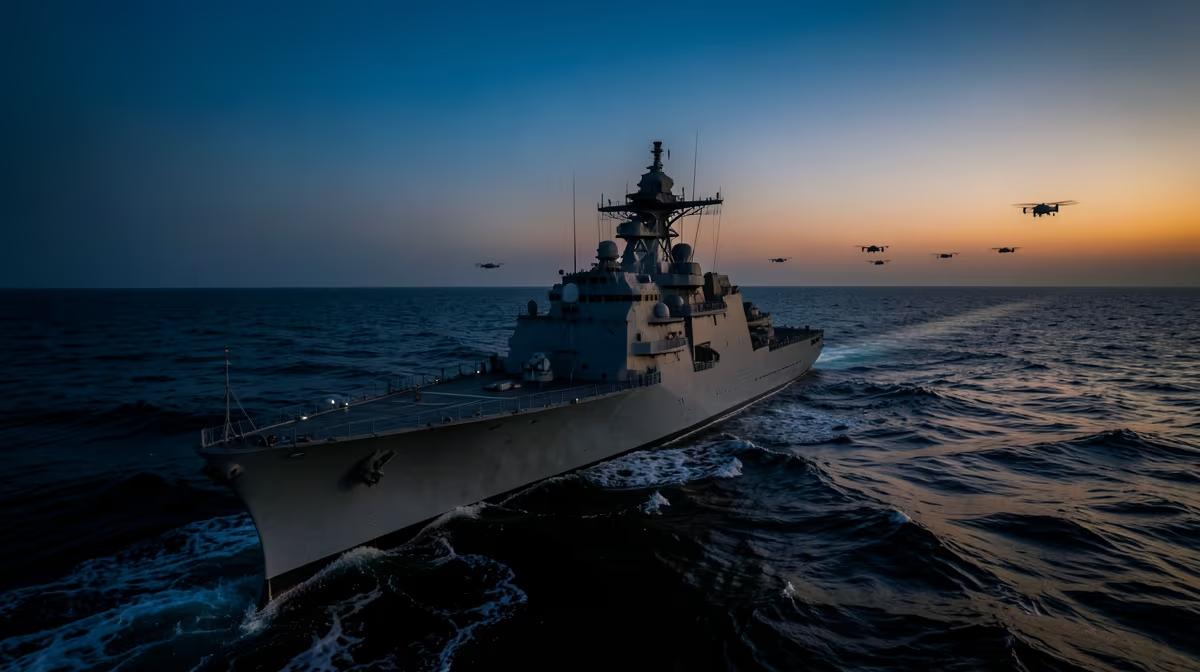
Deep beneath the surface of calm international waters, a high-stakes standoff is unfolding as maritime aggression threatens the fragile balance of power in the Persian Gulf. Rising Bahrain Iran tensions have sparked global concern regarding regional stability and energy security in the Middle East, as reports of potential geopolitical escalation emerge and market analysts closely watch the impact on oil supply chains.
The United States has condemned recent escalations in the Persian Gulf, following reports of Iranian-backed maritime aggression that has intensified tensions in Bahraini waters. U.S. officials are currently investigating a series of incidents involving unmanned aerial vehicles and naval maneuvering that threaten regional stability and the flow of international commerce. In response to the heightened regional volatility, the U.S. Fifth Fleet, headquartered in Manama, Bahrain, has significantly bolstered its maritime patrols. Washington has reaffirmed its commitment to the defense of Bahrain, citing the country as a critical strategic partner in maintaining the security of the Strait of Hormuz. Analysts suggest that the maneuvers represent a calculated pressure campaign by Tehran directed at Western-aligned Gulf states. Defense experts highlight that these actions follow a pattern of gray-zone warfare designed to challenge U.S. naval dominance without triggering a full-scale conventional conflict. By deploying maritime drones and coordinating harassment of commercial vessels, Iranian forces are testing the response time and containment capabilities of the combined task forces operating in the region.
Key developments in this standoff center on several undeniable strategic realities. Bahrain is home to the U.S. Navy Fifth Fleet headquarters, making it a focal point for regional security. Iran has historically exerted influence over political factions within the island nation, and the region faces ongoing security challenges due to shifting geopolitical alliances. Cybersecurity and maritime stability remain the primary concerns for U.S. interests in the Gulf. International monitors are now watching for any escalation that could disrupt energy supplies, as the current environment involves increased military readiness and patrolling by U.S. and Bahraini forces in response to regional security concerns. A spokesperson for the U.S. Fifth Fleet stated that they remain vigilant in monitoring all destabilizing activities in the region and are working closely with their Bahraini counterparts to ensure the continued security of these vital international waterways.
This situation is critical because the Persian Gulf acts as a global chokepoint for oil and gas shipments. Any significant conflict involving Bahrain or U.S. military assets there could disrupt global energy markets, cause gas prices to rise in the U.S., and potentially draw the American military into a wider regional confrontation. Beyond the immediate military implications, the situation impacts U.S. military personnel stationed in Bahrain, global energy markets, and the stability of the Bahraini government. The economic angle is particularly concerning to investors, as threats to the stability of energy logistics through the Strait of Hormuz may lead to a devaluation of sovereign credit ratings due to elevated security risk premiums.
The root cause of these frictions lies in the structural containment strategy pursued by the Gulf Cooperation Council and the United States against Iranian regional influence, combined with Tehran’s intent to demonstrate the vulnerability of Gulf monarchies hosting U.S. assets. This creates a proxy conflict atmosphere, as the internal fragility of the Bahraini monarchy facing sectarian tensions is often exacerbated by Iranian support for opposition groups. Analysts view this as a stress test of the U.S.-Bahraini defense partnership amid broader regional shifts toward normalization between Arab states and Iran. A hidden element of this conflict involves cyber-warfare and information operations preceding physical kinetic actions, aimed at delegitimizing the Bahraini security apparatus in the eyes of the populace. This strategy mirrors the 1980s Tanker War, where Iran challenged regional security architectures to counter the U.S. presence in the Persian Gulf.
Politically, the situation is delicate. The current standoff is characterized by precision strikes and gray-zone warfare targeting critical infrastructure, following years of incremental escalation in maritime sabotage. Washington is currently refining its contingency plans to address any direct threats to U.S. assets or allied territorial integrity. While the State Department has urged all parties to practice restraint and diplomatic channels remain open, the situation remains fluid as military intelligence continues to assess the origins and intent behind the most recent incursions.
Looking at the immediate horizon, the next 24 hours will likely see increased diplomatic back-channel communications and regional security alerts intended to prevent immediate escalation. Within 72 hours, we expect the formal issuance of condemnations from the U.S. State Department and intensified monitoring of maritime security in the Persian Gulf. Experts predict the situation will remain in a state of grey zone confrontation, with Tehran opting for tactical signaling rather than full-scale kinetic engagement to avoid triggering a direct U.S. military response. In the best-case scenario, the region will see rapid de-escalation through third-party mediation and a return to the status quo. Conversely, the worst-case scenario involves a miscalculation leading to a direct military exchange that forces U.S. intervention, resulting in significant disruption to Gulf shipping lanes.
Frequently Asked Questions
Has Iran ever attacked Bahrain?
While there have been periods of high diplomatic tension, there has been no direct military attack by Iran against Bahrain. Bahrain has frequently accused Iran of interfering in its internal affairs and supporting local opposition groups, which has led to severed diplomatic ties between the two nations.
What is the current status of Iran and Bahrain relations?
Diplomatic relations between Iran and Bahrain were severed in 2016 following attacks on Saudi diplomatic missions in Iran. While both countries have expressed a recent willingness to normalize relations, formal diplomatic ties remain suspended as they navigate complex regional politics.
Why does Bahrain accuse Iran of destabilization?
Bahrain consistently accuses Iran of training and funding militant groups to incite unrest within the kingdom. The Bahraini government views these actions as a direct threat to its national security and regional stability in the Persian Gulf.
Are there US military bases in Bahrain?
Yes, Bahrain hosts the United States Navy's Fifth Fleet headquarters, which is a critical strategic asset for American operations in the region. This presence underscores the US commitment to regional security and serves as a deterrent against potential aggression.
How does the Iran-Bahrain conflict impact the Persian Gulf?
The friction between Iran and Bahrain contributes to broader regional volatility and a complex security environment involving global powers. It complicates maritime security in the Persian Gulf, where tensions over shipping lanes and naval influence frequently rise.
Are Iran and Bahrain in a state of war?
No, Iran and Bahrain are not in a state of war. Although they experience significant political and diplomatic hostility, there is no active armed conflict or ongoing military exchange between the two sovereign states.
Conclusion
The confrontation between Iran and Bahrain remains a precarious element of Middle Eastern geopolitics, defined by gray-zone tactics and strategic posturing. While no direct military conflict has broken out, the presence of the U.S. Fifth Fleet and the criticality of Persian Gulf energy routes ensure that the situation remains a priority for international intelligence and security analysts. The coming days will be defined by diplomatic maneuvering and heightened maritime monitoring, as stakeholders work to prevent a localized miscalculation from spiraling into a broader regional crisis.


.webp)

.webp)

