
Crude Oil Market Volatility Signals a Major Shift in Global Energy
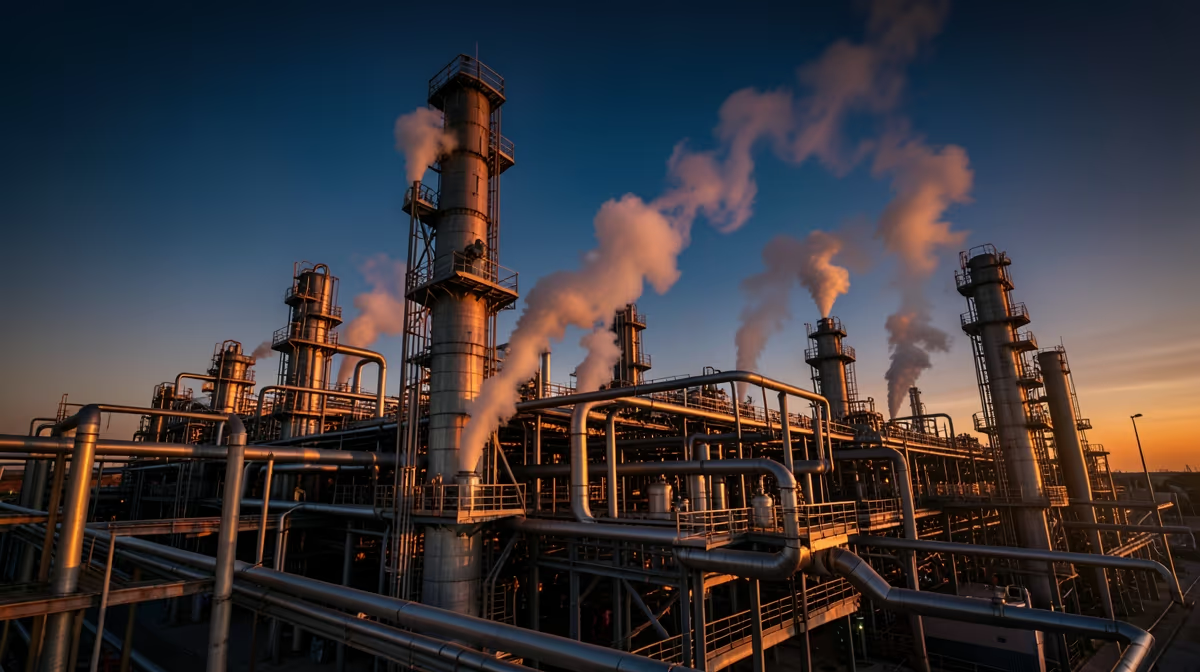
The intricate balance of global power is currently being recalibrated within the corridors of energy trading floors, where the cost of a single barrel of oil serves as a barometer for geopolitical stability. Fluctuations in crude oil prices remain a primary driver of instability within global energy markets as investors react to the latest geopolitical developments and shifts in macroeconomic policy. U.S. crude oil prices hovered near 70 dollars per barrel on Tuesday as market participants balanced concerns over weakening demand in China against persistent geopolitical risks in the Middle East.
Domestic benchmark West Texas Intermediate saw marginal fluctuations as traders analyzed the latest economic data from Beijing. Despite stimulus efforts by the Chinese government, lingering concerns over the nation’s industrial output continue to weigh on global energy demand forecasts, capping potential gains for U.S. producers. Simultaneously, the energy sector remains on high alert regarding potential supply disruptions stemming from ongoing conflicts in the Middle East. Analysts suggest that while physical flows have remained largely uninterrupted thus far, the persistent risk premium continues to support a price floor for U.S. crude futures.
The Structural Shift in Energy Production
The contemporary energy landscape is defined by a root transition from peak conventional production toward a reliance on shale extraction efficiency and strict capital discipline. This shift represents a departure from the growth-at-all-costs era that characterized the initial shale revolution. Today, U.S. producers have prioritized shareholder returns, dividends, and capital stability over the aggressive drilling expansion seen in previous cycles. This fundamental change in corporate strategy has created a supply-side rigidity that prevents rapid production spikes even when prices are attractive, resulting in a more constrained global market.
The United States has moved from being a traditional swing producer to a market-linked player with limited spare capacity. This evolution has altered the geopolitical leverage the nation holds within the OPEC+ framework, as domestic assets are increasingly consolidated by supermajors and private equity firms. This consolidation creates a supply bottleneck, ensuring that the market remains sensitive to even minor logistical or geopolitical disruptions.
Understanding the Fundamentals of the Petroleum Industry
Crude oil is a naturally occurring, unrefined liquid pumped from underground that serves as the base ingredient for gasoline, diesel, and a vast array of everyday plastic products. The United States currently stands as one of the largest producers of crude oil in the world, a significant transformation from two decades ago when the country relied heavily on imports. This resource is traded on global markets where international organizations like OPEC influence supply levels, while West Texas Intermediate serves as the primary domestic benchmark.
The process of converting this raw resource into usable fuel occurs in refineries through fractional distillation. In this process, the crude is heated in a tower to separate its various hydrocarbon components, which are subsequently processed and blended into the fuels that power modern transportation and industry. Because oil is a finite, non-renewable fossil fuel that takes millions of years to form, the pace of its consumption creates an inherent pressure on global supply chains.
Economic Consequences and Market Sensitivity
Changes in crude oil prices act as a ripple effect throughout the entire economy. Because oil is a primary fuel for logistics, transportation, and shipping, higher prices directly increase the cost of moving food and manufactured goods to storefronts. This creates inflationary pressure, often resulting in smaller budgets for the average household. The market is currently highly sensitive to macroeconomic news, as reflected by the ongoing tug-of-war between Chinese demand recovery and global supply chain stability.
Investors and policymakers are watching the Energy Information Administration closely as it prepares to release its weekly inventory report. Market participants are currently positioning their portfolios to hedge against potential volatility in refining margins and seasonal demand shifts. This focus is heightened by the political tension between domestic energy independence rhetoric and broader decarbonization mandates, which complicates long-term investment in traditional energy infrastructure.
Projected Market Trajectory
In the next 24 hours, crude oil prices are expected to remain volatile as traders weigh domestic inventory reports against ongoing geopolitical risk premiums in the Middle East. Looking toward the next 72 hours, market participants will narrow their focus to EIA data releases and potential shifts in Federal Reserve interest rate rhetoric, which will influence the strength of the dollar and broader demand outlooks.
Expert predictions suggest a period of consolidation with a slight upward bias, driven by seasonal demand increases and constrained supply growth from domestic operators. In the best-case scenario, stable production levels combined with cooling inflation data could lead to a gradual reduction in energy costs, boosting industrial consumer confidence. Conversely, the worst-case scenario involves supply chain disruptions or sudden geopolitical escalation, which could trigger a price spike and force a contraction in refining margins, ultimately leading to higher fuel costs for consumers.
Frequently Asked Questions
What is crude oil and how is it used?
Crude oil is a naturally occurring, unrefined petroleum product composed of hydrocarbon deposits. It is refined into usable products like gasoline, diesel, and heating oil, which serve as essential fuel sources for transportation and industry.
Why does the price of crude oil fluctuate?
The price is primarily driven by global supply and demand, geopolitical tensions, and production decisions by organizations like OPEC. Economic growth, currency strength, and shifts toward renewable energy also play significant roles.
What is the difference between Brent and WTI crude oil?
Brent crude is sourced primarily from the North Sea and is a global benchmark. WTI, or West Texas Intermediate, is extracted from the United States and is generally lighter and sweeter, reflecting domestic supply conditions.
How is crude oil refined into gasoline?
Crude oil is refined through fractional distillation, where it is heated in a tower to separate hydrocarbon components, which are then chemically processed and blended to create specific fuels.
Is crude oil considered a renewable resource?
No, crude oil is a finite, non-renewable fossil fuel that takes millions of years to form and is consumed much faster than it is produced.
What are the environmental impacts of crude oil extraction?
Extraction and transport can lead to habitat destruction, water contamination, and greenhouse gas emissions, with spills posing risks to marine ecosystems.
Conclusion
The crude oil market is currently navigating a period of significant structural adjustment, defined by domestic supply rigidity and global macroeconomic uncertainty. While U.S. producers remain disciplined in their capital expenditure, the influence of geopolitical premiums and fluctuating international demand, particularly from China, ensures that price volatility will persist. The upcoming EIA inventory report remains the immediate focal point for investors, serving as the next major indicator of whether current supply levels can withstand shifting economic pressures. Stakeholders should anticipate a period of consolidation while remaining prepared for potential disruptions tied to the ongoing geopolitical environment.


.webp)

.webp)

