
Royal Navy Common Combat Vessel Program Signals Major Fleet Shift
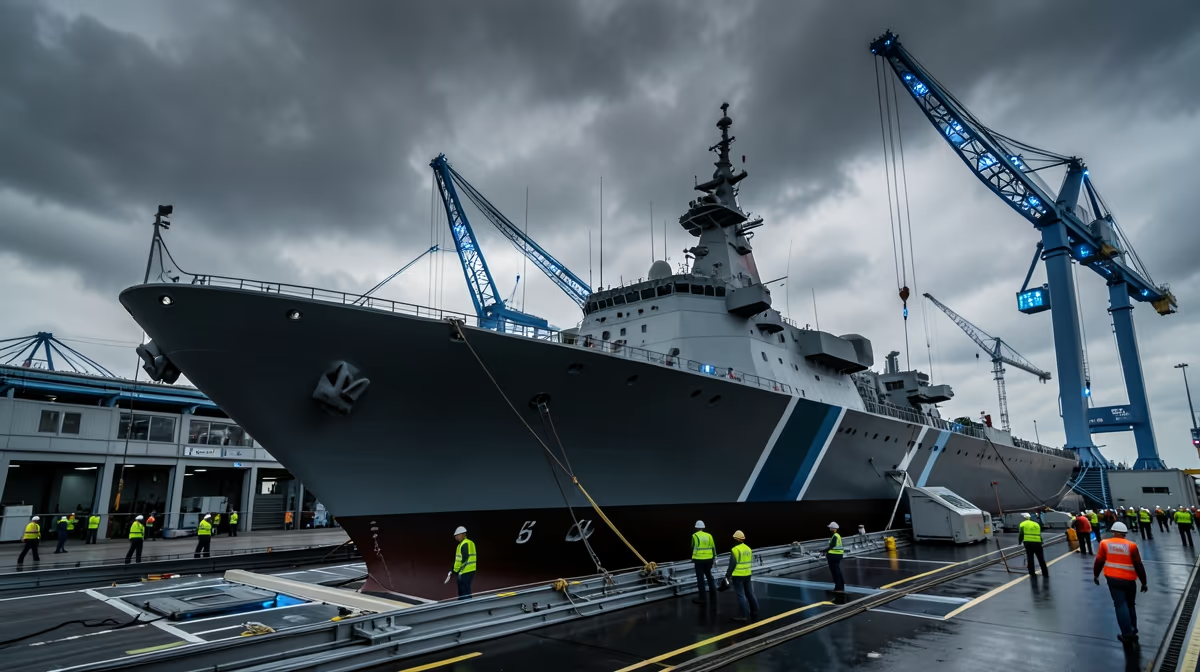
The Royal Navy Common Combat Vessel program represents a significant shift in UK defense procurement, aiming to standardize future fleet architecture to bolster maritime strategy in an increasingly contested global landscape. As the Ministry of Defence navigates the complexities of modernizing its surface fleet, this initiative moves to bridge the capability gap between specialized high-end destroyers and general-purpose frigates through a highly modular and flexible design philosophy.
The Genesis of Modular Naval Design
The conceptual foundation of the Common Combat Vessel, or CCV, lies in the requirement to replace the aging Type 23 frigate fleet with a platform that is fundamentally more adaptable to the rapid pace of technological change. Unlike previous procurement cycles that relied on bespoke, specialized warships, the CCV program prioritizes a standardized hull that functions as a common chassis for diverse maritime operations. By adopting an open-architecture approach, the Royal Navy aims to utilize a plug-and-play methodology where weapon suites, sensor arrays, and communication systems can be swapped or upgraded with minimal time spent in dry dock. This shift is designed to maintain the fleet's relevance in environments ranging from anti-submarine warfare to littoral patrols without the immense cost overhead of individual, custom-built vessel classes.
Program Status and Strategic Objectives
The project is currently in the rigorous requirements-definition and initial design phase, with the UK Ministry of Defence, BAE Systems, and the Royal Navy collaborating to finalize the technical specifications. The initiative is a cornerstone of the broader National Shipbuilding Strategy, which was launched in 2017 to consolidate the UK's industrial output and modernize shipbuilding capabilities. While the CCV program remains in its infancy regarding official procurement contracts and finalized tonnage estimates, its impact on the maritime strategy is clear. It provides a blueprint for a more cohesive tier of mid-sized warships that can be deployed across various global theaters, from the North Atlantic to the Indo-Pacific, ensuring that the Royal Navy retains its status as a top-tier maritime power despite the financial constraints imposed by a stagnant defense budget.
The Economic and Industrial Reality
The push for a common platform is a direct response to the economic pressures facing the defense sector, where the rising cost of procurement threatens to create a capability gap as current vessels reach the end of their operational lives. Historically, the Admiralty has struggled to maintain a blue-water fleet across multiple global commitments while operating a diverse range of specialized ships. The CCV serves as a strategic maneuver to mitigate these rising costs, though it carries the inherent risk of creating a vessel that lacks the highly specialized performance of its predecessors. To manage this, the Defence Equipment and Support agency is focused on balancing high-end automation with the need for cost-effective mass, aiming to revitalize domestic shipyards through a consistent, long-term demand for standardized components.
Geopolitical Considerations and Global Presence
The transition to a standardized combat vessel is deeply linked to the UK's commitment to maintaining presence in an era of unpredictable geopolitical tensions. By ensuring that the surface fleet remains interoperable with allies and capable of being reconfigured to counter evolving submarine threats and littoral challenges, the Royal Navy seeks to project power more effectively. This shift acknowledges that the UK’s maritime strategy must balance the requirements of the AUKUS partnership with the ongoing necessity of securing vital trade routes. The reliance on complex international supply chains for modular systems, however, remains a point of scrutiny, as it shifts elements of sovereign operational control toward multinational defense conglomerates.
Predicting the Near-Term Trajectory
In the coming 24 hours, stakeholders expect increased parliamentary scrutiny regarding the procurement schedule and potential budget revisions, particularly as they relate to the broader Type 32 program. Within the next 72 hours, strategic signaling from the Ministry of Defence is expected to center on the integration of autonomous platforms into the CCV design, reflecting a shift toward maritime autonomous systems. Analysts predict that the project will inevitably pivot toward an increasingly modular design to satisfy both fiscal hawks within the Treasury and a naval establishment seeking to maintain a high-tempo, modern fleet. Success will be defined by an accelerated procurement timeline and the ability to leverage domestic manufacturing, while the worst-case scenario involves significant design creep and funding shortfalls that could delay the decommissioning of current frigates.
Frequently Asked Questions
What is the Royal Navy Common Combatant vessel?
The Common Combatant is a conceptual future ship platform designed to replace the Royal Navy's current Type 23 frigates. It aims to utilise modular design principles to streamline maintenance, reduce costs, and allow for rapid capability upgrades throughout the ship's service life.
Will the Common Combatant replace the Type 23 frigate?
Yes, the Common Combatant is intended to serve as a successor to the Type 23 frigate fleet. By adopting a more standardised hull and systems architecture, the Royal Navy hopes to maintain a high level of operational readiness while simplifying the logistical support chain.
How does the Common Combatant concept differ from current frigates?
Unlike existing frigates which often have bespoke systems, the Common Combatant focuses on open architecture and modularity. This allows the navy to swap out weapons and sensor packages more efficiently as technology evolves, rather than needing extensive refits.
Is the Common Combatant the same as the Type 31 frigate?
While they share goals regarding modularity and cost-effectiveness, the Type 31 is an active project, whereas the Common Combatant represents a broader long-term design philosophy. The Common Combatant concept informs the development of future surface combatants to ensure fleet interoperability.
What are the primary benefits of the Common Combatant programme?
The programme aims to drive down construction and through-life costs by using shared components across different ship classes. This approach enhances procurement flexibility and ensures that the Royal Navy can respond more effectively to changing geopolitical threats.
When will the Common Combatant enter service?
There is no definitive in-service date for a single Common Combatant vessel, as it is an ongoing research and development concept. It is closely tied to the UK's long-term surface ship strategy, which looks towards the mid-2030s and beyond for next-generation fleet capabilities.
Conclusion
The Royal Navy Common Combat Vessel program stands as a pivotal development in UK maritime defense, signaling a transition toward a more agile, modular, and cost-effective surface fleet. By moving away from specialized platforms toward a standardized design, the Ministry of Defence seeks to ensure that the fleet can remain technically current and operationally ready despite shifting geopolitical demands and economic constraints. While the project remains in the early requirements-definition stage, its trajectory suggests a concerted effort to integrate autonomous capabilities and streamline industrial output. The coming years will be defined by the delicate task of balancing the technical demands of a high-end combatant with the fiscal realities of contemporary defense procurement.


.webp)

.webp)

