
Indian Households Selling Old Gold Signal a Major Financial Shift
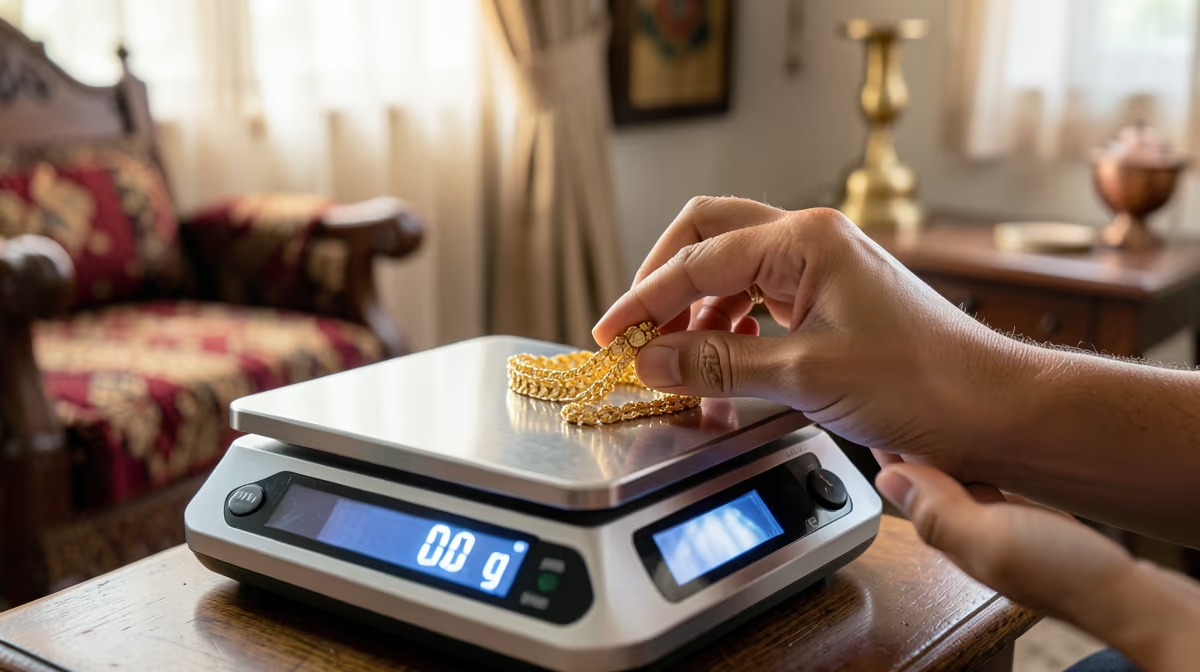
A quiet transformation is sweeping through the vaults and jewelery boxes of the Indian middle class as families turn to their most cherished assets to navigate an increasingly complex economic landscape. The decision of selling old gold in India has become a growing trend as families navigate shifting economic conditions and rising inflation.
What Unfolded
Financial institutions and local jewelers across the nation report a sharp uptick in the volume of old gold being brought in for sale or exchange since the start of the second quarter. Driven by spot gold prices breaching historic psychological thresholds, families are choosing to offload accumulated ornaments to secure liquidity for education expenses, home renovations, and debt servicing. The trend is particularly pronounced in tier-2 and tier-3 cities, where traditional gold ownership remains the primary form of household savings.
Market analysts suggest that while gold is culturally viewed as a permanent asset, the current price volatility has transformed the metal into a tactical financial tool. Rather than hoarding for generational wealth, consumers are monitoring daily price fluctuations to time their exit, effectively using the yellow metal as a hedge against inflationary pressure. Jewelry associations have noted that the recycling segment has seen a significant boost, with organized players capturing a larger share of the market from unorganized local pawn shops. This shift highlights a broader move toward formalization, as households prefer the transparency of digital weighing and purity testing offered by organized retailers when liquidating high-value assets.
Key Facts
The surge in gold liquidation is underpinned by several verifiable developments. Domestic gold prices in India reached all-time highs in the first half of 2024, providing a powerful financial incentive for households to unlock the value of their holdings. Data from major refining facilities indicates a measurable increase in the volume of recycled gold being processed, while retail jewelry chains report double-digit growth in exchange-for-new-jewelry transactions.
For many, this is a calculated pivot from gold as a dormant store of value to gold as a liquid asset. This is not merely an act of desperation but a strategic move; many sellers are utilizing realized gains to clear high-interest debt or fund significant life milestones like weddings and higher education. The expansion of the organized gold-buying market has further facilitated this transition, providing a safer and more transparent environment for consumers to access the value of their family heirlooms.
Why It Matters
This movement of gold back into the market represents a fundamental shift in Indian household wealth management. By converting idle gold into liquid cash, families are directly influencing local liquidity and consumer spending patterns. On a macroeconomic level, this surge of domestic gold recycling helps refineries increase supply, which has the potential to ease some of the country’s import pressures. Historically, gold was viewed as a final resort during periods of severe distress, but today, it has been normalized as a rational component of financial management. The shift also marks a move toward the formal economy, as fintech-enabled, gold-backed loans and organized retail networks begin to displace traditional, less regulated pawn arrangements.
Expert Analysis
The root cause of this trend lies in a structural shift, where households are facing stagnant real wage growth coupled with rising cost-of-living pressures. As inflation erodes purchasing power, gold has emerged as an essential liquidity buffer. From an economic perspective, this transition signifies a movement from private hoarding to market circulation. While this could potentially contribute to reducing the national Current Account Deficit, it also carries the risk of depleting long-term household safety nets.
As Ajay Mehra, a senior analyst at the India Bullion and Jewellers Association, notes, the surge in old gold inflow is a direct consequence of price discovery. Consumers are realizing that their idle gold is now a high-performing financial instrument that can solve immediate liquidity crunches without needing to turn to high-interest personal loans.
Political And Geopolitical Implications
The current trend creates a point of friction regarding the narrative of the aspirational Indian versus the reality of household balance sheet stress. For policymakers, this presents a challenge in balancing wealth distribution policies and social safety nets. Geopolitically, the increased domestic recycling of gold reduces the nation's reliance on Swiss and UAE bullion imports. This shift alters, however slightly, global gold trade flows and lowers the domestic economy's immediate exposure to extreme international price volatility.
What Happens Next
In the next 24 hours, experts anticipate increased footfall at organized gold loan NBFCs and local jewelers as households look to capitalize on near-record domestic prices. Looking toward the next 72 hours, market liquidity pressure on small-scale jewelers is expected to rise, alongside a growth in collateralized gold loan applications as gold prices show signs of localized volatility. The best-case scenario involves consumers successfully utilizing these realized gains to clear expensive debt and stabilize their balance sheets. Conversely, the worst-case scenario involves a liquidity crunch for local jewelers that could lead to valuation discounts, potentially impacting low-income families who rely most heavily on gold as an emergency fund.
Frequently Asked Questions
Is it safe to sell old gold in India?
Yes, it is safe to sell old gold if you choose a reputable jeweler or a certified gold-buying company. Ensure they use high-precision karatmeter machines for testing purity and provide transparent pricing based on the current market rate.
What documents are required to sell gold in India?
You typically need to provide a government-issued photo ID like an Aadhar card, PAN card, or Voter ID for KYC purposes. Some buyers may also request a copy of the original purchase invoice to verify ownership.
How is the price of old gold calculated?
The price is calculated by multiplying the weight of the gold by the current market rate for its specific purity, such as 22k or 24k. Reputable buyers will deduct a small percentage for melting losses and impurities.
Do I have to pay tax when selling old gold?
Yes, selling old gold is considered a transfer of a capital asset, which attracts capital gains tax. If held for more than 36 months, it is treated as long-term capital gains and is taxable after accounting for indexation.
Should I sell my old gold to a local jeweler or a specialized gold buyer?
Local jewelers often provide better value if you are exchanging old gold for new jewelry. Specialized gold-buying companies are usually better if you want an instant cash settlement without the obligation to purchase new items.
What is the best way to get the maximum value for old gold?
Compare quotes from at least two or three different buyers, know the exact weight and purity of your items, and check the daily gold rate provided by the Multi Commodity Exchange to ensure a fair offer.
Conclusion
The rise in Indian households liquidating gold is a multifaceted development that reflects the changing relationship between traditional assets and modern economic necessity. As gold prices reach historic highs, families are treating the precious metal as a versatile financial tool to navigate inflationary pressures. While this trend provides immediate liquidity and promotes the formalization of the gold market, it also underscores the growing importance of managing household balance sheets in an era of high living costs. Moving forward, the sustainability of this trend will depend on whether these liquidated funds are used to build long-term financial security or merely to bridge temporary income gaps.


.webp)

.webp)

