
Royal Navy Common Combat Vessel Plans Signal a Major Maritime Shift
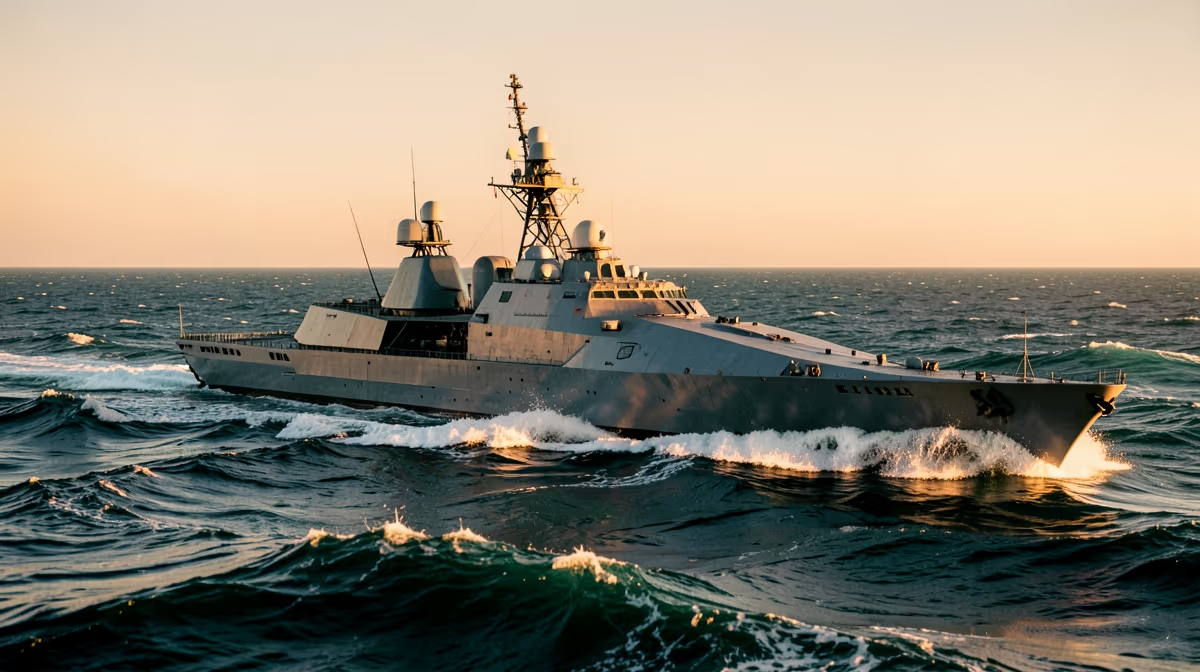
The Royal Navy Common Combat Vessel program sits at the heart of the latest maritime strategy, aiming to modernize Britain’s fleet through agile naval procurement. As the Ministry of Defence navigates an era of heightened global volatility, this modular platform initiative has emerged as a cornerstone in the effort to bridge the widening capability gap between legacy hardware and modern security requirements.
The Strategic Pivot to Modularity
The Royal Navy is currently undergoing a structural transformation to address an ongoing shortage of hull numbers, a challenge that leaves fewer ships available to respond to urgent global incidents. To counter this, the UK Ministry of Defence is advancing the Common Combat Vessel concept, which is increasingly tied to the development of the Type 32 frigate program. Unlike previous bespoke warship designs that were built for specific, rigid roles, the Common Combat Vessel is being engineered as a shared, modular platform. By utilizing a standard base design, the Navy aims to create a fleet that can be adapted for a wide variety of roles, ranging from routine patrolling to sophisticated anti-submarine warfare and surface combat.
This approach acts as a significant shift in naval procurement strategy. Similar to how commercial vehicle manufacturers utilize common platforms to build several different models, the Royal Navy intends to use this design language to speed up manufacturing, lower maintenance costs, and ensure a greater number of modern, capable warships remain operational. This shift is essential for maintaining the persistent presence required to protect international trade routes and deter aggression in an unstable geopolitical environment.
Evolution of the Procurement Landscape
The journey toward this new class of vessel has been shaped by the lessons learned from the Type 26 and Type 31 frigate programs. Previous projects were frequently criticized for their high costs and extended timelines, which hindered the speed at which new capabilities reached the fleet. The current procurement strategy emphasizes efficiency, aiming to leverage economies of scale to avoid the budgetary death spiral often associated with traditional, bespoke naval construction.
Parallel to this, the Ministry of Defence is advancing plans for the Multi-Role Support Ship, a new class of vessel designed to modernize amphibious warfare and littoral strike capabilities. As part of a wider strategic fleet reorganization, these support ships will replace the aging Albion-class landing platform docks and Bay-class landing ship docks. By prioritizing modularity, both the Common Combat Vessel and the Multi-Role Support Ship are being designed to deploy forces more flexibly, utilizing uncrewed aerial and underwater systems to project power in contested maritime environments.
Operational Versatility and Technological Integration
The technical core of the Common Combat Vessel program lies in its commitment to open-architecture software and the digitization of the combat suite. This is as much a software-driven initiative as it is a physical shipbuilding project. By decoupling sensor development from platform delivery cycles, the Royal Navy intends to ensure its ships can be upgraded with the latest technology rapidly without requiring constant structural overhauls.
This agility is vital for the Future Commando Force and the broader integration of uncrewed systems. The vessels are expected to act as command hubs for autonomous technology, allowing a smaller crew to manage a wider array of sensing and strike capabilities. Such a design philosophy addresses the dual requirement of managing personnel costs while maximizing the lethality and reach of individual hulls.
Geopolitical and Economic Dimensions
The Common Combat Vessel program serves as a focal point for the UK’s Global Britain narrative. It balances the need to satisfy domestic industrial constituencies in historic shipbuilding heartlands with the pressure to demonstrate an increased naval presence in the Indo-Pacific and beyond. Economically, the move toward standardizing ship-board systems is intended to secure long-term orders for Scottish and English shipyards, ensuring a sovereign shipbuilding capability that can withstand market fluctuations.
Geopolitically, the program is designed for multi-role interoperability within AUKUS and NATO. By ensuring that the Royal Navy can fulfill persistent presence roles with standard, modular vessels, the service can avoid over-committing its limited fleet of high-end destroyers to low-intensity maritime security tasks. This ensures that when major crises arise, the most sophisticated assets are available for high-intensity warfare, while the core fleet remains capable of covering broader regional requirements.
Projected Timelines and Strategic Outlook
Ministry of Defence officials are expected to continue internal briefings regarding the Type 32 frigate procurement strategy and its integration into the Common Combat Vessel concept over the next 24 hours. As the program matures, parliamentary questions regarding the budgetary commitment to the Type 32 program are likely to surface within the next 72 hours, particularly as broader defense spending reviews take center stage.
The best-case scenario for the Ministry of Defence involves the formal confirmation of a firm funding roadmap, which would secure long-term viability for both the Royal Navy and associated shipyards. Conversely, the worst-case scenario involves significant project delays or budget overruns that force a reduction in the total number of vessels, which would ultimately compromise the Royal Navy’s stated objective of maintaining a persistent global presence.
Frequently Asked Questions
What is the Royal Navy Common Combat Vessel?
The Common Combat Vessel is a planned modular warship design intended to serve as a successor to the Type 23 frigate, providing a standardized platform for various roles like anti-submarine warfare and general combat.
When will the Royal Navy Common Combat Vessel enter service?
While the Ministry of Defence has outlined long-term shipbuilding plans, specific delivery dates remain subject to procurement updates, though the vessels are generally expected to arrive in the late 2030s.
How does the Common Combat Vessel differ from the Type 26 frigate?
The Type 26 is a specialized high-end anti-submarine platform, whereas the Common Combat Vessel is envisioned as a more versatile, cost-effective modular ship designed to streamline maintenance across the fleet.
Is the Royal Navy Common Combat Vessel the same as the Type 32 frigate?
Yes, the Common Combat Vessel concept is closely aligned with the proposed Type 32 frigate program, designed as a persistent platform for autonomous systems.
What is the primary role of the Royal Navy's new combat vessels?
The primary role is to provide persistent maritime presence, utilizing modular mission bays to adapt to evolving threats and deploy unmanned aerial and underwater vehicles.
Will the Common Combat Vessel feature autonomous technology?
Yes, a core requirement of the program is the ability to launch and operate autonomous systems, ensuring the ships remain relevant by integrating new technology without extensive redesigns.
Conclusion
The Royal Navy Common Combat Vessel represents a fundamental transition in how the United Kingdom approaches naval procurement and strategic maritime presence. By prioritizing modularity, digitized systems, and standardized platforms, the Ministry of Defence seeks to rectify past issues regarding budget overruns and slow delivery cycles. While the project faces significant pressures regarding funding and integration with the wider fleet, it remains a central component of the UK’s commitment to maintaining a credible, flexible, and powerful maritime force in an increasingly competitive global environment. The path forward requires steady budgetary support and successful industrial execution to ensure these vessels meet the operational demands of the late 2030s and beyond.