
Russia Ukraine War Escalation Signals a Dangerous New Geopolitical Phase
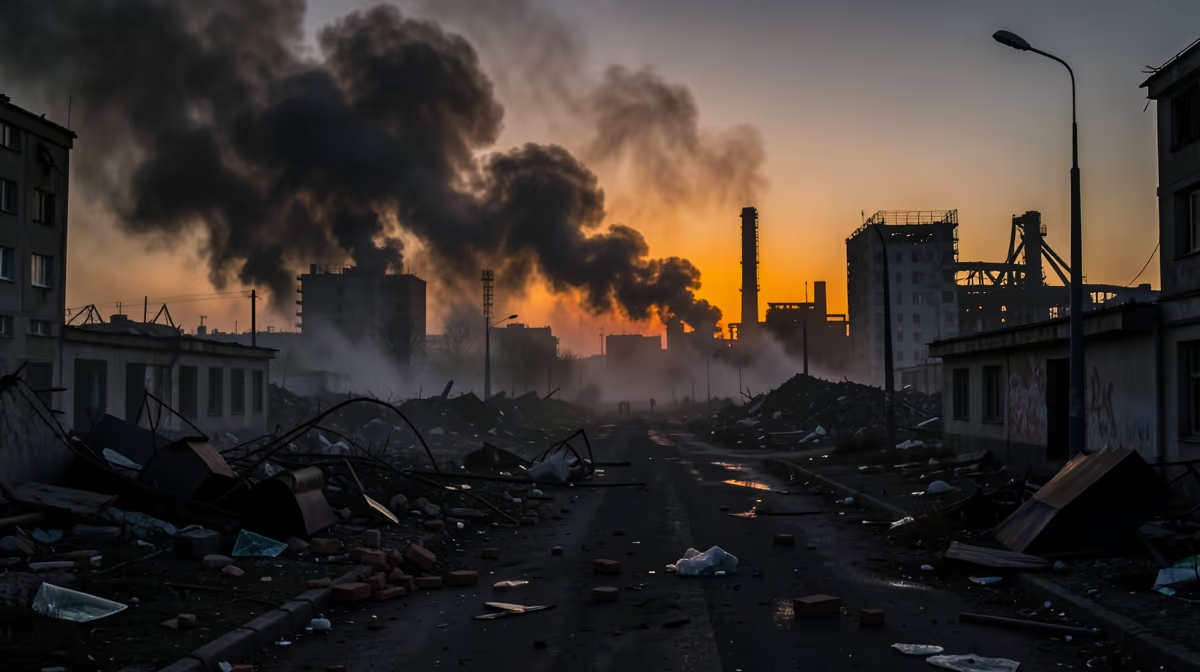
The shadow of conflict continues to stretch across the European continent, forcing international observers to confront the harsh reality of a protracted struggle. As the russia ukraine war continues to evolve, international observers are closely monitoring the situation for signs of further geopolitical escalation that could alter the long-term stability of the region.
Russian forces intensified ballistic missile and drone strikes across multiple Ukrainian cities on Wednesday, targeting critical energy infrastructure as frontline fighting in the eastern Donetsk region remains deadlocked. The coordinated aerial assault hit energy facilities in the Kharkiv and Sumy regions, resulting in widespread power outages that have left hundreds of thousands of civilians without heat or electricity as winter temperatures plummet. Regional officials reported that air defense systems successfully intercepted a portion of the incoming projectiles, but falling debris caused significant damage to residential buildings and civilian infrastructure. Simultaneously, the situation along the eastern front remains critical, with reports of intense artillery duels and infantry combat near the strategic hub of Pokrovsk. Ukrainian military analysts indicate that Russian forces are attempting to squeeze supply lines in the region, while Kyiv continues to utilize long-range drone strikes to degrade Russian logistical hubs deep behind the front lines.
The origins of this conflict are rooted in the systemic collapse of the post-Cold War security architecture and a sharpening competition over Ukraine’s alignment between Euro-Atlantic integration and the restoration of a Russian sphere of influence. This friction points to a broader transition from a unipolar international system toward a fragmented multipolar order, where Russia attempts to assert Great Power status through kinetic force. Historically, the current state of affairs parallels the 1930s remilitarization of the Rhineland, highlighting the failure of collective security frameworks to deter revisionist expansionism. Ukraine has effectively become a primary laboratory for modern hybrid warfare, characterized by the integration of AI-driven reconnaissance and commercial satellite data in state-level combat.
Key facts regarding the ongoing situation include the formal start of the full-scale invasion on February 24, 2022, which served as a massive escalation of the conflict originating in 2014. Millions of Ukrainians have been forced to flee their homes, becoming refugees in neighboring nations, while the country’s infrastructure and energy grid suffer under systematic strikes. Throughout this period, Ukraine has received critical military and financial support from NATO members and the European Union, even as international courts continue to investigate alleged war crimes committed on the ground.
The disruption caused by this war extends far beyond the physical front lines. It has fundamentally altered the global economy, specifically impacting food security and energy prices worldwide. Because both Russia and Ukraine are primary exporters of grain and energy, the fighting has disrupted supply chains, contributing to global inflation. Furthermore, the war has served as a turning point that has revitalized military blocs like NATO and deepened the partnership between Russia and China, signaling a potential long-term bifurcation of global trade and security alliances. The transition has also seen the weaponization of energy supply chains and a shift in the global role of the US dollar as a result of unprecedented financial sanctions.
Political and military leadership remains entrenched in their respective positions. Ukrainian President Volodymyr Zelenskyy has stated that the enemy continues to terrorize the population by targeting vital survival systems, while emphasizing that his government is working to restore services and reinforce air defense capabilities. Conversely, the Kremlin has reaffirmed that its military objectives remain unchanged and will be pursued until all declared security goals are achieved. This impasse creates a difficult environment for diplomacy, as both sides appear committed to their current military trajectories despite heavy losses.
Looking toward the next 24 hours, expectations remain focused on continued localized infantry clashes along the Avdiivka-Pokrovsk axis and ongoing Russian aerial strikes against Ukrainian energy infrastructure and logistical hubs. Over the next 72 hours, experts anticipate an intensification of drone warfare and a potential increase in long-range missile exchanges as both sides consolidate positions following recent tactical shifts in the Kharkiv and Donbas regions. The expert consensus suggests the conflict will remain locked in a high-attrition war of maneuver where tactical gains are offset by defensive fortification, leaving no immediate path to a negotiated ceasefire. While the best-case scenario involves back-channel diplomatic discussions leading to a localized humanitarian corridor or a temporary freeze in hostilities, the worst-case scenario involves escalation to direct cross-border strikes on critical military infrastructure, potentially triggering a broader geopolitical confrontation.
Frequently Asked Questions
Why did Russia invade Ukraine?
Russia launched a full-scale invasion of Ukraine in February 2022, citing a desire to demilitarize the country and prevent Ukraine from joining NATO. Ukrainian leaders and the international community view the aggression as an unprovoked violation of national sovereignty and territorial integrity.
What is the current status of the Russia-Ukraine war?
The conflict remains an intense war of attrition with active front lines concentrated in eastern and southern Ukraine. Both sides continue to engage in significant combat operations while experiencing ongoing shifts in territorial control.
How has the international community responded to the Russia-Ukraine conflict?
Many Western nations have responded by imposing severe economic sanctions on Russia and providing Ukraine with military, financial, and humanitarian aid. International organizations, including the UN and ICC, have also conducted investigations into alleged war crimes committed during the conflict.
What are the main goals of Ukraine in the war?
Ukraine's primary goal is to fully restore its territorial integrity, including the reclamation of Crimea and areas in the Donbas region. Additionally, the government seeks to ensure long-term national security, potentially through future alignment with European and transatlantic institutions.
Are there ongoing peace negotiations between Russia and Ukraine?
There have been several rounds of talks since the conflict began, but formal peace negotiations are currently stalled. Significant disagreements over territorial concessions and security guarantees make a diplomatic resolution difficult to achieve at this stage.
How does the war impact the global economy?
The conflict has caused significant disruptions to global supply chains, particularly regarding food and energy exports. These instabilities have contributed to increased inflation, energy price volatility, and food security concerns in various regions across the world.
Conclusion
The russia ukraine war remains a defining event in current international relations, characterized by deep-seated geopolitical tensions and a relentless war of attrition. While military operations continue to impact energy infrastructure and civilian life, the broader global implications—from economic volatility to the reconfiguration of security alliances—persist as primary concerns for policymakers. With formal negotiations currently stalled, the immediate future will likely be defined by continued tactical maneuvering and the ongoing challenges of maintaining global stability in a bifurcated world.


.webp)

.webp)

