
SpaceX Launch Strategy Is Quietly Altering the Global Power Balance
Introduction
A single private entity is fundamentally altering the architecture of Earth orbit, moving the global communications industry away from state-monopoly control toward a new era of commercial hegemony. Tracking the latest spacex launch reveals more than just technical progress; it highlights a systemic shift in how humanity manages satellite infrastructure and aerospace logistics.
What Happened
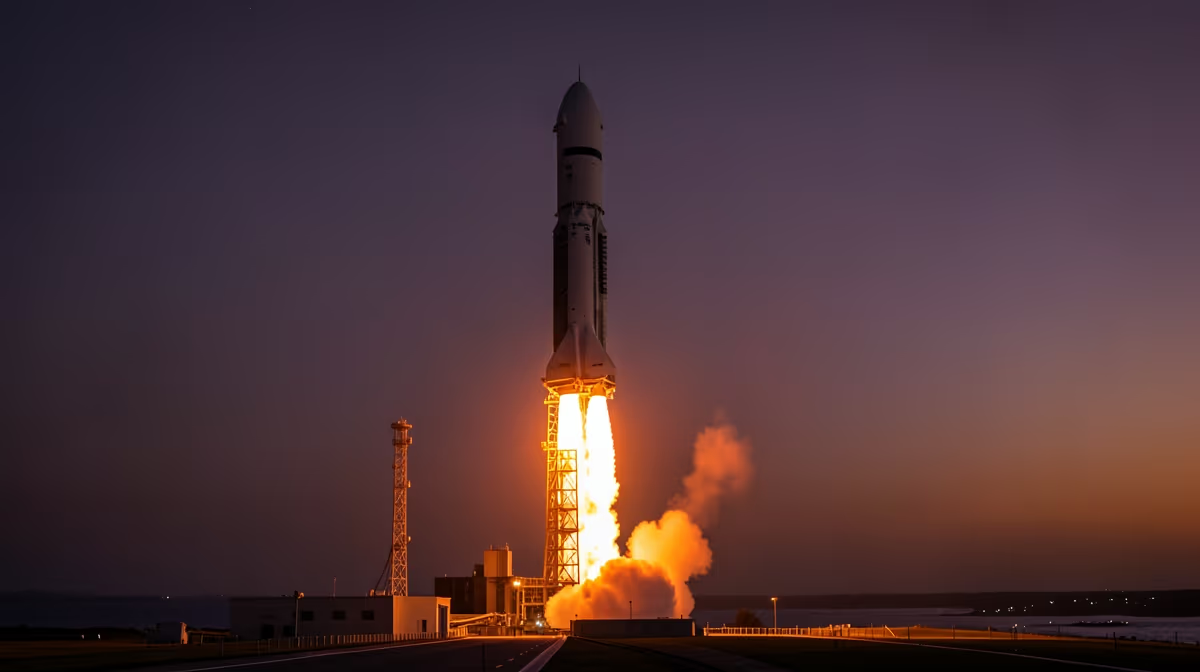
SpaceX successfully launched a Falcon 9 rocket from Cape Canaveral Space Force Station in Florida on Tuesday, deploying a fresh batch of Starlink satellites into low-Earth orbit as part of the company's ongoing effort to expand global high-speed internet coverage. The launch took place at 8:14 p.m. ET, marking another milestone in the company's rapid-cadence launch schedule.
Following liftoff, the first-stage booster completed a controlled vertical landing on the autonomous droneship A Shortfall of Gravitas, which was stationed in the Atlantic Ocean. This recovery occurred approximately eight minutes after the initial launch and represented the 15th flight for this specific piece of flight-proven hardware. Following stage separation, the upper stage continued its trajectory to deploy 23 Starlink satellites into their intended orbital plane. SpaceX officials confirmed that all systems functioned within nominal parameters throughout the ascent, and favorable weather conditions provided clear visibility for the mission.
Key Facts
The mission utilized a flight-proven Falcon 9 rocket, consistent with the company's focus on reusable technology. This specific launch was conducted from a primary United States spaceport located at Cape Canaveral. The successful deployment of 23 Starlink satellites adds to a mega-constellation that already provides connectivity to remote regions globally. A critical highlight of the operation was the precision landing of the first-stage booster on an ocean-based droneship, an action that demonstrates the efficiency of reusability in lowering the cost of reaching space. The mission proceeded on schedule with no significant technical delays or anomalies reported by mission control.
Why It Matters
The shift toward regular, low-cost access to space is transforming the global economy by enabling faster satellite internet services, improved climate monitoring, and advanced scientific research. As launch costs decrease, smaller companies and academic researchers gain the ability to deploy technology into orbit, which accelerates innovation in earth observation and communication systems. The impact is felt broadly across the telecommunications industry, scientific communities, and the general public, who increasingly rely on satellite-based internet and tracking services for daily connectivity and weather data. By perfecting vertical landing technology, SpaceX has moved the aerospace sector away from expendable rockets, effectively establishing itself as the most frequent launcher in the world.
Expert Analysis
The root cause of this operational shift is the transition of launch capabilities from traditional state-monopoly models to commercial-hegemony, aimed at increasing the frequency of orbital delivery. SpaceX has successfully created a market moat through its reusability technology, forcing global competitors into unsustainable price wars while simultaneously securing lucrative government launch contracts. This dynamic mirrors the expansion of 19th-century transcontinental railroads, where private infrastructure development was inextricably linked to territorial control and state-building. However, this centralization creates a potential single point of failure and raises questions regarding the oversight of global communications infrastructure under a single private entity. Experts predict that SpaceX will continue this high-cadence strategy to maintain market share while accelerating the Starship program to meet Human Landing System milestones.
Political And Geopolitical Implications
The rise of SpaceX represents a notable erosion of the traditional defense contractor influence, often referred to as the Beltway Bandits, shifting power toward Silicon Valley-style disruption within the military-industrial complex. Orbital access is increasingly treated as a tool of soft power and strategic deterrence. As a result, SpaceX now functions as a sovereign-level geopolitical actor, capable of dictating battlefield connectivity. This development forces policymakers to address the reality that global communications infrastructure is now heavily reliant on the operational status of a single private company, which could lead to shifts in regulatory policy regarding orbital sovereignty and national security.
What Happens Next
In the next 24 hours, the focus will shift toward the completion of post-flight data analysis from this recent mission and routine ground-system maintenance checks at Cape Canaveral. Over the next 72 hours, the company is expected to conduct pre-launch testing for the next scheduled mission, which includes static fire tests and continued coordination with the Federal Aviation Administration for necessary launch licensing updates. A best-case scenario involves the continued successful execution of these launches with zero technical anomalies, allowing for rapid vehicle reusability. Conversely, a worst-case scenario would involve a launch vehicle anomaly leading to hardware loss, which would trigger a mandatory investigation, potential fleet grounding, and project delays.
Frequently Asked Questions
Q: When is the next SpaceX launch?
A: SpaceX maintains a dynamic launch schedule that changes frequently based on weather conditions and technical readiness. You can check the official SpaceX website or their official social media channels for the most up-to-date schedule and mission countdowns.
Q: Where can I watch SpaceX launches live?
A: You can watch all SpaceX launches live through the official SpaceX website or their verified YouTube channel. The live stream typically begins about 10 to 15 minutes before the scheduled liftoff time.
Q: How can I see a SpaceX launch in person?
A: If you are in Florida, public viewing areas near Kennedy Space Center, such as Jetty Park or Playalinda Beach, offer great views. For launches from California, popular viewing spots include locations near Vandenberg Space Force Base, depending on the flight path.
Q: Does SpaceX launch rockets every day?
A: SpaceX does not launch every day, but their cadence has significantly increased to support the growing Starlink constellation. Launches are scheduled based on mission requirements, payload readiness, and safe weather windows for both liftoff and landing.
Q: How much does a SpaceX rocket launch cost?
A: The cost of a SpaceX launch varies depending on the mission type and the specific rocket configuration used. Generally, a dedicated Falcon 9 launch starts at roughly $67 million, though rideshare missions and government contracts have different pricing structures.
Q: Can I track SpaceX Starlink satellites after launch?
A: Yes, you can track Starlink satellites using third-party websites like FindStarlink or Heavens-Above. These tools allow you to input your location to see when the satellite train will be visible in the night sky shortly after a deployment mission.
Conclusion
The recent Falcon 9 mission confirms the efficiency of SpaceX in maintaining a high-cadence launch schedule while furthering the expansion of global satellite internet. By successfully deploying 23 satellites and recovering the booster, the company continues to solidify its dominant position in the commercial space sector. As the industry looks toward future missions, the focus remains on sustaining these operational milestones while managing the regulatory and logistical challenges inherent in such rapid expansion. Interested parties should monitor official mission updates for the next launch window as the company continues to refine its orbital infrastructure.
" } ]


