
Tupolev Tu-160 Modernization Signals a Major Shift in Global Security
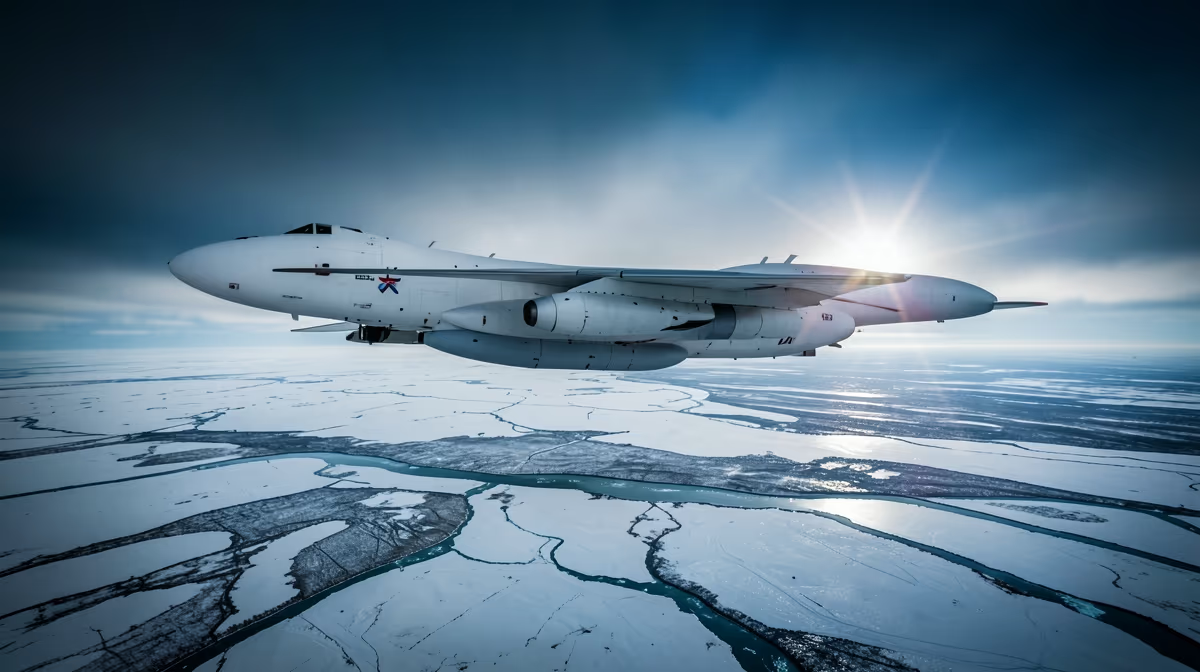
A piercing silhouette slices through the high-latitude silence, signaling a resurgence in long-range aerial posturing that has captured the urgent attention of global defense agencies. The Tupolev Tu-160 remains a cornerstone of the Russian nuclear triad, with ongoing efforts to bolster its capabilities, as the long-range aviation modernization program prioritizes the rollout of upgraded variants of these Russian strategic bombers to maintain aerial superiority.
Evolution of the Black Jack
Known by NATO as the Blackjack, the Tu-160 stands as the world’s largest and heaviest combat aircraft. Developed during the Cold War in the 1970s and 1980s as the Soviet Union’s answer to the American B-1 Lancer, the platform first took flight in 1981. Its design is defined by a variable-sweep wing, or swing-wing, configuration. This engineering choice allows the aircraft to adjust its wings during flight, optimizing aerodynamics for slow-speed takeoff and landing while enabling high-performance, supersonic flight. With a maximum speed exceeding Mach 2.05, it is the fastest combat aircraft in its class. The distinctive white anti-flash paint scheme has earned it the nickname White Swan, a moniker that belies the potent, heavy-payload strike capabilities hidden within its internal weapons bays.
Strategic Infrastructure and Operational Reality
The Russian Aerospace Forces maintain a fleet of approximately 17 of these aircraft, though the composition of this fleet is shifting. While production slowed significantly following the collapse of the Soviet Union, the Kremlin has committed to restarting manufacturing lines at the Kazan Aviation Plant to produce the upgraded Tu-160M variant. These modernized aircraft are integrated with updated avionics and advanced weapon systems designed to deliver cruise missiles, including those capable of carrying nuclear warheads. Despite these efforts, defense analysts maintain a degree of skepticism regarding the scale of production, citing challenges in the industrial supply chain and the inherent complexity of manufacturing such a specialized airframe.
Strategic Deterrence and Global Security
For Western nations, the Tu-160 serves as a primary focus for intelligence and defense planning. Its immense range allows for rapid transit toward North American airspace, forcing the United States and Canada to maintain constant, high-alert status through the North American Aerospace Defense Command, or NORAD. The bomber is more than a flight platform; it is a vital component of Russia’s nuclear deterrent. By maintaining the ability to launch air-launched cruise missiles from vast distances, the Russian military can threaten targets while theoretically remaining outside the reach of conventional air defense systems. Consequently, the operational tempo of these bombers functions as a barometer for regional security, particularly in the Arctic theater.
Analytic Perspectives on Power Projection
The root cause of this modernization focus lies in the Russian desire to maintain strategic parity with United States nuclear hegemony. By deploying the Tu-160, Moscow forces Washington to continuously re-evaluate its defense readiness and allocate resources toward frequent interception cycles. Economically, this creates a distinct tension. The massive federal resources required to sustain the Tu-160M2 program represent a significant opportunity cost for Russia, limiting investments in non-military technological sectors. Simultaneously, it compels the United States to commit to expensive, long-term procurement projects, such as the B-21 Raider. This cycle of investment and counter-investment mirrors the Cold War pressure campaigns of the 1980s, where aircraft deployments were used as deliberate instruments of signaling to gauge adversary response times and influence legislative debates over defense spending.
Geopolitical and Tactical Signaling
The deployment of these strategic bombers serves as a dual-purpose tool for the Kremlin. Domestically, it reinforces a narrative of military resurgence, projecting strength to a national audience. Externally, it complicates the sovereignty framework of North American defense by regularly testing the boundaries of the Alaskan Air Defense Identification Zone. Beyond the psychological impact, there is a technical motive. Intelligence assessments suggest the Tu-160 serves as a testbed for advanced cruise missile systems. These weapons are specifically engineered to bypass modern Aegis-based ballistic missile defenses by employing low-altitude, terrain-following flight paths that minimize detection windows. This development creates a complex security environment for NATO and the United States, shifting focus toward high-latitude defense infrastructure.
Anticipating Future Intercepts
In the next 24 hours, experts anticipate increased monitoring by NORAD and NATO surveillance assets in direct response to ongoing long-range bomber exercises or transit maneuvers. Looking toward the next 72 hours, it is likely that diplomatic signals and classified intelligence assessments will circulate regarding the strategic intent behind flight patterns near the North American ADIZ. The expert consensus suggests that the Tu-160 will continue to be utilized as a tool for strategic signaling, balancing technical maintenance cycles with assertive long-range patrols. While a best-case scenario involves the continued adherence to established intercept protocols without escalatory incidents, the worst-case scenario remains an inadvertent mid-air encounter, which could lead to a rapid escalation in military tensions or direct confrontation in high-latitude airspace.
Frequently Asked Questions
What is the Tupolev Tu-160 used for?
The Tupolev Tu-160 is a strategic missile carrier designed for long-range nuclear and conventional strike missions. It serves as a key component of Russia's long-range aviation fleet, capable of launching cruise missiles while remaining outside the reach of most air defense systems.
How fast is the Tupolev Tu-160?
The Tu-160 is capable of reaching a maximum speed of Mach 2.05, or approximately 1,380 mph at altitude. This makes it the fastest and heaviest combat aircraft currently in active service in the world.
Does the US have a plane like the Tu-160?
The American counterpart to the Tu-160 is the Rockwell B-1 Lancer, which shares a similar variable-sweep wing design. While both aircraft serve as supersonic strategic bombers, the Tu-160 is significantly larger and faster than the B-1B variant operated by the United States Air Force.
What is the nickname of the Tupolev Tu-160?
The Tupolev Tu-160 is famously nicknamed the White Swan by its Russian pilots due to its sleek, white anti-flash paint scheme and graceful maneuverability. NATO, however, designates the aircraft with the reporting name Blackjack.
Can the Tu-160 carry nuclear weapons?
Yes, the Tu-160 is designed to carry a variety of nuclear-armed cruise missiles and gravity bombs. It serves as an integral part of the Russian nuclear triad, meant to provide a credible strategic deterrent.
How many Tu-160s are currently in service?
There are approximately 17 Tu-160 aircraft currently in the Russian Air Force inventory. The fleet consists of a mix of original models and modernized Tu-160M variants, with production of new-build airframes having resumed in recent years.
Conclusion
The Tupolev Tu-160 remains a pivotal element of Russia’s strategic posture, bridging the gap between Cold War-era design and modern, upgraded warfare capabilities. As the Russian Aerospace Forces continue to modernize their bomber fleet, the frequency and nature of these patrols remain a primary concern for North American and European defense commands. The platform serves as both a physical deterrent and a potent signaling tool, forcing a consistent cycle of surveillance and readiness assessments among international military powers. Moving forward, the global community will continue to monitor the production rates of the Tu-160M variant and the specific technological advancements of its integrated weapon systems, as these factors will dictate the future trajectory of Arctic and global aerial security.


.webp)

.webp)

