
Brazil vs Norway Rivalry Reemerges Ahead of FIFA World Cup 2026
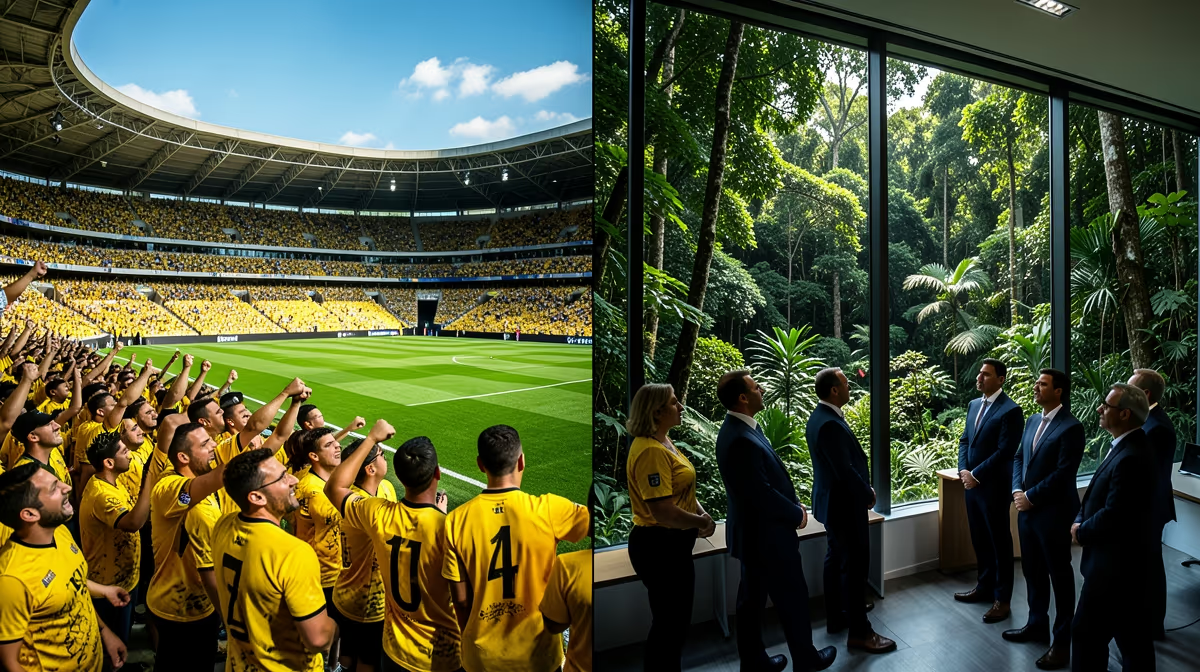
Beyond the reach of the pitch, the lingering legacy of a 1998 football miracle serves as a curious lens through which to view the contemporary diplomatic dance between two unlikely partners. Fans are eagerly discussing a potential Brazil vs Norway matchup as the excitement builds for the FIFA World Cup 2026, reawakening memories of a sporting rivalry that remains uniquely tilted in favor of the Nordic nation.
Historical Rivalry on the Pitch
The Brazilian national football team and Norway have shared a storied rivalry marked by intense tactical encounters, most notably in the 1998 FIFA World Cup, where Norway secured a historic 2-1 victory over the South American powerhouse. Historically, the match between Brazil and Norway is cemented in football lore due to the 1998 meeting in Marseille. Despite Brazil entering the tournament as favorites, Norway’s disciplined defensive structure and clinical execution in the final minutes allowed them to overcome a Bebeto goal, securing a legendary win that remains the only time Brazil has lost to the Norwegians in competitive play.
Since that iconic match, the two nations have maintained a relationship defined by professional sportsmanship and occasional friendly matches. While their paths on the international stage have diverged, the memory of that upset continues to be a point of cultural reflection for fans in both nations, highlighting the unpredictable nature of global competition. Following the 1998 fixture, former Norwegian manager Egil Olsen stated that the team believed in their game plan and that their belief never wavered even after going a goal down; it was a testament to the collective discipline of the squad. To date, Brazil and Norway have faced each other four times in their history, and remarkably, Norway remains one of the few national teams that has never lost to Brazil.
Diplomacy and Environmental Stewardship
While football matches draw global attention, the real-world connection between Brazil and Norway is grounded in a deep strategic partnership focused on sustainable development. Brazil and Norway have entered into a significant diplomatic and environmental partnership centered on the preservation of the Amazon rainforest. The core of this agreement involves Norway providing substantial financial support to Brazil’s conservation efforts, specifically aimed at reducing deforestation rates that have spiked in recent years. This cooperation marks a renewed commitment between the two nations to combat climate change through international funding.
Norway is the largest contributor to the Amazon Fund, a central mechanism for tropical forest conservation. This partnership was revitalized following the change in Brazilian leadership, focusing on halting deforestation with a goal of ending illegal clearing by 2030. Norway’s financial support is results-based, meaning funds are released only when Brazil demonstrates measurable progress in protecting its biodiversity and supporting local communities. The collaboration serves as a model for how wealthy nations can support developing countries in protecting critical ecosystems. The Amazon rainforest acts as one of the planet’s most vital carbon sinks, and because this ecosystem impacts global weather patterns, the success of the Brazil-Norway initiative has direct implications for international climate targets.
Analytical Perspectives on the Partnership
The relationship between these two nations is defined by a complex interplay between Norway's sustainability-focused wealth management and Brazil's resource-dependent economic model. The root cause of recent tensions has been the difficulty of balancing these interests, specifically regarding the Amazon Fund and extractive industry oversight. A notable political angle in this dynamic is the clash between Norway's role as a moral arbiter of global environmental policy and Brazil's assertion of national sovereignty over territorial resources.
From an economic perspective, Norway holds a massive stake in the Brazilian energy and mining sectors. This is frequently contrasted with the conditions attached to Norwegian development aid and the threat of potential divestment by the Norwegian Government Pension Fund Global. Geopolitically, the tension manifests as a struggle between European-led ESG mandates and Brazil's strategic pivot toward BRICS-led developmental priorities, which challenges the traditional influence of Western environmental conditionality. A hidden aspect of this relationship involves Norwegian maritime technology interests in the pre-salt oil fields, which often creates a tension between their domestic environmental messaging and their international commercial operations.
Future Outlook and Strategic Predictions
Looking ahead to the next 24 hours, stakeholders expect to see diplomatic statements regarding the ongoing Amazon Fund collaboration and potential discussions on upcoming climate finance summits. Within the next 72 hours, the focus is likely to shift to technical bilateral meetings centered on renewable energy technology transfer and sustainable trade agreements.
Key figures managing this dialogue include Brazilian President Luiz Inácio Lula da Silva and Norwegian Prime Minister Jonas Gahr Støre, alongside Environmental Ministers Marina Silva and Espen Barth Eide. Expert predictions suggest a strengthening of the green partnership framework, with Norway doubling down on its support for Brazil’s zero-deforestation goals in exchange for long-term influence in the South American energy sector. The best-case scenario involves significant new funding announcements for biodiversity protection and deepened cooperation in offshore wind energy projects. Conversely, the worst-case scenario involves rising tensions over oil exploration in the Amazon basin, which could lead to a temporary stall in Norwegian financial contributions to the Amazon Fund.
Frequently Asked Questions
What is the relationship between Brazil and Norway?
Brazil and Norway maintain a strong strategic partnership focused on sustainable development, environmental protection, and energy. The two nations have collaborated extensively on the Amazon Fund to reduce deforestation and greenhouse gas emissions in the Brazilian rainforest.
Why is Norway involved in the Amazon rainforest?
Norway has been a primary financial contributor to the Amazon Fund, which supports efforts to prevent, monitor, and combat deforestation in Brazil. This partnership reflects Norway's commitment to global climate change mitigation and sustainable forest management.
How much has Norway invested in Brazil?
Norway is one of the largest foreign investors in Brazil, with significant capital flowing into the oil and gas, maritime, and renewable energy sectors.
Does Brazil play Norway in football?
Brazil and Norway have faced each other in international football, with one of the most famous encounters occurring during the 1998 FIFA World Cup. In that match, Norway famously defeated Brazil 2-1 in a group stage upset.
Are there many Brazilians living in Norway?
There is a growing Brazilian community in Norway, consisting primarily of students, professionals, and individuals connected through marriage.
What is the status of the Brazil-Norway trade agreement?
Trade between Brazil and Norway is largely facilitated through the EFTA (European Free Trade Association) agreement, which aims to reduce tariffs and improve market access for goods and services between the two nations.
Conclusion
The narrative of Brazil and Norway is a study in contrasts, ranging from the unpredictable drama of the football pitch to the disciplined rigors of international climate diplomacy. While the 1998 World Cup victory remains a unique historical footnote for Norwegian football fans, the contemporary focus between the two nations is firmly rooted in the survival of the Amazon and the stability of global energy markets. As both countries navigate the complexities of environmental sovereignty and economic dependency, their partnership continues to evolve. Whether on the field in 2026 or in the climate summits of the coming months, the interaction between Brazil and Norway remains a critical focal point for observers of global policy and international competition.


.webp)
