
China Tornadoes Signal an Unsettling Shift in Global Weather Patterns
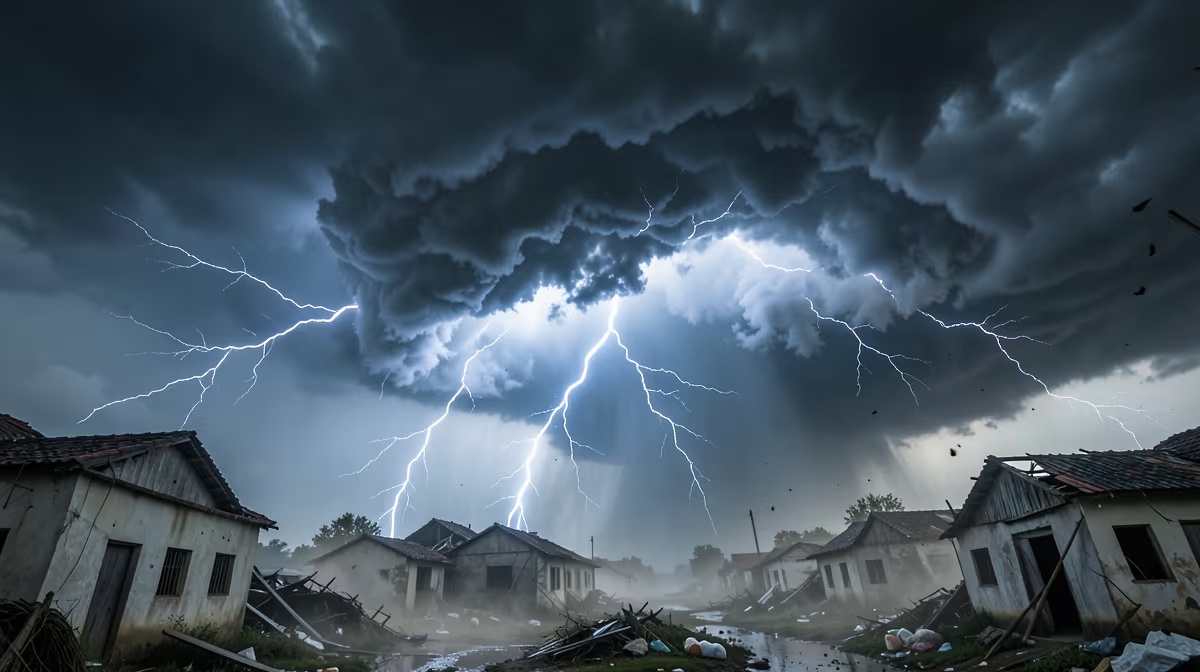
A series of severe tornadoes recently swept through parts of China, leaving a trail of destruction that has prompted urgent questions regarding regional infrastructure and the broader global climate crisis. These intense storms hit multiple residential townships in the eastern provinces, causing significant structural collapse and highlighting the unpredictable nature of extreme weather in areas historically less accustomed to such high-velocity events.
The Mechanics of the Recent Disaster
The tornadoes, which struck multiple townships in eastern China earlier this week, resulted in at least 10 confirmed fatalities and widespread destruction to residential buildings, local power grids, and agricultural infrastructure. Emergency responders were deployed immediately to conduct search and rescue operations, while local authorities coordinated medical assistance for the dozens injured during the storm system. Meteorological reports indicate that the intensity of these storms exceeded typical seasonal averages, catching many residents off guard as the sudden onset of cyclonic activity left little time for shelter.
The atmospheric conditions that fueled these events were characterized by extreme instability, likely intensified by shifting jet stream patterns and regional environmental anomalies. As local provincial governments continue to assess the full scope of economic and structural loss, the primary focus remains on clearing debris and evaluating long-term housing solutions for those displaced by the devastation. Power outages and blocked roads have hindered initial recovery efforts, forcing a massive mobilization of emergency personnel to the hardest-hit regions.
Root Causes and Meteorological Context
The recent escalation in extreme weather China reflects a complex intersection of natural variability and broader environmental shifts. Analysts point to intensifying atmospheric instability, driven by anthropogenic climate change, as a primary factor. Specific shifting jet stream patterns are increasingly interacting with anomalous heat domes, creating high-risk environments for supercell development. While China experiences tornadoes annually—most frequently in the middle and lower reaches of the Yangtze River, the coastal provinces of Jiangsu and Zhejiang, and the Pearl River Delta—the historical records are being rewritten.
Improved radar technology and heightened reporting protocols have confirmed that these events are more frequent and potentially more dangerous than previously documented. This scientific realization aligns with a historical parallel to the 1974 Super Outbreak in the United States, which catalyzed the evolution of centralized storm-tracking protocols. Similarly, the current disaster is driving calls for the integration of hyper-local predictive technology to mitigate systemic vulnerability in densely populated regions.
Economic and Geopolitical Implications
The frequency of such events creates a ripple effect that extends far beyond local recovery efforts. For business leaders and geopolitical analysts, these storms represent a significant threat to supply chain stability. As manufacturing sectors in China face potential disruption from climate-induced disasters, global markets are experiencing increased volatility. This economic angle is exacerbated by rising insurance premiums and the complexities inherent in decoupling critical manufacturing from Asian dependencies.
Furthermore, the situation has invited a political dimension regarding disaster relief discourse. There is a palpable tension in how state-media accounts characterize infrastructure resilience, often juxtaposing these challenges against perceptions of decline in other global powers. This strategic competition, particularly regarding green technology adoption, suggests that climate-induced extreme weather may serve as either a catalyst for essential US-China climate diplomacy or as a new source of friction at international summits. The hidden risk lies in how climate-driven migration and potential insurance market instability could force internal demographic shifts that eventually influence electoral power bases on both sides of the Pacific.
Looking Ahead: Risks and Preparedness
Predictive data for the coming days suggests a need for increased vigilance. While the current focus is on Chinese recovery, the broader meteorological context points toward continued instability. In the next 24 hours, experts expect heightened monitoring of atmospheric instability across the central regions of the United States as seasonal convective patterns intensify. Within the next 72 hours, there is a potential for localized supercell development in high-risk zones, with meteorological services already issuing alerts for tornado activity and hail.
The best-case scenario involves storm systems weakening upon landfall or encountering strong capping inversions, effectively limiting damage to minor wind gusts. Conversely, the worst-case scenario entails rapidly developing supercells interacting with high instability to trigger a multi-day outbreak of significant, long-track tornadoes. Key players, including the National Weather Service, NOAA, and local emergency management agencies, are preparing for these shifts in the Great Plains, the Midwestern United States, and the Lower Mississippi Valley, underscoring the universal nature of the challenge.
Why This Matters for Global Resilience
These tornadoes serve as a stark reminder of the growing global challenge of extreme weather events. For the average person, this underscores the necessity of robust disaster preparedness, improved early warning systems, and resilient infrastructure. The devastation in China highlights that no region is immune to the changing climate, and the economic integration of our modern world means that a disaster in one province can have cascading impacts on global supply chains. Moving forward, the emphasis must shift from reactive recovery to proactive atmospheric resilience, ensuring that communities are equipped to handle the increasingly volatile weather patterns that define the current era.
Frequently Asked Questions
Do tornadoes happen in China?
Yes, tornadoes do occur in China, although they are generally less frequent than in the United States. They are most commonly observed in the eastern and southern provinces where the climate is more conducive to severe thunderstorms.
Which parts of China are most prone to tornadoes?
The areas most susceptible to tornadoes in China include the middle and lower reaches of the Yangtze River, the coastal provinces of Jiangsu and Zhejiang, and the Pearl River Delta. These regions experience frequent moisture transport from the ocean, creating favorable conditions for cyclonic activity.
How do Chinese tornadoes compare to those in the US?
While China does experience significant tornadoes, they typically occur with less frequency and intensity compared to the infamous Tornado Alley in the United States. However, when they do strike, they can be just as destructive due to the high population density in many Chinese provinces.
What is the tornado season in China?
The tornado season in China primarily occurs during the spring and summer months, typically peaking between April and July. This period aligns with the transition of seasonal monsoon winds, which provide the necessary instability for tornado formation.
Are tornadoes increasing in frequency in China?
Recent studies and meteorological reports suggest an increase in observed tornado activity in certain parts of China. This is often attributed to both improved detection technology and potential shifts in regional climate patterns that influence thunderstorm development.
Is there a specific Tornado Alley in China?
China does not have a single, clearly defined Tornado Alley like the United States. However, the eastern coastal plains, particularly the province of Jiangsu, are often cited by meteorologists as having the highest frequency of tornado strikes in the country.
Conclusion
The recent tornado outbreak in China serves as a significant case study in the risks posed by shifting global climate patterns. With at least 10 confirmed fatalities and extensive damage to critical infrastructure, the event has prompted a necessary re-evaluation of disaster readiness and supply chain security. While local authorities focus on ongoing search and rescue efforts and the immediate restoration of power and housing, the broader international community must grapple with the analytical reality that such extreme weather is becoming more frequent. Future stability hinges on the integration of advanced predictive technology, the hardening of vulnerable infrastructure, and a global commitment to understanding the environmental drivers of these disasters. As recovery continues in the affected provinces, the lessons learned from this tragedy will inevitably inform future policy regarding climate resilience and emergency response on a global scale.


.webp)

.webp)
