
Ebola Outbreak UK Protocols Trigger High-Level Biosecurity Response
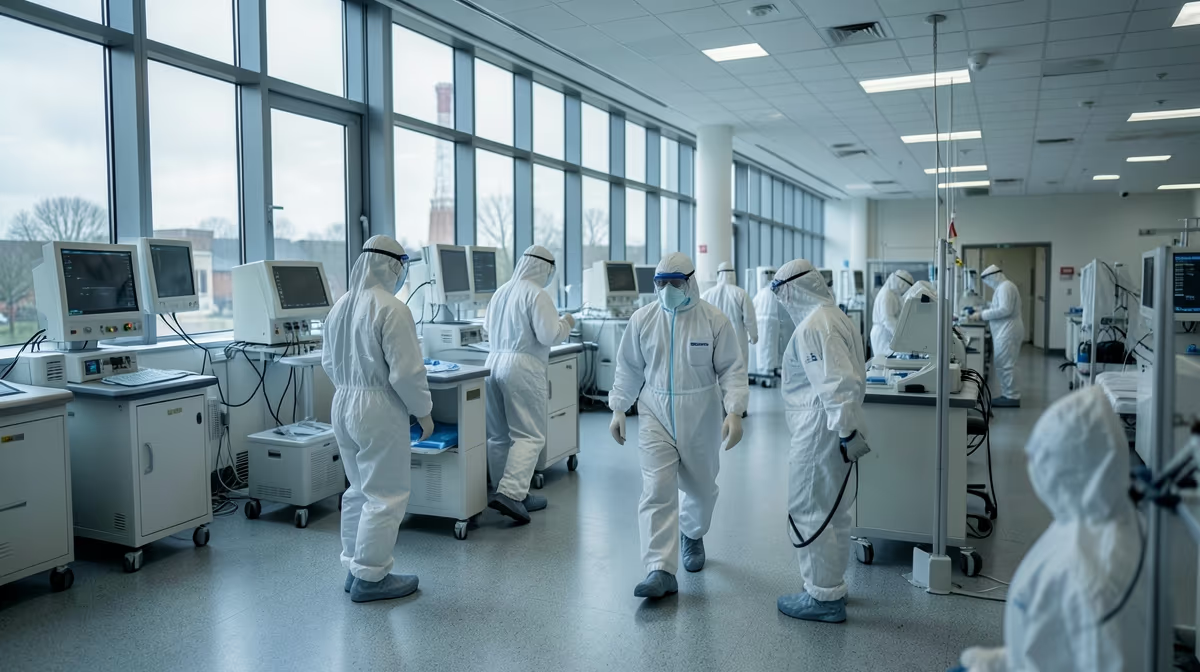
High-consequence pathogen alerts have triggered a coordinated response across national health infrastructure, placing the spotlight squarely on biosecurity readiness during an ebola outbreak uk scenario. Medical professionals and risk-conscious citizens are closely tracking containment protocols as specialized teams manage a suspected imported case under strict isolation.
Current Clinical Operations and Containment
The patient, who recently traveled from an Ebola-affected region in West Africa, is currently receiving specialized care in a high-consequence infectious disease unit at a major London hospital. Medical teams are strictly following established containment and treatment guidelines to ensure the safety of both staff and the wider public. Public Health England and the UK Health Security Agency have initiated standard contact-tracing procedures to identify and monitor any individuals who may have had close contact with the patient prior to hospitalization. Officials emphasize that Ebola is not airborne and is only transmitted through direct contact with bodily fluids, making widespread transmission highly unlikely in the healthcare environment. Health experts have convened to review preparedness measures across national transport hubs and National Health Service facilities. Hospitals have been reminded of diagnostic protocols to rapidly identify any potential future cases, ensuring that the healthcare system remains fully fortified against imported infectious diseases. Dr. Susan Hopkins, Chief Medical Adviser at the UK Health Security Agency, stated that robust national health systems are designed to detect, isolate, and treat cases of high-consequence infectious diseases swiftly, noting that all necessary precautions are being taken to protect public health.
Understanding the Public Health Reality
Health authorities in the UK are currently responding to a reported case of the virus. Public health teams have activated established protocols to trace anyone who may have had contact with the individual to prevent any potential spread of the disease. Ebola is a rare and severe illness caused by a virus. It does not spread easily through the air like a cold or flu; instead, it is transmitted only through direct contact with the bodily fluids of someone who is sick or has died from the virus. Because of these strict transmission requirements, health officials have stressed that the overall risk to the general public in the UK remains very low. A single case has been identified, prompting a rapid public health response where health officials are actively tracing and monitoring close contacts. The virus is not airborne, and the UK Health Security Agency has confirmed that the risk to the wider British public is very low. Specialist hospitals maintain well-rehearsed protocols to safely isolate and treat patients with high-consequence infectious diseases. While any mention of Ebola naturally causes concern, this situation matters primarily as a test of health infrastructure. Swift contact tracing and isolation procedures are designed to contain the virus immediately, preventing widespread panic and ensuring that public health remains completely protected without disrupting everyday life. The primary individuals affected are the patient receiving medical care and a small, targeted group of close contacts who are being monitored by health officials as a precaution, leaving the general public unaffected. Ebola virus disease is a severe, often fatal illness first discovered in 1976 with major historical outbreaks in remote parts of Central and West Africa. Thanks to modern international travel medicine and strict containment protocols, cases appearing in countries like the UK are extremely rare and typically managed without community spread.
Analytical Perspectives and Institutional Pressures
The situation highlights underlying vulnerabilities in global biosecurity supply chains and delays in rapid-response pathogen tracking protocols within the UK privatized health logistics infrastructure. This operational framework intersects with political friction, where opposition parties may weaponize health security to challenge the current administration border control competence alongside bureaucratic friction between devolved health authorities. Immediate economic pressures include strain on National Health Service contingency funds, potential disruption to international trade corridors through UK ports, and speculative hits to airline and tourism sectors. Geopolitically, the event risks strained diplomatic ties with West African partner nations over travel restrictions, alongside renewed scrutiny on biodefense funding commitments relative to other G7 nations. A hidden operational angle involves heavy reliance on underpaid, migrant subcontracted healthcare labor within high-containment quarantine wards, exposing systemic labor exploitation during health emergencies. Historical parallels point directly to the 2014 to 2016 West African Ebola epidemic panic and the subsequent logistical missteps during the early phases of the COVID-19 response. The timeline spans from an initial imported asymptomatic case flagged at a major international transport hub, through potential secondary transmission risks among frontline healthcare workers due to protective equipment protocol breaches, to emergency Cabinet Office Briefing Room meetings initiated alongside stringent contact tracing and targeted travel advisories, culminating in the current containment phase focusing on genomic surveillance, public reassurance, and managing localized supply chain panic.
Immediate Operational Outlook and Risk Scenarios
UK health agencies have issued updated travel advisories and continue to monitor any individuals exhibiting symptoms who recently traveled from affected regions within the next 24 hours. Over the next 72 hours, enhanced screening protocols at major UK airports will be evaluated, and public health briefings will be conducted to reassure the population while emphasizing preparedness. Independent expert prediction indicates that while the risk to the general UK public remains very low, heightened surveillance and containment protocols will be strictly enforced to prevent secondary transmission. The best-case scenario projects that suspected cases test negative, public panic is averted, and existing biosecurity measures successfully contain the threat at the border. Conversely, the worst-case scenario envisions a confirmed imported case leading to localized contact tracing efforts, temporary facility lockdowns, and heightened media-driven market anxiety.
Frequently Asked Questions
Has there ever been an Ebola outbreak in the UK?
No widespread Ebola outbreak has ever occurred in the United Kingdom. However, the UK has managed a very small number of imported cases involving aid workers who contracted the virus abroad and were safely repatriated for treatment.
When was the last Ebola case diagnosed in the UK?
The last confirmed case of Ebola in the UK was diagnosed in December 2014 involving a healthcare worker who returned from Sierra Leone. The patient received specialized care at the Royal Free Hospital in London and fully recovered.
How does the UK NHS prepare for potential Ebola cases?
The National Health Service maintains robust preparedness plans developed in coordination with public health authorities. Designated hospitals feature specialized high-consequence infectious disease units equipped with advanced isolation facilities and trained medical staff.
What is the current risk of Ebola to the UK general public?
The risk of Ebola to the general public in the UK is assessed as very low. The virus is not airborne and only spreads through direct contact with the bodily fluids of an infected person showing symptoms.
What screening procedures exist at UK airports for Ebola?
Routine screening at UK airports is generally not active unless a specific international health emergency warrants enhanced surveillance. Public health authorities instead rely on alert systems for travelers arriving from affected regions and pre-travel advisories.
Where are suspected Ebola patients treated in the UK?
Suspected or confirmed Ebola patients in the UK are managed through a coordinated network involving National Health Service ambulance services and specialized infectious disease centers. The primary treatment facility is the High Consequence Infectious Diseases unit at the Royal Free Hospital in London.
Conclusion
Verified developments confirm that a suspected case of Ebola is currently undergoing specialized treatment in London under strict isolation protocols, with public health agencies actively executing contact tracing and heightened surveillance measures. The UK Health Security Agency maintains that the overall risk to the general public remains very low. Realistic next steps involve continued monitoring of close contacts, adherence to established high-consequence infectious disease unit guidelines, and ongoing coordination between national health authorities to ensure containment protocols remain fully effective.


