
Edgewing GCAP fighter contract signals major shift in UK air defense
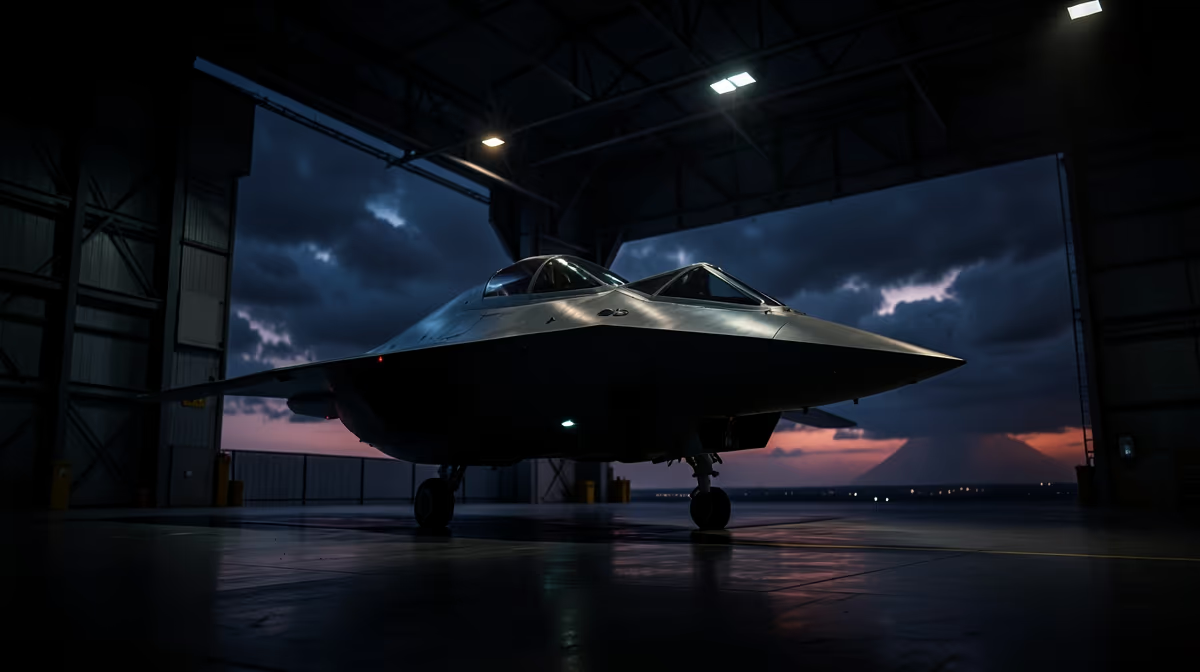
Deep beneath the surface of current defense procurement, the UK is laying the structural foundations for a platform that will redefine aerial warfare for the next half-century. The recently announced Edgewing GCAP fighter contract marks a significant milestone for UK defense innovation, solidifying the role of BAE Systems in developing the sixth-generation fighter platform that promises to transition the Royal Air Force into a new era of dominance.
The Genesis of a Trilateral Powerhouse
The Global Combat Air Programme, or GCAP, stands as the successor to the UK’s earlier Tempest project and Japan’s F-X program. Born from a strategic necessity to share the astronomical costs of sixth-generation technology, the initiative represents a trilateral partnership between the United Kingdom, Italy, and Japan. By formally establishing the GCAP International Government Organisation, these nations have moved beyond theoretical cooperation into a concrete industrial framework. This collaborative model, often described as Edgewing, provides the governance required to integrate distinct national industrial requirements into a single, cohesive combat platform designed to replace the Eurofighter Typhoon fleet.
Engineering the Future of Aerial Combat
At the heart of the project lies a shift toward advanced autonomy and modular design. The program aims to move beyond traditional manned flight, focusing instead on AI-augmented swarming and digital twin integration. BAE Systems, serving as the primary industrial partner for the UK segment of the effort, is tasked with maturing the design of a supersonic stealth jet capable of utilizing laser-based weaponry and sophisticated sensor fusion. These platforms are not merely intended to fly, but to operate as a core node in a broader, software-defined network. By focusing on digital backbone architecture now, the consortium intends to ensure that the aircraft can evolve through rapid software iterations well before its targeted 2035 entry-to-service date.
Economic and Industrial Implications
The GCAP project serves as a cornerstone of the UK’s post-Brexit industrial strategy, acting as a vehicle for inward investment and the retention of high-skilled engineering talent. Facilities in Warton and Samlesbury, located in northern England, are currently evolving into primary hubs for the aircraft’s development. This industrial focus is not merely about manufacturing; it is a long-term commitment to sovereign defense capability. By keeping the design and assembly of these next-generation systems domestic, the UK seeks to reduce its dependence on foreign-built platforms while maintaining a competitive edge in the global aerospace export market of the 2030s. The economic model relies on the expectation that these high-skilled roles will be sustained through the multi-decade lifecycle of the platform.
Strategic Geopolitics and Security
Beyond the factory floor, the program represents a significant pivot toward the Indo-Pacific. By linking European security architectures with the defense requirements of Tokyo, the GCAP project acts as a strategic hedge against regional instability in the South China Sea. Defense Secretary John Healey has emphasized that the program is vital to national security, ensuring the Royal Air Force maintains air superiority in an increasingly unstable global landscape. However, the move toward such advanced integrated systems brings unique risks, specifically regarding intellectual property dependency and the potential for vulnerabilities inherent in complex, software-defined warfare systems. Balancing these sovereign requirements with the shared technical specifications of Italy and Japan remains the primary geopolitical challenge.
Predicting the Development Horizon
The project is currently in a state of rapid transition. Over the next 24 hours, stakeholders expect confirmation regarding sub-contractor integration details, specifically how the ecosystem will connect BAE Systems with its Italian and Japanese counterparts. The 72-hour outlook suggests that the program will face increasing scrutiny from parliamentary bodies, particularly regarding the transparency of long-term budgetary commitments during the demonstrator phase. Looking further ahead, experts anticipate a steady flow of incremental contract awards focused on sensor integration and digital architecture. While the best-case scenario involves smooth alignment leading to expedited timelines, the program faces the risk of supply chain bottlenecks and escalating R&D costs, which could lead to political pressure to adjust the scope of the program.
Frequently Asked Questions
What is the Edgewing GCAP fighter contract?
The GCAP is a trilateral defense project between the UK, Italy, and Japan to develop a next-generation stealth fighter. Edgewing refers to the specific industrial collaboration and framework established between these partner nations to manage the design and production phases of the aircraft.
Who are the primary contractors involved in the GCAP fighter program?
The primary industrial partners include BAE Systems for the UK, Leonardo for Italy, and Mitsubishi Heavy Industries for Japan. These companies collaborate under the GCAP framework to integrate advanced avionics, propulsion systems, and stealth capabilities into the new fighter jet.
What is the expected delivery date for the GCAP fighter?
The Global Combat Air Programme aims to have the next-generation fighter in service by 2035. This timeline requires intensive research and development efforts across the participating nations.
Will the GCAP fighter replace the RAF Typhoon?
Yes, the GCAP fighter is being developed primarily to replace the Eurofighter Typhoon currently operated by the Royal Air Force. It is designed to act as a core platform that works alongside uncrewed systems to provide superior air dominance.
How does the GCAP program benefit the UK defence industry?
The program secures long-term high-skilled jobs in the UK aerospace sector and maintains the nation's sovereign capability to design and manufacture advanced combat aircraft. It also fosters deeper technological cooperation with key international allies like Italy and Japan.
What makes the GCAP fighter a next-generation aircraft?
The GCAP fighter features advanced stealth, sensor fusion, and high-speed data connectivity to operate in contested environments. It also emphasizes modular design, allowing for frequent software updates and the integration of future weapons technology throughout its operational lifespan.
Conclusion
The GCAP initiative has moved into its formal development phase, marked by the recent awarding of major contracts to BAE Systems. As the project accelerates, the focus remains on harmonizing the technical requirements of the UK, Italy, and Japan to ensure the 2035 service target is met. While the program successfully solidifies the UK’s position in the global aerospace market and addresses long-term national security needs, the path forward will require navigating complex industrial interdependencies and strict budgetary oversight. The next phase of development will clarify the integration of critical systems, setting the stage for what is intended to be the backbone of allied air power for decades to come.


.webp)
