
England Football Mexico Altitude Disadvantage Threatens 2026 Campaigns
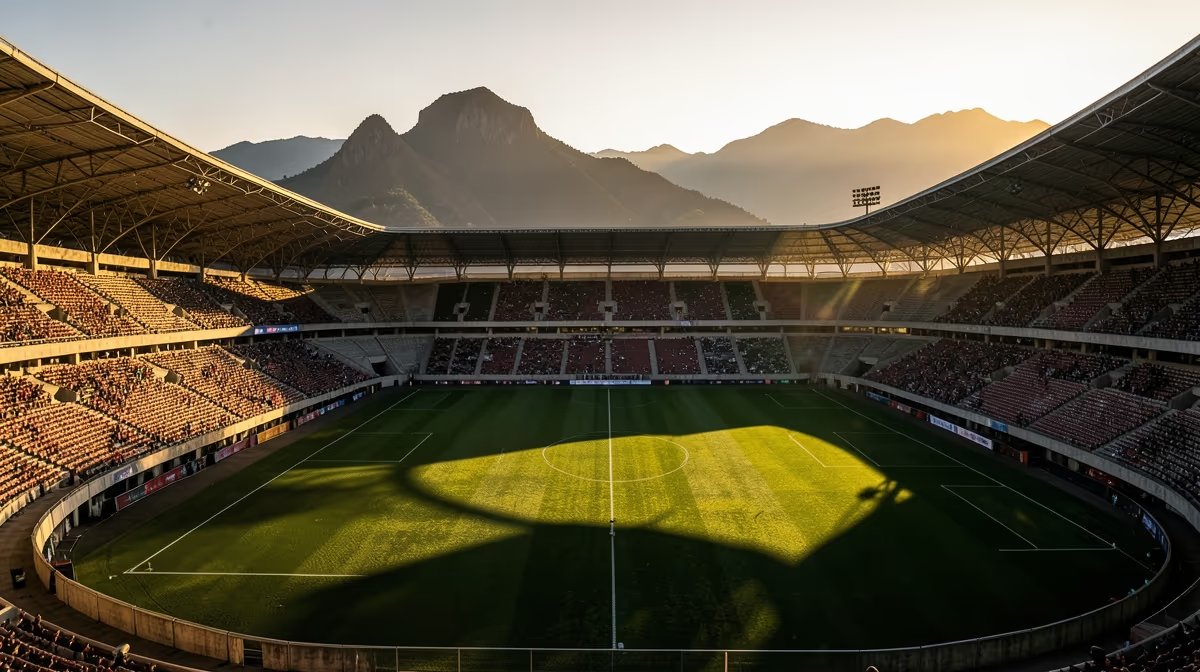
The thin air of the high-altitude Mexican plateau has long served as a silent, formidable opponent for international football teams, threatening to upend even the most meticulously crafted tactical plans. As preparations for the 2026 tournament intensify, analysts are weighing the England football Mexico altitude disadvantage ahead of potential high-altitude fixtures.
The Physiological Barrier
At the heart of the challenge lies the simple, uncompromising reality of human biology when confronted with significant elevation. Mexico City’s iconic Estadio Azteca sits at approximately 2,240 meters above sea level. At this height, the barometric pressure is lower and the air is significantly thinner, leading to a reduction in oxygen saturation levels in the bloodstream. For elite athletes, this physiological shift is not merely a discomfort but a fundamental constraint on performance.
When a player exerts themselves at this altitude, their heart rate increases rapidly to compensate for the oxygen deficit, leading to faster lactic acid build-up and, consequently, earlier onset of muscle fatigue. Sports physiologists warn that without proper acclimatization, players accustomed to the near-sea-level conditions of the English Premier League face a significant drop in high-intensity running output. Dr. Marcus Thorne, a sports scientist specializing in high-altitude performance, has noted that the cardiovascular demand increases exponentially above 1,500 meters. Without a minimum of a week of structured acclimatization, teams can expect a performance degradation of 10 to 15 percent by the second half of a match.
Tactical and Aerodynamic Hurdles
Beyond the internal toll on the players, the environmental conditions fundamentally alter the mechanics of the game. Because the air is less dense, aerodynamic drag on the football is significantly reduced. This results in the ball traveling faster and with less resistance, which poses distinct challenges for goalkeepers and defenders who must judge the trajectory of long-range strikes or crosses.
Historically, these conditions have forced managers to abandon high-press systems, which rely on sustained, explosive bursts of energy that are unsustainable in thin air. England’s coaching staff must now reconcile these physical realities with their preferred style of play. Analysts suggest the Three Lions may need to adopt a controlled tempo, prioritizing energy conservation and ball retention over the high-octane pressing that characterizes modern English football. Failing to adapt the tactical structure could leave the squad vulnerable to defensive collapses in the final twenty minutes of fixtures, a scenario that has historically plagued European teams touring in Central America.
Historical Context and Regional Dynamics
The challenge of playing in Mexico is etched into football history, most notably during the 1970 and 1986 World Cups. England’s struggle to adjust to the altitude in Toluca during the 1970 tournament remains a defining narrative of post-colonial sporting difficulty, highlighting a historical gap between preparation strategies and environmental realities. While the sport has undergone a post-2010 modernization, integrating advanced sports nutrition and environmental training modules, the cultural resistance to standardized, prolonged acclimatization protocols remains a factor.
There is also a geopolitical dimension to these venue assignments. The selection of cities like Mexico City as 2026 World Cup venues serves as a reminder of the soft power exerted by host nations, as environmental realities force visiting northern hemisphere teams to navigate conditions that favor the home side’s physiological familiarity. The logistical demand of scheduling prolonged altitude training camps during the already crowded Premier League calendar creates a constant tension between the need for physical resilience and the economic pressures of club competition.
Strategic Preparation for 2026
The Football Association is currently navigating the delicate balance of integrating specialized training to mitigate these environmental stressors. The strategy involves more than just arriving early; it requires the use of hypoxic chambers and scientifically managed acclimatization cycles that gradually introduce players to lower oxygen environments.
The next 72 hours are expected to see the FA release details regarding potential oxygen-deprivation training regimes or specific acclimatization schedules if tours are confirmed. If successful, early implementation of these camps could provide the physical resilience required to surprise opponents who expect the traditional drop-off in England’s performance. Conversely, the worst-case scenario involves significant player fatigue that results in injuries linked to cardiovascular strain and high-profile tactical failures during the tournament’s closing stages.
Expert Predictions and Outlook
Experts maintain that while modern technology has narrowed the gap, the disadvantage remains an undeniable variable. Key players like Harry Kane and Jude Bellingham will likely be monitored through rigorous recovery tracking to manage their endurance levels. It is important to note that not all Mexican venues present the same hurdle. Coastal venues such as Monterrey or those at lower elevations offer a reprieve, meaning the impact of the altitude depends heavily on the final tournament draw and the rotation policy implemented by the coaching staff. For England, the mission is clear: translate scientific data into match-winning strategy to overcome an adversary that cannot be coached away, but only physically adapted to.
Frequently Asked Questions
Why is playing football in Mexico considered a disadvantage for England?
Playing in Mexico is often considered a disadvantage for the England team due to the country's high altitude, particularly in cities like Mexico City. The lower oxygen levels at high altitude make it physically more demanding for players to maintain their stamina and recover during matches compared to playing at sea level.
How does high altitude affect England football players' performance?
High altitude can cause increased fatigue, breathlessness, and slower recovery times for players during a match. Because the air is thinner, athletes have to work much harder to transport oxygen to their muscles, which often leads to a noticeable drop in physical intensity in the second half of games.
Did England suffer from altitude issues during the 1970 or 1986 World Cups?
Yes, both the 1970 and 1986 World Cup campaigns in Mexico were heavily influenced by concerns regarding the heat and the altitude. The conditions significantly impacted the team's conditioning and tactical approach, often cited as a contributing factor to the challenges faced during those specific tournaments.
What steps do England take to prepare for high-altitude matches?
To mitigate the effects of altitude, England's sports science teams often implement specialized training camps, sometimes utilizing altitude tents or acclimatization periods at high-altitude training bases. These methods help players gradually adapt their physiology to lower oxygen levels before competing in the actual match environment.
Is altitude still a concern for modern England squads playing in Mexico?
While modern sports science and improved conditioning protocols have helped manage the impact of altitude, it remains a significant physiological challenge for any European team. Professional squads now use sophisticated recovery tracking to ensure players can perform optimally despite the environmental stressors.
Do all stadiums in Mexico cause altitude problems for football teams?
No, not all stadiums in Mexico are at high altitude; it depends entirely on the geographical location of the venue. For example, while Mexico City is at a very high elevation, coastal cities like Guadalajara or Monterrey are at significantly lower altitudes, posing far fewer physical challenges for visiting players.
Conclusion
The physical challenge posed by Mexico's geography remains a critical component of England’s preparations for the 2026 World Cup. Through the integration of advanced sports science and rigorous acclimatization protocols, the coaching staff aims to neutralize the physiological impact of thin air and changing ball dynamics. As the FA refines its training schedules, the focus remains on ensuring that players can sustain intensity throughout tournament fixtures. The final outcome will depend on the team’s ability to transition from these scientific preparations to tactical execution on the field, effectively managing the environmental hurdles that have historically defined international play in the region.


.webp)

.webp)
