
FIFA World Cup 2026 Plans Reveal Massive Changes to Global Football
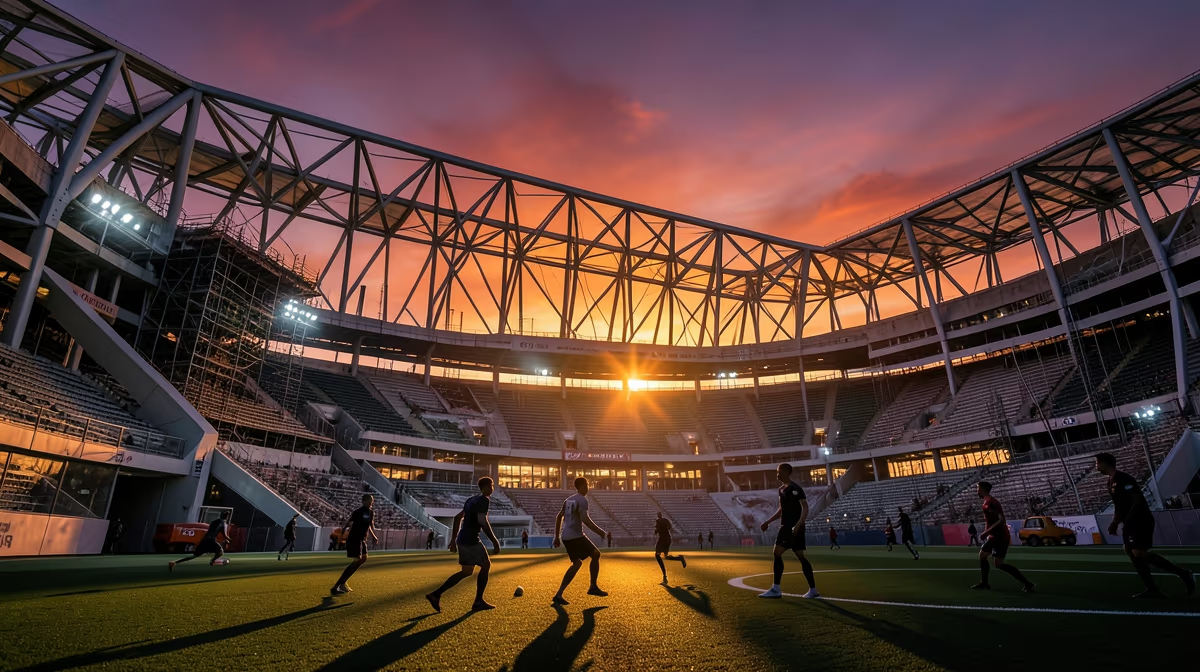
The landscape of international football is undergoing its most significant transformation since the late nineties as stakeholders prepare for a tournament that defies traditional logistical boundaries. The anticipation for the FIFA World Cup 2026 is reaching fever pitch as fans look toward the expanded tournament bracket and potential blockbuster matchups that will redefine the sport's global footprint.
A Historic Expansion
For the first time in the history of the sport, the tournament will be hosted jointly by three nations: the United States, Canada, and Mexico. This tri-continental format is designed to transcend regional borders, creating a spectacle that stretches from the historic Estadio Azteca in Mexico City to the modern infrastructure of the United States and Canada. The 2026 edition marks a departure from the long-standing 32-team model, expanding to a 48-team field. This shift results in a total of 104 matches, an unprecedented volume of competition that will test the hosting capabilities of the 16 selected cities. This expansion serves as a catalyst for growth, aiming to make the world's most popular sporting event more inclusive and accessible to diverse fan bases across North America.
Geopolitical and Economic Drivers
The transition to a multi-nation hosting model is not merely a logistical choice but a strategic move by FIFA to ensure long-term commercial sustainability. By consolidating the United States, Canada, and Mexico into a single hosting bloc, FIFA has secured access to the largest combined GDP region in sports history. Analysts suggest this move acts as a mechanism to repair diplomatic rifts while projecting soft power for the Western coalition. The economic scale is staggering, with the tournament expected to generate billions in revenue through record-breaking gate receipts, broadcast rights, and global sponsorship valuations. This commercial dominance is intended to offset the inherent risks of managing such a vast, distributed event across sixteen distinct jurisdictions.
The Infrastructure Challenge
Hosting 104 matches requires a Herculean effort in coordination, transport, and security. FIFA is currently focused on optimizing logistical requirements for all host cities to ensure that infrastructure can handle the influx of international visitors. While the 2002 South Korea and Japan tournament provided a blueprint for multi-nation hosting, the scale of 2026 is significantly larger. Over the next 72 hours, discussions between FIFA and local organizing committees are expected to intensify regarding match schedules and the finalization of kick-off times. These discussions are critical, as they must balance the complexities of broadcast time zones with the need for fair competitive conditions for all 48 participating teams.
The Competitive Landscape
As the qualification process continues to unfold across various confederations, the global focus is turning toward potential narratives. Fans are already analyzing the world cup bracket, looking for signs of which nations will emerge as favorites in this new, expanded format. While global titans like Brazil remain central to the conversation, the expanded field invites speculation about the performance of rising European stars. Specific intrigue surrounds players such as Erling Haaland; whether Norway manages to secure its place in the tournament remains a high-interest topic for fans monitoring qualification scenarios. These potential matchups, including the hypothetical prospect of a Brazil vs Norway clash, highlight the broad appeal of the upcoming competition.
Looking Toward Kick-off
The path to the 2026 final is now clearly defined, with the championship match set for July 19, 2026, at MetLife Stadium in New Jersey. FIFA executives are actively releasing updated guidelines for training facilities and site-specific operational requirements to ensure consistency across the 16 host cities. Despite the promise of a record-breaking event, experts warn that the logistical complexity remains a significant hurdle. A best-case scenario envisions a seamless integration of matches and a lasting positive economic legacy, whereas a worst-case scenario involves potential bottlenecks or security lapses. As the clock ticks down to the June 11, 2026, opening match in Mexico City, the global sports community remains focused on the finalization of team base camps and travel logistics.
Frequently Asked Questions
Where is the 2026 FIFA World Cup being held?
The 2026 FIFA World Cup will be co-hosted by three countries: Canada, Mexico, and the United States. This marks the first time that three nations have been selected to jointly host the tournament.
How many teams will compete in the 2026 World Cup?
The 2026 tournament will feature a historic expansion to 48 teams, up from the 32 teams that competed in previous editions. This increase allows for more nations to participate and results in a higher number of total matches.
What are the host cities for the 2026 World Cup?
There are 16 host cities spread across the three nations, including major locations like New York/New Jersey, Los Angeles, Mexico City, and Toronto. These venues were selected to accommodate the tournament's massive logistical needs and fan infrastructure.
When does the 2026 FIFA World Cup start?
The tournament is scheduled to kick off on June 11, 2026, and will run through July 19, 2026. The opening match will take place at the Estadio Azteca in Mexico City.
What is the format of the 2026 FIFA World Cup?
The 2026 format consists of a group stage where the 48 teams are divided into 12 groups of four. Following the group stage, the top teams will advance to a knockout phase that begins with a round of 32.
Where will the 2026 World Cup final be played?
The final match of the 2026 FIFA World Cup is scheduled to be held at MetLife Stadium in East Rutherford, New Jersey. The stadium serves the New York City metropolitan area and was chosen to host the championship game.
Conclusion
The 2026 FIFA World Cup represents a transformative moment for global sports, characterized by its unprecedented expansion and the integration of three host nations. With the match venues finalized, including the opening at Estadio Azteca and the final at MetLife Stadium, the focus now shifts toward the rigorous logistical execution required to manage 104 matches. As teams continue their path through qualification, the global community prepares for a tournament that aims to balance record-breaking commercial success with the complexities of modern transnational event management. The coming months will be defined by the finalization of travel, security, and scheduling requirements to ensure the 2026 event meets the high expectations of fans and stakeholders worldwide.


.webp)
