
Flock Safety Autonomous Police Drones Are Changing US Skies Fast
As law enforcement agencies across the country modernize their toolkits, the integration of flock safety autonomous police drones has sparked widespread national debate. Flock Safety, a major provider of automated license plate readers, has expanded its law enforcement technology suite to include autonomous drone-as-first-responder systems, sparking privacy debates across municipalities nationwide as police departments evaluate the aerial surveillance tools.
How Flock Safety Autonomous Police Drones Operate
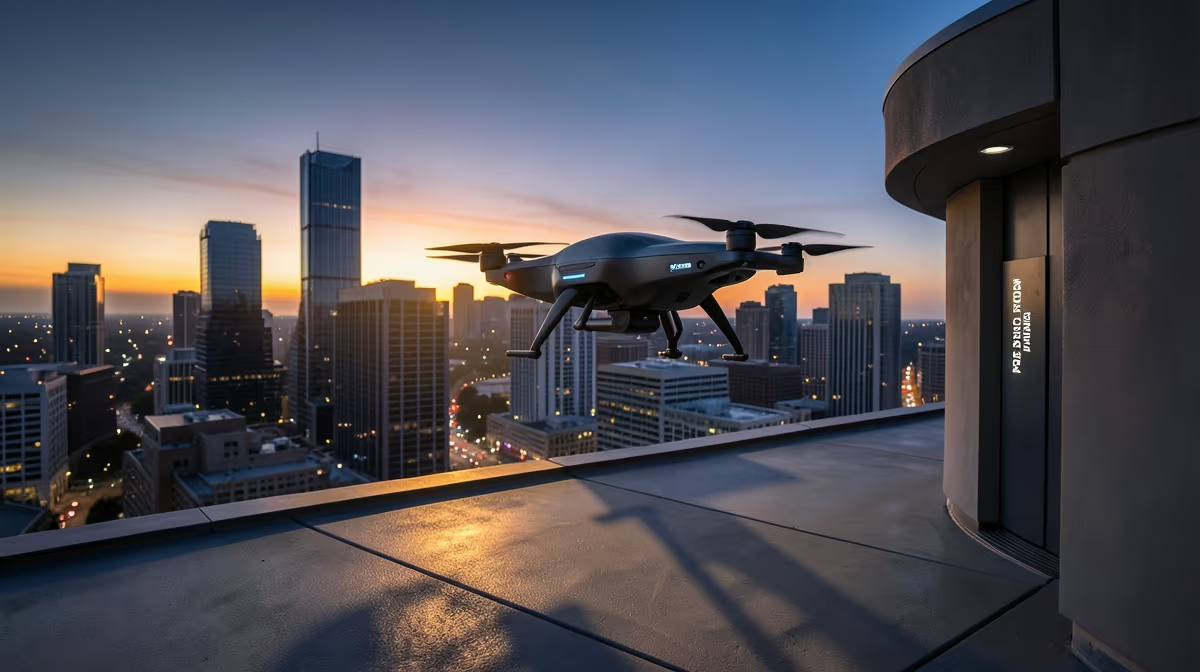
The integration allows automated drones to deploy instantly upon receiving a 911 call or an alert from existing Flock Safety gunshot detection and license plate recognition sensors. These small flying machines can launch automatically from rooftop docking stations when an emergency call comes in, operating without requiring a human pilot on-site. Instead of waiting for a patrol car to navigate through traffic, the police can send a drone to the scene in seconds to get eyes on the situation.
The system is designed to act as a first responder from the sky, navigating predefined flight paths and tracking incident locations to stream live video directly to dispatchers and responding officers. Once the incident is resolved, the drone automatically returns to its station. Flock Safety originally built its reputation on fixed automated license plate reader cameras mounted to poles and streetlights, which are currently used by thousands of police departments nationwide to track vehicles. Expanding into autonomous drones is the company's next step toward creating a fully integrated, tech-driven police surveillance ecosystem.
Privacy Implications and Public Concerns
Civil liberties organizations and privacy advocates have raised significant concerns regarding the widespread, persistent aerial monitoring enabled by these autonomous systems. Critics emphasize the potential for mission creep, where technology initially intended for critical emergencies could be utilized for routine patrol or protest monitoring without adequate warrant protections. Many worry about the constant capture of video in residential neighborhoods, the expansion of police monitoring tools, and the lack of strict warrant requirements for aerial observation.
While police departments say this technology makes communities safer by cutting response times, critics argue it normalizes constant aerial monitoring. Everyday citizens going about their normal routines may find themselves watched by police drones, sparking a major debate over public safety versus personal privacy. In response to these concerns, advocacy groups push for transparent data retention policies and strict usage guidelines.
The Future of Autonomous Security Technology in Law Enforcement
The deployment timeline varies by jurisdiction, as local city councils and police commissions must approve the procurement and integration of the drone hardware into existing municipal networks. Several suburban and mid-sized police departments across the United States have already begun pilot programs to test the operational efficacy of the automated launch platforms. The adoption rate is growing as more cities look for ways to leverage automation to combat response time delays, though rollout often depends on local city council approval and community feedback.
Financially, departments typically enter into annual subscription models that cover hardware maintenance, cloud storage, and system updates. Municipalities often fund these technologies through a combination of city budgets and federal grants. The transition moves law enforcement from one-time municipal hardware sales to lucrative recurring revenue models, creating taxpayer-funded corporate cash flows while raising questions about oversight and transparency.
Analyst View and Structural Drivers
The rise of these surveillance tools stems from the chronic underfunding of municipal social services paired with a post-pandemic panic over property crime, creating a vacuum eagerly filled by venture-backed surveillance tech startups promising algorithmic security. Elected officials increasingly outsource the state monopoly on violence to private corporations, bypassing traditional democratic oversight and procurement transparency while insulating themselves from police brutality backlash.
This operational shift echoes historical parallels such as the expansion of the 1990s War on Drugs private prison boom, where state actors partnered with private entities to monetize law enforcement outcomes under the guise of efficiency. Furthermore, the domestic normalization of autonomous aerial surveillance risks exporting authoritarian foreign policy tools inward, eroding global credibility on human rights while creating a testing ground for exportable policing tech. The integration with private Ring-style doorbell cameras and commercial security feeds further compounds this by effectively creating a stateless, unregulated dragnet that monitors lawful citizens without probable cause.
Expected Near-Term Outlook and Trajectory
Immediate developments indicate that Flock Safety will announce strategic deployment plans for their autonomous drone-as-first-responder systems, sparking immediate debate among privacy advocates and law enforcement agencies across multiple US states. Within seventy-two hours, civil liberties organizations are expected to issue formal letters and demand transparency regarding data retention and facial recognition capabilities, while initial client police departments defend the technology's potential to reduce response times.
Key players navigating this landscape include Flock Safety, the American Civil Liberties Union, the Major Cities Chiefs Association, and the Federal Aviation Administration. The integration of automated drones with existing fixed license plate reader networks will face intense legislative scrutiny and localized protests, prompting calls for strict federal and state-level regulatory guardrails. In a best-case scenario, transparent collaboration between tech developers, law enforcement, and community stakeholders leads to strict usage policies, resulting in faster emergency response times without compromising citizen privacy. Conversely, a worst-case scenario involves rapid, unregulated deployment leading to widespread public backlash, successful legal injunctions against municipalities, and a severe erosion of public trust in police surveillance technologies.
Frequently Asked Questions
What are Flock Safety autonomous police drones?
Flock Safety autonomous police drones are aerial surveillance devices designed to integrate with automated security networks. They are deployed to assist law enforcement by providing real-time aerial footage during active calls and emergency responses. These systems aim to improve response times and situational awareness for officers in the field.
How do Flock Safety drones operate autonomously?
These drones can launch automatically from rooftop docking stations in response to 911 calls or gunshot detection alerts. They navigate predefined flight paths and track incident locations without requiring a pilot to manually fly the aircraft. This automation allows agencies to deploy eyes on the scene within seconds of an alert.
Are Flock Safety drones always watching?
No, the drones are not continuously recording or monitoring public spaces 24/7. They typically remain docked until triggered by a specific emergency event, such as a verified 911 call or a connected sensor alert. Once the incident is resolved, the drone automatically returns to its station.
What privacy concerns surround Flock Safety autonomous drones?
Critics and privacy advocates express concern over potential mass surveillance and the constant capture of video in residential neighborhoods. Many worry about the expansion of police monitoring tools and the lack of strict warrant requirements for aerial observation. In response, advocacy groups push for transparent data retention policies and strict usage guidelines.
How much do Flock Safety drone programs cost police departments?
The cost varies depending on the number of docking stations, drones, and software integration packages a city purchases. Typically, departments enter into annual subscription models that cover hardware maintenance, cloud storage, and system updates. Municipalities often fund these technologies through a combination of city budgets and federal grants.
Which police departments are using Flock Safety drones?
Several law enforcement agencies across the United States have begun piloting or integrating Flock Safety's technology into their daily operations. The adoption rate is growing as more cities look for ways to leverage automation to combat response time delays. However, rollout often depends on local city council approval and community feedback.
Conclusion
The expansion of automated aerial systems by private technology providers highlights a significant shift in American policing, balancing the demand for faster emergency response times against profound civil liberties concerns. As municipal police departments evaluate pilot programs and local governments review procurement options, the push for regulatory transparency and oversight remains a central focus for communities nationwide. The ongoing dialogue between law enforcement agencies, civic organizations, and policy makers will ultimately determine the operational guardrails governing the future of urban surveillance.


