
GCAP Sixth-Generation Fighter Jet Is Set to Alter Modern Warfare
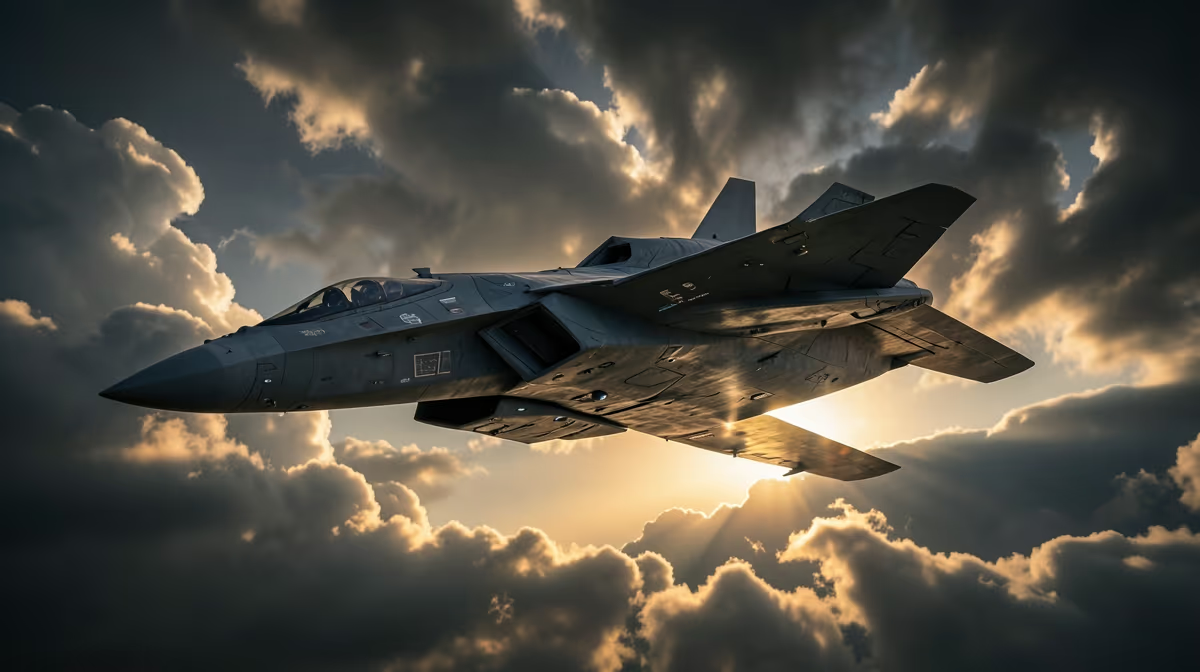
The skies above the mid-2030s will be patrolled by a new breed of aircraft that fundamentally alters the logic of aerial combat through integrated autonomy and advanced stealth. The Global Combat Air Programme is set to redefine modern aerial warfare as the UK leads development on a cutting-edge sixth-generation fighter jet, a project that is already transforming how nations approach the sovereignty of their skies.
The Strategic Genesis
The birth of the Global Combat Air Programme is not a sudden emergence, but rather a calculated pivot to sustain sovereign combat air industrial capabilities in a post-Brexit landscape. With the Eurofighter Typhoon fleet steadily approaching obsolescence, the United Kingdom faced a binary choice: surrender its status as a top-tier aerospace power or pioneer a new path that leapfrogs existing F-35 dependencies. The program officially solidified in December 2022, effectively merging the UK’s homegrown Tempest project—first unveiled at the 2018 Farnborough Airshow—with Japanese and Italian defense initiatives. This trilateral alliance is a strategic balancing act, designed to share the prohibitive costs of next-generation development while preventing a brain drain in the domestic aerospace sector.
Technological Integration and Capability
At its core, this aircraft is designed to be a flying command center, a system of systems that departs from the traditional concept of a solo fighter. By integrating artificial intelligence, the platform will be capable of controlling swarms of loyal wingman drones, allowing the pilot to coordinate complex combat missions in real-time. The aircraft will utilize high-speed data networking, directed-energy weapons, and an open-architecture sensor suite to operate in highly contested environments where current stealth capabilities would be insufficient. Industry giants including BAE Systems, Leonardo, Mitsubishi Electric, and Rolls-Royce are currently deep in the research and development phase, focusing on propulsion and sensor fusion that will define the next two decades of military aviation.
The Geopolitical Architecture
The alliance between the UK, Italy, and Japan is creating a unique fusion of European and Indo-Pacific security architectures. By combining their industrial resources, these nations are building a unified technological deterrent against peer-competitors. Beyond the defense hardware, this partnership is a calculated economic strategy. It protects thousands of high-skilled engineering jobs and secures long-term export dominance in competitive global markets. However, the project is not without friction. Underlying this collaboration is a subtle struggle for AI sovereignty and control over proprietary combat cloud architecture. Determining who controls the software that dictates mission outcomes is perhaps the most significant challenge in ensuring the UK remains a Tier-1 military power rather than a service-reliant platform operator.
The Path to 2035
The timeline for this project is remarkably tight, with the goal of fielding an operational fighter by 2035. Establishing the GCAP International Government Organisation (GIGO) in 2024 was a major milestone, yet the path ahead remains complex. Ongoing negotiations are currently centered on industrial workshare percentages and the integration of specific proprietary sensor technologies. Defense analysts from the Royal United Services Institute have highlighted that the primary challenge lies in balancing the high ambition of this sixth-generation technology with the strict delivery schedule, which leaves little margin for error in the development cycle.
Risk and Resilience
As the program moves forward, it will face intense scrutiny regarding fiscal alignment and export control policies. Success depends on the formalization of a memorandum of understanding on third-country exports, which is essential to ensure the long-term viability of the project. A best-case scenario involves the successful alignment of international industrial standards, leading to expedited prototype development. Conversely, the worst-case scenario involves bureaucratic delays and disagreements over intellectual property rights, which could cause significant timeline slippage and potentially erode political support. Within the next 72 hours, the defense community anticipates the release of parliamentary briefings and committee reports that will clarify current project milestones and fiscal commitments.
Frequently Asked Questions
What is the GCAP sixth-generation fighter jet program?
The Global Combat Air Programme is a trilateral initiative between the UK, Italy, and Japan to develop a next-generation stealth fighter jet that integrates artificial intelligence, unmanned wingmen, and laser weapon technology.
When will the GCAP fighter jet enter service?
The partner nations aim to have the aircraft enter service by 2035, an ambitious timeline given the complexity of the systems involved.
Which countries are involved in the GCAP project?
The project is a collaboration between the United Kingdom, Italy, and Japan, representing a significant merger of the UK’s Tempest program, Japan’s F-X program, and Italian defense initiatives.
What are the key features of the GCAP aircraft?
Key features include advanced stealth, a sophisticated digital cockpit, open-architecture sensor suites, and the ability to operate as an optionally-manned, autonomous platform alongside drone swarms.
What is the relationship between Tempest and GCAP?
Tempest was the initial UK-led concept for a sixth-generation fighter; it now serves as the foundational design and technological roadmap for the broader GCAP partnership.
Why is the UK developing the GCAP fighter jet?
The UK is developing the GCAP to maintain air superiority, ensure sovereignty over military technology, and sustain its domestic aerospace industrial base against evolving global threats.
Conclusion
The Global Combat Air Programme represents a critical juncture for the United Kingdom's defense strategy and its role in international security. By merging resources with Japan and Italy, the UK is attempting to secure long-term technological and economic influence in an increasingly volatile global landscape. While the path to 2035 is fraught with technical and bureaucratic challenges, the commitment of the partner nations remains firm. The coming years will be defined by the successful integration of complex industrial workshares and the translation of ambitious, sixth-generation concepts into a functioning, next-generation fleet.


.webp)
