
Indian Economy Inflation Spike Signals Unforeseen Market Hurdles
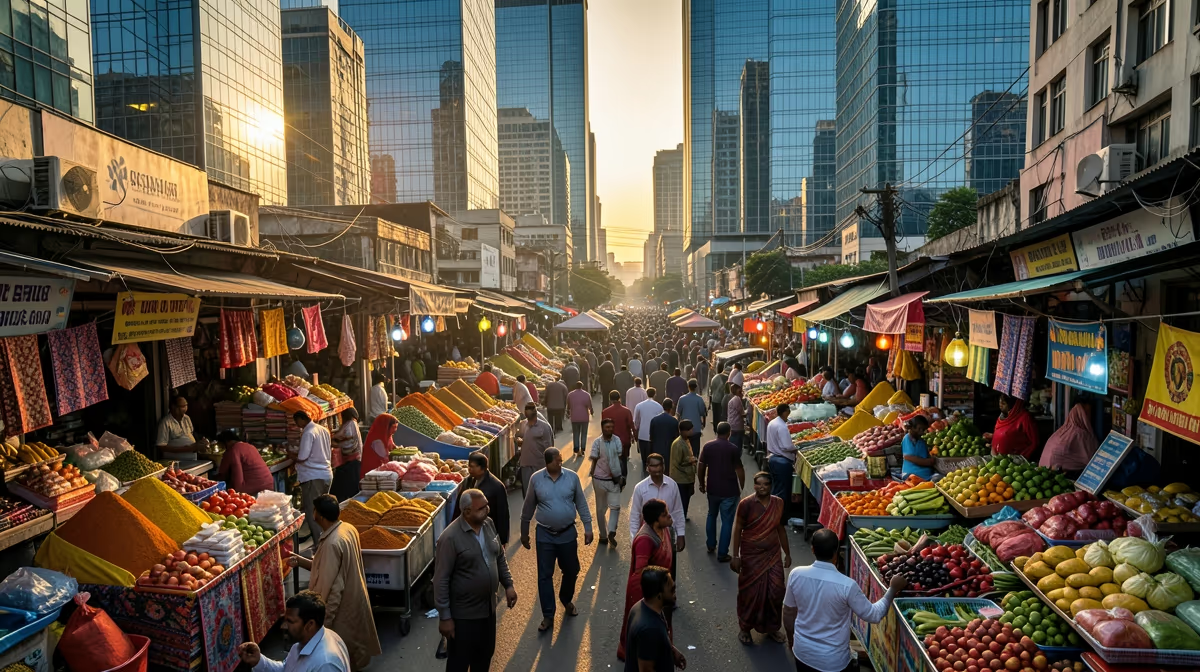
India's retail inflation, measured by the Consumer Price Index (CPI), surged to a 14-month high of 6.21 percent in October 2024, breaching the Reserve Bank of India's upper tolerance limit of 6 percent due to a sharp escalation in vegetable prices. This critical threshold breach serves as a stark reminder that the Indian economy remains highly sensitive to supply-side shocks even as it attempts to maintain its position as one of the fastest-growing major markets on the global stage.
The Mechanics of Recent Inflationary Pressure
The spike in inflation was primarily driven by the food basket, which witnessed a significant jump in costs for vegetables, onions, and edible oils. According to data released by the Ministry of Statistics and Programme Implementation, the food inflation rate climbed to 10.87 percent in October, up from 9.24 percent in September. This persistent pressure on food items has significantly eroded household purchasing power across the country. Core inflation, which excludes volatile food and fuel prices, also showed a marginal uptick, suggesting that inflationary pressures are beginning to broaden beyond seasonal factors. While manufacturing output has shown signs of recovery, the high inflation environment creates a challenging landscape for the Monetary Policy Committee as it attempts to balance economic growth with price stability. Economists at HDFC Bank noted that the sharp uptick in food inflation significantly complicates the central bank's path, effectively taking a rate cut in December off the table, while RBI Governor Shaktikanta Das has maintained that the bank remains unwaveringly committed to aligning inflation to the 4 percent target.
Structural Drivers and Economic Transitions
At its core, the current economic landscape reflects a structural transition from a consumption-led informal economy to a formal, digital-first capital-intensive model. This shift, while essential for long-term modernization, creates temporary growth volatility and K-shaped wealth distribution. Historically, the nation is mirroring the post-1991 liberalization phase, where initial fiscal imbalances were met with structural reforms that eventually integrated the country into the global trade apparatus. Today, the government leverages economic centralization and infrastructure nationalism to consolidate electoral support, positioning the concept of self-reliance as a tool for political hegemony. Despite these efforts, persistent labor market inefficiencies and low private capital expenditure compared to public spending continue to constrain the potential for sustained double-digit GDP expansion.
Global Integration and Geopolitical Balancing
India's multi-alignment strategy seeks to decouple its supply chains from China while positioning the nation as the primary alternative global manufacturing hub, carefully balancing Western capital with neutral energy sourcing from Russia. This geopolitical maneuver is designed to insulate the economy from global economic instability, which often manifests as volatility in Indian stock markets, currency fluctuations, and higher import costs. The recent surge in vegetable prices highlights how domestic factors interact with these global headwinds. As global markets react to changing international trade conditions, the Reserve Bank of India must navigate the delicate balance of managing currency volatility in the INR-USD pair while maintaining enough liquidity to support domestic manufacturing and infrastructure projects.
Short-Term Projections and Market Reactions
In the next 24 hours, markets will likely react to RBI liquidity management signals and updated CPI inflation projections, with currency volatility expected in the INR-USD pair. Looking ahead to the next 72 hours, the focus will shift to corporate earnings reports from the banking and manufacturing sectors, alongside domestic retail inflation data releases influencing short-term bond yields. Experts advise cautious optimism, noting that while the economy is poised for sustained growth, persistent food inflation pressures and global geopolitical headwinds affecting energy prices remain significant risks. The best-case scenario involves inflation cooling down within the RBI target band, prompting a potential rate cut cycle that boosts consumer demand and infrastructure investment. Conversely, the worst-case scenario involves an unexpected spike in crude oil prices coupled with currency depreciation, leading to stagflationary pressure that forces the central bank to maintain higher-for-longer interest rates.
Why the Economic Pulse Matters
For the average person, a growing economy typically translates into better job prospects, higher household incomes, and improved public services. When the economy performs well, it fosters a climate where small businesses can thrive, leading to a broader distribution of wealth and improved living standards. Everyone is affected by these trends, ranging from daily wage earners and middle-class households to large-scale corporate investors and entrepreneurs. The government has significantly increased capital expenditure on national infrastructure projects, and service sectors like IT and finance continue to be primary drivers of GDP, yet the rapid expansion of private credit and fintech lending masks a hidden systemic risk through household over-leverage among the aspirational middle class.
Frequently Asked Questions
What is the current state of the Indian economy?
The Indian economy is currently one of the fastest-growing major economies in the world, driven by strong domestic demand, infrastructure development, and a robust services sector. However, it continues to face challenges such as managing inflation, generating sufficient employment, and navigating global geopolitical uncertainties.
Which sectors contribute the most to India's GDP?
The services sector is the largest contributor to India's GDP, accounting for more than 50% of the total economic output. This is followed by the industrial and manufacturing sectors, while the agricultural sector continues to be a vital source of employment for a large portion of the population.
What are the main factors affecting the Indian economy?
Key factors influencing the Indian economy include global oil prices, foreign direct investment inflows, and domestic monetary policy set by the Reserve Bank of India. Additionally, government fiscal policies, weather patterns affecting agriculture, and global trade dynamics play a significant role in determining economic growth.
Is India's economy expected to grow in the coming years?
Most international financial institutions and economic experts project India to maintain a strong growth trajectory over the next few years. This optimism is based on continued government focus on capital expenditure, digitalization, and the country's strategic position in global supply chains.
What is the role of the RBI in the Indian economy?
The Reserve Bank of India (RBI) acts as the central bank and is responsible for maintaining price stability and ensuring the smooth functioning of the financial system. It manages inflation through monetary policy, regulates banking institutions, and supervises the country's foreign exchange reserves.
How does global economic instability affect India?
Global economic instability can lead to volatility in the Indian stock markets, currency fluctuations, and higher import costs, especially for commodities like crude oil. However, India's large domestic market and focus on self-reliance programs help provide a buffer against extreme global shocks.
Conclusion
The Indian economy currently sits at a precarious intersection of structural growth and immediate inflationary pressure. While the breach of the 6 percent CPI threshold creates a clear mandate for the central bank to maintain a cautious stance, the underlying expansion of the manufacturing and services sectors remains a pillar of resilience. The immediate path forward depends on the stabilization of food prices and the management of domestic liquidity in the face of shifting global market sentiments. As the Reserve Bank of India evaluates its policy stance for December, stakeholders across all sectors remain focused on whether supply-chain bottlenecks are transitory or symptomatic of deeper systemic hurdles. Realistic next steps involve monitoring the upcoming banking and manufacturing earnings reports as proxies for private sector health, alongside fiscal signals from the government regarding the trajectory of infrastructure-led growth.


.webp)

.webp)
