
Hudson Tunnel Project Faces Critical Hurdles That Threaten US Transit
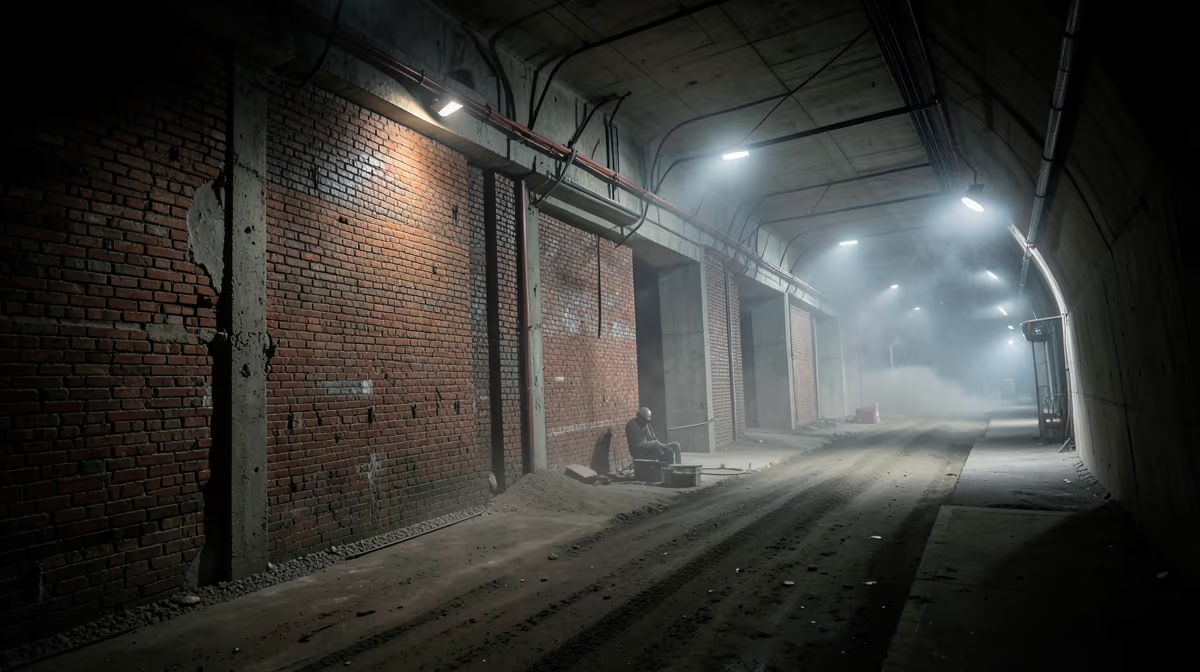
Deep beneath the surface of the Hudson River, a century-old masonry relic is struggling to support the heartbeat of the American economy. The Hudson Tunnel Project remains the most critical component of the Amtrak Gateway Program, aimed at modernizing the aging infrastructure of the Northeast Corridor to prevent a potential systemic collapse of regional transit.
Historical Context and Root Causes
The current North River Tunnel, which opened in 1910, was never designed to endure the environmental trauma it has faced over the last decade. The root cause of the current crisis lies in a combination of century-old subaqueous infrastructure and decades of institutional inertia. Following the devastation caused by Hurricane Sandy in 2012, the tunnel suffered from irreversible chemical damage due to saltwater intrusion. This event transformed a manageable maintenance cycle into an urgent national priority. The project itself is a successor to the failed Access to the Region's Core project from 2010, which was canceled due to a lack of consensus on design and funding. Today, the project has evolved into a robust federal-state partnership, driven by the realization that the existing infrastructure is a ticking time bomb of structural degradation.
The Mechanics of Modernization
The project is structured around two fundamental phases: the rehabilitation of the existing tunnels and the construction of a brand-new, two-track tunnel under the Hudson River. This design is not merely for expansion but for survival. Once completed, the new tunnel will provide the necessary redundancy to allow crews to perform deep-level repairs on the 110-year-old tubes without shutting down the entire corridor. This infrastructure modernization is managed by the Gateway Development Commission, serving as the central coordinator between Amtrak, the Federal Transit Administration, and regional transit agencies. With the project having received a Record of Decision from the Federal Railroad Administration, the legal and regulatory path is now cleared for full-scale construction.
Economic Stakes and Regional Impact
The Northeast Corridor is the busiest passenger rail line in the United States, and it serves as the vital artery for the nation's most productive financial and commercial hub. The tunnel handles over 450 trains per day, carrying commuters and business travelers who fuel billions in annual tax revenue. The economic angle is stark: if the current tunnels were forced to close for emergency repairs without a redundant backup, the result would be a total paralysis of regional transit. Such a failure would cause massive gridlock on highways and disrupt the commutes of hundreds of thousands of people, leading to a catastrophic economic ripple effect across the U.S. GDP. Secretary of Transportation Pete Buttigieg has framed this initiative as the most important infrastructure project in the country, underscoring its role in maintaining economic connectivity.
Political and Geopolitical Significance
The Hudson Tunnel Project has often been caught in a high-stakes tug-of-war between the Democratic-led Northeast corridor and successive federal administrations. For years, this essential transit link was turned into a bargaining chip for regional political leverage and infrastructure funding reform. From a geopolitical standpoint, the struggle to modernize this segment reflects a broader concern regarding the decline of American internal infrastructure investment relative to international peers. By failing to maintain such a critical asset, the United States risks undermining its narrative of technological prowess and domestic modernization on the global arena. The current securing of federal funding represents a shift in political strategy, moving from stagnation to a solidified commitment to long-term construction.
Construction Outlook and Technical Timeline
Pre-construction preparations are currently holding steady. Over the next 24 hours, routine environmental monitoring and geotechnical drilling activities will continue at both the New Jersey and New York staging sites. As the project enters the next 72 hours, focus will shift toward intense inter-agency coordination between the Gateway Development Commission and federal partners to finalize remaining procurement milestones and labor agreement details. Expert predictions suggest the project will maintain its current pace of site preparation throughout the quarter. Major construction tenders are expected to move toward the awarding phase by year-end, provided that the flow of federal funding remains sustained.
Risk Assessment and Future Projections
The future impact of this initiative is defined by the tension between the best-case and worst-case scenarios. In the best-case outcome, the project experiences a seamless progression of contract awards, leading to the early commencement of full-scale tunnel boring operations without significant legal or budget bottlenecks. Conversely, the worst-case scenario involves unexpected litigation or bureaucratic delays in federal grant disbursements, which could stall phase-one procurement and push back the operational timeline by several years. Despite these risks, the current trajectory is one of progress, with major federal grants already committed to the construction phase.
Frequently Asked Questions
What is the Hudson Tunnel Project?
The Hudson Tunnel Project is a major infrastructure initiative designed to rehabilitate the existing North River Tunnel and construct a new two-track tunnel under the Hudson River. It aims to modernize critical rail infrastructure between New Jersey and New York City to ensure reliable transit for hundreds of thousands of daily commuters.
When will the Hudson Tunnel Project be completed?
Construction on the Hudson Tunnel Project is currently underway, with major tunneling work beginning in 2024. Officials currently estimate that the new tunnel will be completed and fully operational by approximately 2035.
How much will the Hudson Tunnel Project cost?
The total cost of the Hudson Tunnel Project is estimated at roughly 16 billion dollars. Funding is being provided through a combination of federal grants, local contributions from New York and New Jersey, and other transportation-related revenue sources.
Why is the Hudson Tunnel Project necessary?
The existing tunnel, built over 110 years ago, was severely damaged by Superstorm Sandy in 2012, leading to ongoing service reliability issues. Building a new tunnel is essential to prevent a potential total failure of the corridor, which serves as a vital economic lifeline for the Northeast region.
Who is building the Hudson Tunnel Project?
The project is being managed by the Gateway Development Commission, a partnership between Amtrak, the State of New York, and the State of New Jersey. Various private engineering and construction firms have been contracted to handle the tunneling, track work, and station infrastructure upgrades.
How will the Hudson Tunnel Project affect commuters?
Once completed, the project will provide increased capacity, improved service reliability, and fewer delays for NJ Transit and Amtrak passengers traveling into New York Penn Station. During the construction phase, commuters may experience periodic service adjustments, though the project is designed to minimize disruptions to ongoing rail operations.
Conclusion
The Hudson Tunnel Project has officially entered its primary construction phase, marking the end of years of administrative and financial uncertainty. With federal funding commitments solidified and preliminary site work underway, the Gateway Development Commission is now navigating the critical transition into heavy construction. While the project faces long-term challenges related to procurement, inflation, and the complexities of working within an aging transit corridor, the roadmap for the next decade is clear. Moving forward, the focus remains on the awarding of major construction tenders and the continuous, safe execution of tunneling beneath the Hudson River to ensure the long-term reliability of the Northeast Corridor.


.webp)

.webp)
