
Judge Sullivan USPS Ballot Ruling Uncovers Critical Election Gaps
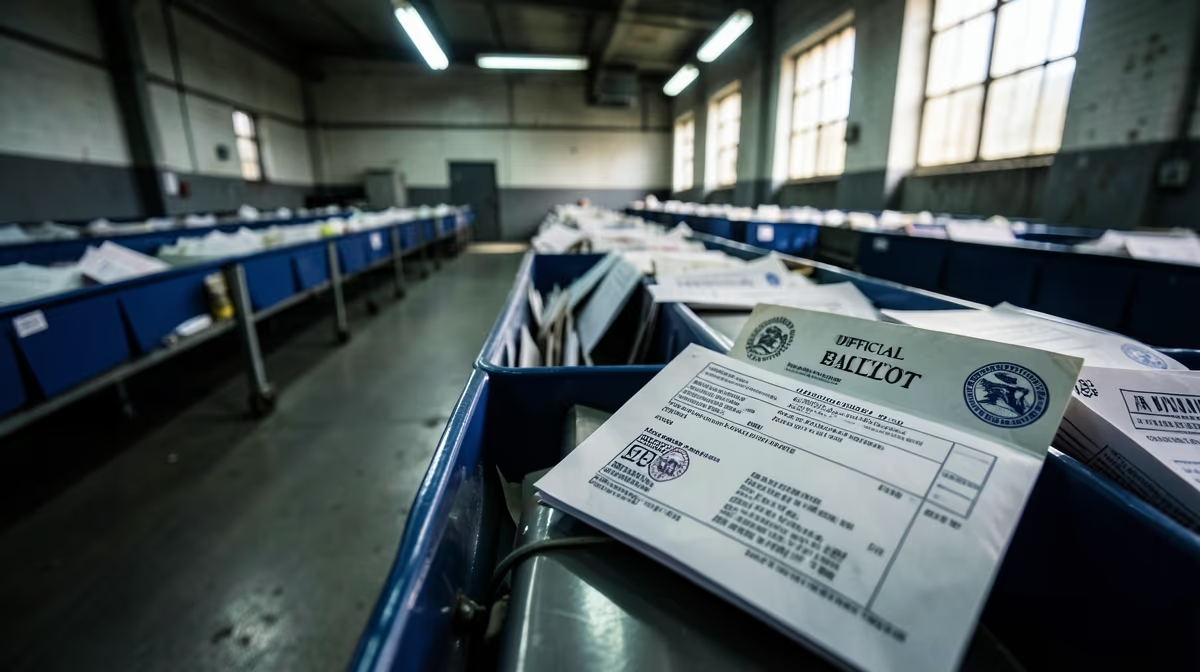
The delicate machinery of American democracy relies on the silent, steady movement of paper through the national mail system, yet that process faced an unprecedented test during the 2020 election cycle. Following the latest legal developments, the Judge Sullivan USPS ballot ruling has sparked significant national attention regarding election integrity and postal delivery protocols, highlighting the inherent friction between administrative efficiency and the constitutional right to vote.
A Landscape of Judicial Intervention
In the lead-up to the 2020 general election, U.S. District Judge Emmet G. Sullivan issued a series of emergency orders that reshaped how the United States Postal Service handled millions of ballots. This intervention was not a spontaneous action but a calculated response to lawsuits filed by various civil rights organizations and states. These plaintiffs alleged that sweeping service changes, implemented under then-Postmaster General Louis DeJoy, were creating systemic bottlenecks that threatened to disenfranchise voters relying on mail-in ballots during a global pandemic.
Judge Sullivan’s directives were clear and urgent. He mandated that the USPS treat all election mail as First-Class or Priority Mail Express, ensuring that ballots were prioritized over standard commercial mail. Furthermore, the court required the agency to conduct daily sweeps of processing facilities to identify and expedite any lingering ballots that might otherwise be delayed in the complex distribution network. Throughout the litigation, the judge maintained a stern posture, famously telling government attorneys that the Postmaster General is not above the law, thereby framing the postal service’s operational duties as a constitutional obligation to the electorate.
The Mechanics of Compliance and Oversight
The practical impact of these rulings moved beyond mere courtroom rhetoric into the daily operations of postal facilities nationwide. To maintain compliance, the USPS was required to report daily progress to the court, providing a rare glimpse into the logistical challenges of managing a national election during a period of high political scrutiny. These reports served as a vital oversight mechanism, forcing the agency to dedicate additional human and mechanical resources to clear backlogs that had formed as a result of equipment decommissioning and policy shifts earlier that year.
For voters, the ruling meant that their ballots—even those deposited in the final days of the election window—received an elevated status within the system. For election officials, the judicial oversight provided a measure of confidence that the postal infrastructure would not collapse under the strain of record-high mail-in volume. This period of intense supervision ensured that operational changes did not impede the handling of ballots, effectively bridging the gap between internal bureaucratic mandates and the external necessity of a functioning democratic process.
Root Causes and Institutional Tension
At the heart of the litigation lay a fundamental tension between federal administrative authority and state-level election sovereignty. The root cause of this conflict was the collision of cost-cutting measures within the USPS—an agency historically tasked with providing public service—and the logistical demands of a decentralized, high-volume voting system. This struggle pitted career civil servants, who prioritized traditional mail delivery workflows, against political appointees who viewed the agency through the lens of economic sustainability and fiscal discipline.
This dynamic created an environment where the judiciary felt compelled to step into the administrative arena. Historically, scholars have drawn parallels between this intervention and the landmark case of Bush v. Gore, which likewise saw the courts grappling with the mechanics of vote counting and the administrative handling of ballots. By positioning itself as a guarantor of the democratic process, the federal court effectively transformed the USPS into a central player in the political arena, illustrating the vulnerability of logistical institutions when they become entangled in the broader battle over election security.
The Future of Postal Election Security
Looking ahead, the long-term structural integrity of the USPS in maintaining election security remains a subject of ongoing analysis among policy experts. While the specific injunctions issued by Judge Sullivan were temporary measures tailored to the 2020 cycle, the procedural transparency forced by the court has left an indelible mark on how federal agencies approach election-related operations. Future election cycles may see similar calls for increased resource allocation and expedited transit times as standard operating procedures rather than court-ordered exceptions.
The potential for future friction persists, particularly as political stakeholders continue to debate the role of the judiciary in managing independent federal agencies. Predictive modeling suggests that if operational bottlenecks were to return in subsequent national elections, the courts would likely be the first line of defense for advocacy groups seeking to protect voter turnout. The best-case scenario envisions an agency that has fully internalized these lessons, achieving operational compliance without the need for court intervention, whereas the worst-case involves persistent delays and subsequent waves of litigation that could challenge the legitimacy of state election outcomes.
A Global Perspective on Democratic Resilience
While the battle played out in U.S. District Court, the implications of these rulings resonated globally. The United States frequently promotes itself as a standard-bearer for democratic resilience, yet the perception of domestic instability—especially regarding the basic logistics of ballot counting—can undermine this image. When logistical issues become political issues, it weakens the institutional narrative that the U.S. relies upon for its international democratic promotion efforts. The ability of the court to enforce delivery protocols was, in many ways, an exercise in proving that American institutions possess the internal checks and balances necessary to overcome systemic shocks.
Frequently Asked Questions
What was Judge Emmet Sullivan's ruling regarding USPS ballots?
Judge Emmet Sullivan issued orders during the 2020 election period requiring the United States Postal Service to implement extraordinary measures to ensure the timely delivery of mail-in ballots. This included mandates for daily sweeps of processing facilities to identify and expedite any remaining election mail.
Why did Judge Sullivan intervene in USPS ballot operations?
The intervention was prompted by concerns regarding significant mail processing delays and service reductions that could jeopardize the counting of absentee ballots. The court sought to ensure that all validly cast ballots reached election officials by the state-mandated deadlines.
Did Judge Sullivan order USPS to perform ballot sweeps?
Yes, Judge Sullivan mandated that USPS conduct twice-daily sweeps at processing plants in specific geographic areas to locate delayed ballots. These sweeps were intended to clear backlogs and prioritize election mail for immediate dispatch and delivery.
What impact did Judge Sullivan's USPS ruling have on the election?
The ruling created intense oversight of USPS operations during the final days of the 2020 election, leading to increased transparency and reporting requirements for post offices. It forced the agency to dedicate additional resources to ensure election materials were prioritized despite ongoing logistical challenges.
What was the controversy surrounding Judge Sullivan and the USPS?
The controversy centered on the tension between judicial oversight of a federal agency and the USPS's operational autonomy. Disputes arose over whether the postal service was complying strictly with the court's deadlines and sweep protocols during a period of high political scrutiny.
Is Judge Sullivan's USPS ballot ruling still in effect?
No, the specific orders issued by Judge Sullivan were temporary measures tailored to the 2020 general election cycle. These mandates concluded once the election certification process was completed and the immediate threat to mail-in ballot delivery had passed.
Conclusion
The legal interventions spearheaded by Judge Emmet G. Sullivan in 2020 underscored the vital, often overlooked, role of postal infrastructure in the American democratic process. By mandating extraordinary measures and rigorous oversight, the court succeeded in prioritizing the delivery of mail-in ballots during a period of extreme logistical stress. While these specific injunctions were temporary, the events established a clear precedent for the level of transparency and accountability expected of the United States Postal Service in future election cycles. As the national discourse around election integrity continues to evolve, the lessons learned from this judicial action remain central to ensuring that administrative and logistical challenges do not impede the fundamental right of every citizen to participate in the democratic process.


.webp)

.webp)
