
KH-59 Missile Tactics Are Forcing a Shift in Modern Defense Strategy
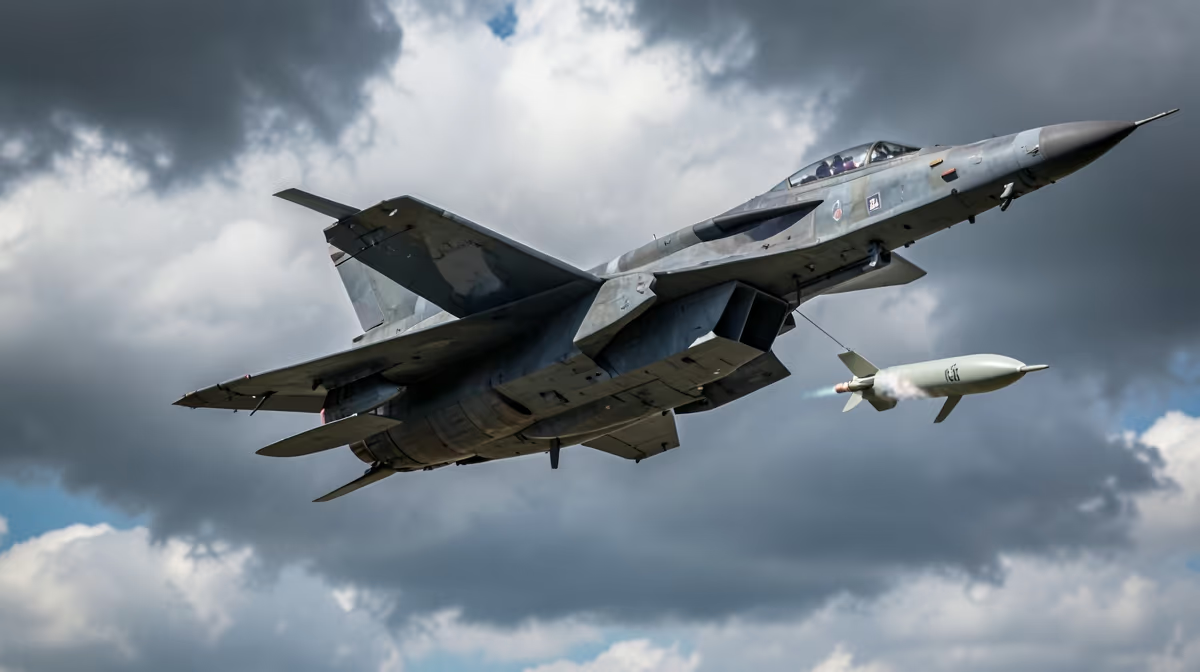
Beyond the frontlines of the ongoing conflict in Ukraine, the precision-guided KH-59 missile system has emerged as a cornerstone of tactical aerial operations, reshaping how regional powers approach standoff engagement. As reports regarding the latest KH-59 missile strike in Ukraine continue to surface, defense analysts are increasingly focused on how this weapon facilitates high-value targeting while minimizing the exposure of manned strike aircraft to dense air defense networks.
Evolution of the AS-13 Kingbolt
The KH-59 Ovod, designated by NATO as the AS-13 Kingbolt, traces its origins back to the late 1970s, representing a concerted Soviet-era effort to transcend the limitations of conventional gravity bombs. Over the decades, the system has undergone significant iterative refinements, evolving from early television-command guidance links to sophisticated electro-optical and satellite-aided navigation suites. Developed by the Raduga design bureau, the weapon functions as a medium-range, guided missile designed for high-accuracy engagement of ground and surface targets. Its operational reliance on a two-stage solid-fuel rocket motor allows it to maintain maneuverability during flight, a critical feature for evading interceptor systems. Today, it remains a vital tactical asset for the Russian Aerospace Forces, compatible with frontline combat aircraft such as the Su-24M, Su-30, Su-34, and Su-35, effectively serving as a primary standoff capability in high-intensity hybrid warfare.
Technical Precision and Tactical Utility
At its core, the missile functions as a precision-guided air-to-surface munition, engineered to engage command centers, logistics hubs, and energy infrastructure from significant distances. Unlike gravity-dropped munitions that require pilots to fly directly over fortified sectors, the KH-59 enables a standoff engagement, keeping launching platforms safely removed from the effective reach of many short-range air defense units. The missile incorporates an advanced guidance architecture, with modern variants like the KH-59MK2 featuring low-observable airframe characteristics and enhanced warheads. These iterations utilize GLONASS satellite navigation, allowing for a fire-and-forget capability that significantly reduces the complexity of terminal guidance compared to the legacy television-command versions. This technological leap allows the weapon to perform surgical strikes on identified tactical targets, making it a persistent challenge for regional air defense networks to track and neutralize.
Operational Dynamics in Ukraine
Current conflict data indicates that the system is frequently deployed to target critical infrastructure and logistics nodes throughout the Eastern Ukraine frontline. The impact of these strikes is multi-faceted; by utilizing low-altitude flight profiles and inherent maneuverability, the missiles often force Ukrainian air defense forces to expend high-value interceptor resources. Recent observations confirm that Russian forces are integrating these missiles into larger Su-34 and Su-35 sorties, specifically aimed at disabling energy distribution nodes and disrupting supply chains. While Ukrainian air defenses have documented successful interceptions using a combination of legacy Soviet and Western-supplied systems, the frequency of deployment highlights the Russian military’s strategy to overwhelm defensive batteries through a mix of standoff precision and persistent pressure.
Strategic and Economic Drivers
The continued reliance on this missile system is rooted in a fundamental need for indigenous military-industrial autonomy. By leaning into the domestic production of these guided munitions, the Russian defense sector has been able to reduce its reliance on imported cruise missile systems, thereby mitigating the impact of global supply chain restrictions and foreign currency expenditure. Furthermore, the integration of commercial drone-derived avionics into legacy missile airframes has allowed for a faster, more scalable production cycle. Beyond the logistical benefits, the system serves as a geopolitical signal; the ability to sustain tactical aviation range forces neighboring states to invest heavily in multi-layered, costly interception assets, effectively altering the regional security architecture and expanding the tactical reach of the Russian Aerospace Forces.
Predictive Trends and Defense Assessments
Military intelligence estimates suggest a continued increase in the deployment of these guided missiles against frontline infrastructure over the coming 72 hours. The expert consensus indicates that the KH-59 will remain a primary weapon for precision strikes, as it forces Ukrainian forces to constantly relocate high-value air defense assets to maintain coverage. The strategic outlook remains precarious: in a worst-case scenario, successful strikes on critical civilian infrastructure could lead to cascading power failures, further complicating the mobility and logistics of defense forces in contested sectors. Conversely, the best-case assessment for the defense rests on the effectiveness of electronic warfare; if Ukrainian counter-measures successfully jam the missile guidance suites, the munitions risk becoming ineffective, potentially forcing a significant shift in Russian tactical planning and air campaign objectives.
The Future of Standoff Warfare
As the conflict continues to evolve, the development of electronic counter-countermeasures remains a focal point for both Russian developers and Ukrainian defenders. The ongoing refinement of the KH-59 guidance suite is a direct response to the iterative improvements in electronic warfare and air defense interception technologies observed on the battlefield. Analysts are closely monitoring how these modifications impact the survivability of standoff platforms. The legacy of the KH-59—spanning from Soviet modernization efforts to current high-intensity hybrid engagement—underscores a broader shift toward smaller, precision-guided tactical weapons. For foreign policy observers and defense contractors, the current usage of these missiles serves as a definitive case study in how standoff capability can dictate the pace and focus of modern regional warfare.
Frequently Asked Questions
What is the KH-59 missile?
The KH-59, known by the NATO reporting name AS-13 Kingbolt, is a Russian-made television-guided land-attack cruise missile. It was primarily designed for use against high-value ground targets and naval assets, featuring a solid-fuel rocket motor for propulsion.
What is the operational range of the KH-59?
The operational range varies depending on the variant. Initial models typically had a range of 40 to 115 kilometers, while upgraded versions, such as the KH-59M or KH-59MK, can reach targets at distances of up to 285 kilometers.
How does the KH-59 guide itself to a target?
The original version uses a television command guidance system requiring a data link pod on the launching aircraft. Newer variants use active radar homing or inertial navigation combined with satellite guidance to improve accuracy and allow for fire-and-forget capabilities.
Which aircraft can carry the KH-59?
Common platforms include the Su-24M, Su-30, Su-34, and Su-35, which utilize specialized external hardpoints and compatible avionics integration to manage the flight path.
What kind of warhead does the KH-59 carry?
It is typically equipped with a conventional high-explosive penetrating warhead weighing around 320 kilograms, intended to neutralize fortified structures, command centers, and large surface vessels.
Is the KH-59 still in active service?
Yes, the KH-59 and its modernized derivatives remain in active service and are frequently deployed as a primary standoff weapon in modern combat operations.
Conclusion
The KH-59 remains a pivotal element of the ongoing conflict, serving as a versatile tactical asset that provides precision standoff capabilities for the Russian Aerospace Forces. While Ukrainian air defenses continue to adapt, the frequent deployment of this missile system remains a significant challenge to the protection of critical military and civilian infrastructure. The shift toward modernized variants and the integration of advanced navigation reflect a broader trend in standoff weaponry, where surgical strike capability is prioritized to maintain tactical advantages. Future developments will likely hinge on the competition between missile guidance refinements and the efficacy of electronic counter-measures. Intelligence, defense analysts, and policy observers continue to monitor these developments as they play a direct role in shaping the evolving battlefield landscape.


.webp)


.webp)
