
Oil Prices Face Major Volatility Amid Evolving Middle East Tensions
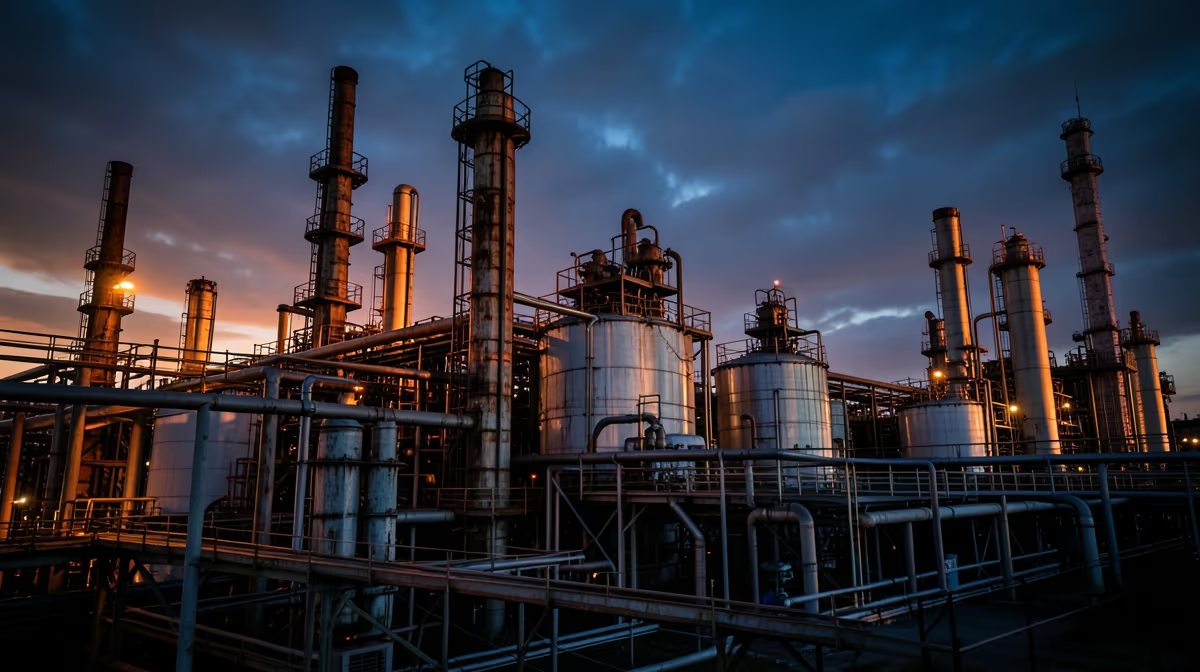
Global oil prices are reacting sharply to shifting geopolitical landscapes, with traders closely monitoring the latest Iran news and its potential impact on supply routes. As markets weigh the implications of potential ceasefire negotiations against the backdrop of persistent supply concerns, West Texas Intermediate (WTI) crude futures are navigating a period of heightened sensitivity.
The Current Market Landscape
U.S. oil prices edged higher in early trading on Wednesday, stabilizing near 72 dollars per barrel as traders balanced ongoing supply concerns in the Middle East against unexpected builds in domestic crude inventories. WTI crude futures saw modest gains as markets weighed reports of intensifying geopolitical tensions. The market remains sensitive to potential supply disruptions, yet price upside has been capped by data from the Energy Information Administration showing an increase in commercial storage levels. Domestic production continues to hover near record highs, acting as a structural buffer against global price spikes. Analysts note that while output remains robust, the combination of cautious Federal Reserve interest rate policy and economic uncertainty in China continues to dictate the broader trading range for energy commodities. Market participants are now turning their attention to upcoming OPEC+ policy meetings, which are expected to signal whether current production cuts will be extended into the next quarter. Sustained high interest rates in the United States remain a primary concern for energy demand forecasts, potentially limiting significant rallies in the near term.
Geopolitical Pressures and Economic Realities
Oil prices are currently shifting due to a mix of global supply changes and fluctuating demand. When major oil-producing countries decide to limit how much they pump, there is less supply available to meet the world needs, which typically pushes prices higher. At the same time, when the global economy grows or slows down, the appetite for oil changes, creating a constant tug-of-war that dictates what you pay at the gas pump. In the U.S., these international price shifts are felt quickly because oil is a globally traded commodity. Even if the U.S. produces a lot of its own energy, local prices remain tied to the world price. As a result, when geopolitical tensions or production cuts occur abroad, American consumers often see the ripple effects reflected in the cost of fuel for their cars and the energy used to heat their homes. The root cause of this complexity lies in the structural transition from a purely supply-driven market to one constrained by capital discipline, ESG mandates, and the long-term energy transition strategy.
Analyst Perspective on Price Drivers
The current market environment is characterized by a decoupling of U.S. shale production growth from price increases as public oil companies prioritize shareholder dividends and debt reduction over aggressive exploration. This shift is compounded by the tension between the current administration push for decarbonization and the political necessity of maintaining low pump prices to mitigate inflation and maintain voter support. Energy analyst Phil Flynn noted that the tug-of-war between geopolitical risk premiums and the reality of rising U.S. stockpiles is creating a volatile environment where traders are hesitant to commit to a singular direction. Furthermore, there is a distinct role of high-frequency algorithmic trading and massive speculative capital flows in decoupling short-term oil futures from physical market fundamentals, a phenomenon that has evolved significantly since the 1970s energy crisis and the 2020 pandemic crash.
A Shifting Geopolitical Hierarchy
The geopolitical angle involves the U.S. loss of price-setting dominance as OPEC+ utilizes spare capacity and production cuts to exert counter-leverage against Western sanctions and fiscal policies. Historically, this mirrors the 1973 oil crisis period where domestic production peaking coincided with a global energy shift. Today, the situation is defined by a new equilibrium of disciplined U.S. output and proactive OPEC+ supply management. It is confirmed that EIA inventory data shows a rise in supply and current price levels on the NYMEX. Meanwhile, developing news includes ongoing geopolitical developments in the Middle East and upcoming consensus announcements from OPEC+ member nations regarding production quotas.
Looking Toward Future Volatility
In the next 24 hours, market observers anticipate modest volatility driven by inventory data releases and anticipation of Federal Reserve interest rate signals. Moving into the next 72 hours, the market is expected to enter a consolidation phase as investors digest geopolitical risk premiums versus soft demand signals from U.S. manufacturing data. Expert predictions suggest prices are expected to trade within a tight range, capped by persistent oversupply fears and supported by seasonal demand expectations. A best-case scenario involves prices stabilizing as inflation cools, leading to a steady increase in economic growth and moderate energy consumption. Conversely, a worst-case scenario warns that unexpected supply chain disruptions or escalating Middle East conflicts could trigger a sudden price spike, fueling inflationary pressures across the globe.
Why This Matters for the Average Consumer
When oil prices rise, it often acts as a tax on the average consumer because it increases the cost of gasoline, heating, and even the transportation of groceries and goods. This can lead to broader inflation, as businesses pass these higher shipping and production costs down to shoppers, effectively reducing the purchasing power of American households. Those most affected include drivers, commuters, families heating their homes, manufacturing industries, and logistics companies. Because the U.S. is one of the world largest oil producers but still participates in the global market pricing system, domestic prices remain inextricably linked to the international supply and demand balance.
Frequently Asked Questions
Why are oil prices going up today?
Oil prices often rise due to geopolitical tensions, supply cuts by major producers like OPEC+, or unexpected disruptions in global infrastructure. Additionally, increased demand during peak travel seasons or economic recovery can drive prices higher as consumption outpaces current supply.
How do oil prices affect gas prices in the US?
Crude oil is the primary raw material used to produce gasoline, accounting for a significant portion of the price at the pump. When global oil prices increase, refiners pass those costs to consumers, leading to higher retail gas prices across the country.
What factors influence the price of oil?
The price of oil is primarily dictated by the global balance of supply and demand. Other critical factors include geopolitical stability in oil-producing regions, currency fluctuations, the strength of the US dollar, and government inventory reports.
Are oil prices expected to drop soon?
Future oil price trends are difficult to predict and depend on factors like global economic growth, shifts in energy policy, and production levels set by oil-producing nations. Analysts typically monitor supply chain developments and central bank interest rate decisions to forecast short-term price movements.
Who sets the price of oil?
Oil prices are not set by a single entity but are determined by global trading on commodities exchanges like the NYMEX and ICE. Traders and investors base prices on real-time market news, supply reports, and speculative forecasts regarding future energy availability.
Why does the US import oil if it produces so much?
The US imports oil because of the specific chemical composition of different crude types and the logistical layout of its refineries. Many domestic refineries are optimized to process heavy, sour crude oils, whereas a large portion of US production consists of light, sweet crude, making it more efficient to trade oil globally.
Conclusion
Current market data confirms that WTI crude is trading near 72 dollars per barrel, supported by record-high domestic production while simultaneously constrained by rising commercial stockpiles. The interplay between geopolitical risk, specifically concerning Iran and the Middle East, and the macroeconomic realities of U.S. interest rates continues to define the energy sector outlook. Moving forward, stakeholders should monitor the upcoming OPEC+ policy meetings and Federal Reserve signals, as these factors will dictate whether the market maintains its current consolidation phase or shifts toward increased volatility. Realistic expectations for the near term remain focused on a tight trading range as the industry balances supply management against global economic demand indicators.


.webp)

.webp)
