
Oil Prices Surge as Geopolitical Tensions Threaten Global Markets
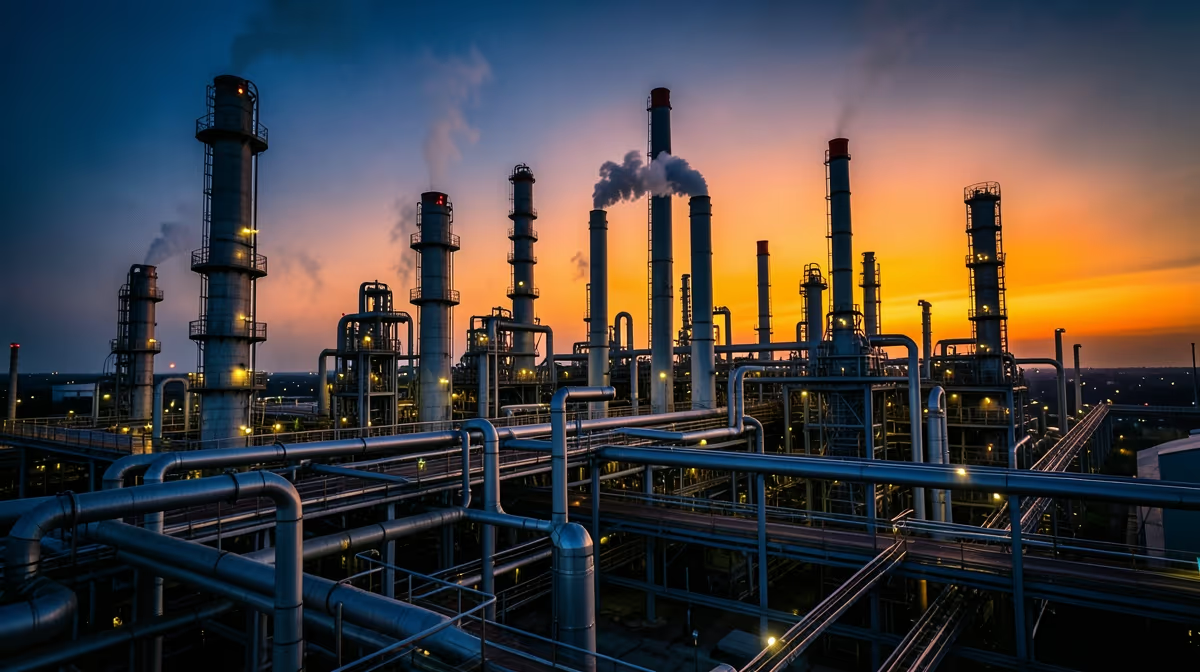
The delicate equilibrium of global energy markets is currently facing a stern test as geopolitical instability intersects with volatile commodity trading. Global oil prices are reacting sharply to recent developments as the US Iran conflict intensifies, fueling concerns over market stability that ripple far beyond the trading floor.
Understanding the Current Market Volatility
At the heart of the current situation, oil prices in the U.S. are shifting due to a complex mix of global supply adjustments and fluctuating consumer demand. When these costs change, it is typically the result of decisions made by major oil-producing countries or unexpected events, such as the current US Iran conflict, which threaten the reliable flow of energy across international borders. As the cost of crude oil—the raw material used to manufacture gasoline and heating oil—moves, these changes eventually propagate through the global supply chain, impacting everything from the cost of logistics to the price of household goods. This environment of uncertainty creates significant challenges for investors, energy industry executives, and macroeconomic policy observers who must navigate a market that remains sensitive to any sign of supply-side disruption.
The Mechanics of Crude Pricing
The global energy market functions on a interconnected web where U.S. prices are inextricably linked to international supply and demand. Organizations such as OPEC+ play a central role, frequently adjusting production quotas to influence global price levels. While the United States has successfully transitioned into one of the world's largest oil producers over the last decade, it continues to engage in the import and export of crude to balance regional refinery needs. Consequently, traders monitor geopolitical energy risk closely, as manufacturing data from major consumers like China and domestic inventory reports from the U.S. Energy Information Administration can trigger immediate shifts in trading sentiment. Historically, this market has proven prone to extreme volatility, evolving from the energy crises of the 1970s to the pandemic-induced demand collapse of 2020.
Economic and Geopolitical Factors
The current rise in prices reflects a structural transition within the energy sector, moving away from a policy of pure energy independence toward a complex, carbon-constrained framework that attempts to balance domestic output with net-zero mandates. Analytically, the situation is compounded by a political balancing act: the administration must manage inflationary pressure at the pump while navigating environmental priorities ahead of electoral cycles. Furthermore, the decoupling of U.S. crude production costs from global benchmarks, driven by institutional capital discipline among exploration and production companies, has created a unique domestic reality. Geopolitically, the erosion of the petrodollar hegemony remains a concern as the U.S. navigates the strategic vulnerability of reliance on international shipping lanes, all while facing a persistent underinvestment in midstream refinery infrastructure that creates bottlenecks, keeping retail prices high even when crude inventory remains stable.
Market Perspectives and Analyst Forecasts
Current trading data shows West Texas Intermediate futures hovering near the 71 dollar per barrel range as investors digest recent economic signals. Market experts observe that traders are currently paralyzed by the tension between macroeconomic headwinds and the constant threat of a supply disruption in the Middle East. While domestic crude production remains near record levels of approximately 13 million barrels per day, the broader equity market volatility is influencing speculative interest, leading to cautious trading patterns. Looking ahead, the next 24 hours will likely see continued volatility as the market reacts to immediate geopolitical tensions and updated inventory data. In the 72-hour window, prices are expected to stabilize as traders interpret Federal Reserve interest rate signals alongside potential updates regarding U.S. crude production output.
Potential Scenarios and Impact
The impact of these market movements is profound, affecting commuters, trucking companies, and manufacturers who rely on steady shipping costs. If geopolitical risk premiums remain elevated, analysts anticipate a moderate upward bias in prices, though this may be capped by demand concerns in China. A best-case scenario involves supply chain stabilization, which would lead to lower fuel costs and potentially contribute to a cooler headline inflation reading for the U.S. economy. Conversely, the worst-case scenario entails significant supply disruptions that could cause a sharp spike in crude prices. Such an event would exacerbate inflation and potentially force the Federal Reserve to adopt more aggressive monetary tightening, which would have long-term consequences for consumer purchasing power and the broader economic recovery.
The Human Cost of Energy Fluctuations
Beyond the analytical charts and futures contracts, these shifts represent a tangible change in the cost of living. Because fuel is a primary expense for global transportation and logistics, rising oil prices increase the cost to ship groceries, raw materials, and finished goods. These costs are frequently passed on to the consumer at the checkout counter, impacting household utility budgets and discretionary spending. When energy prices remain unstable, it complicates the financial planning for households and businesses alike, as the cost of transit becomes an unpredictable variable in the monthly budget. This underscores why transparency and accurate reporting on geopolitical energy risk are essential for stakeholders who must navigate the current economic landscape.
Frequently Asked Questions
Why are oil prices going up today?
Oil prices often rise due to geopolitical tensions, supply cuts from OPEC+, or increased demand from economic growth. Market speculators also react to news regarding international conflicts that could disrupt global supply chains.
What factors influence gas prices in the US?
Gas prices are primarily driven by the global cost of crude oil, which accounts for more than half of the retail price at the pump. Other contributing factors include regional refining capacity, federal and state taxes, and seasonal changes in fuel demand.
How do oil prices affect the US economy?
Fluctuations in oil prices significantly impact the economy by influencing inflation rates and consumer purchasing power. Higher energy costs increase transportation and production expenses for businesses, which are frequently passed on to consumers in the form of higher prices for goods and services.
Are oil prices expected to drop in the near future?
Predicting the future direction of oil prices is challenging due to the volatility of global markets and unexpected geopolitical events. Analysts generally look at current inventory levels and OPEC production policies to forecast price trends, but sudden shifts in global stability can quickly change these projections.
Who determines the price of oil?
Oil prices are determined by global supply and demand dynamics rather than a single entity. Major oil-producing nations, through organizations like OPEC+, influence global supply, while market participants on commodities exchanges set the actual price through futures contracts.
Why is the price of crude oil different from the price at the pump?
The price of crude oil is a global commodity, whereas the price at the pump includes additional costs such as refining, distribution, and marketing. Furthermore, state and federal taxes add a fixed cost to every gallon, causing retail prices to be higher than the raw commodity price.
Conclusion
The global oil market remains in a state of flux as it contends with the intersection of US-Iran geopolitical tensions and fluctuating demand signals. While domestic production levels near 13 million barrels per day provide a measure of support, the threat of supply-side disruptions continues to keep traders on the defensive. Looking ahead, market participants will be closely monitoring EIA inventory reports and potential shifts in Middle Eastern stability to gauge the next movement in crude futures. As the global economy continues to balance these complex energy variables, the primary focus remains on whether supply chain stability can be maintained to avoid further inflationary pressure on the broader US and global markets.


.webp)

.webp)
