
Oil Tanker Explosion in Strait of Hormuz Threatens Global Markets
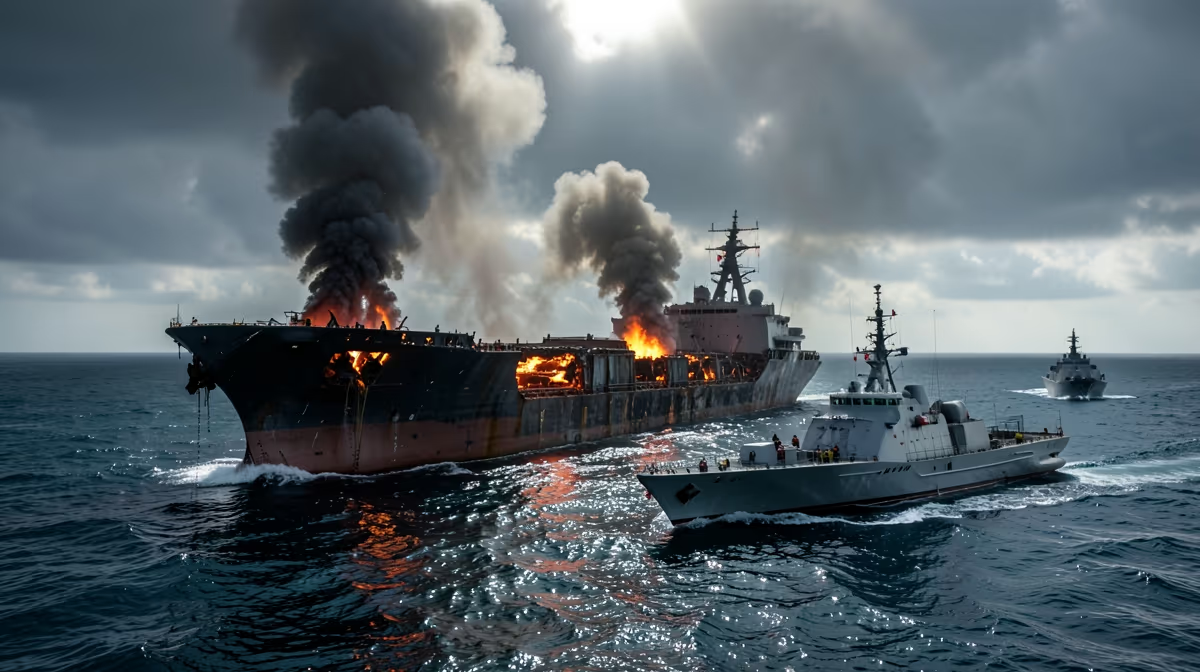
A Marshall Islands-flagged oil tanker suffered a massive explosion and subsequent fire in the Strait of Hormuz on Tuesday, prompting emergency rescue operations by the U.S. Navy and regional authorities while sharply elevating security tensions along the critical global energy transit chokepoint. An oil tanker explodes hormuz strait today, sending shockwaves through global energy markets and raising immediate concerns over a major oil supply disruption. The unfolding crisis exposes the extreme physical vulnerability of the world's most vital maritime trade corridors to sudden, asymmetric disruptions, leaving intelligence analysts and energy traders scrambling to assess the immediate fallout on regional stability and international commerce.
What Unfolded
The blast occurred during morning transit through international waters near the vital maritime trade route, according to reports from the United Kingdom Maritime Trade Operations and the U.S. Fifth Fleet. Initial distress signals indicated a severe rupture in the vessel's hull, triggering a rapid response from coalition naval forces stationed in the region to assist the stranded crew. An oil tanker registered under the Marshall Islands flag experienced an explosion in the Strait of Hormuz, and the U.S. Navy Fifth Fleet deployed assets to assist with emergency response and rescue operations. All crew members from the affected vessel have been accounted for and rescued safely, and search and rescue efforts successfully ensured the safety of all mariners in the area. While search and rescue operations have concluded successfully regarding personnel, the exact cause of the explosion remains undetermined. Investigators have not yet ruled out mechanical failure, an onboard fire, or external sabotage, leaving maritime security experts on high alert as regional tensions remain elevated.
The Numbers Behind The Story
Energy markets reacted swiftly to the incident, with Brent crude futures surging over three percent amid mounting anxiety over potential disruptions to oil supplies flowing out of the Persian Gulf. The Strait of Hormuz handles roughly a fifth of the world's petroleum consumption, making any security incident in the corridor a matter of immediate international concern. The immediate financial fallout includes soaring maritime insurance war-risk premiums and consequential inflationary pressures on Western economies as traders price in heightened regional risk. This financial sensitivity underscores how quickly localized maritime emergencies translate into broad macroeconomic pressures across global energy markets.
Why This Matters
This incident matters because the Strait of Hormuz carries roughly a fifth of the world's petroleum. Any threat to security in this narrow channel can instantly disrupt global energy supplies, sending shockwaves through international stock markets and causing oil and gas prices to spike for everyday consumers. Global energy consumers, motorists facing higher gas prices, international shipping companies, and the economies of nations heavily reliant on Middle Eastern oil imports are immediately affected by such vulnerabilities. The Strait of Hormuz has long been a geopolitical flashpoint. Because it is the only sea passage from the Persian Gulf to the open ocean, it has frequently been the site of military tensions, tanker seizures, and past attacks on commercial shipping vessels, drawing historical parallels to the 1987-1988 Iran-Iraq Tanker War, which similarly threatened global crude flows and drew direct U.S. naval intervention under Operation Earnest Will.
Analyst View
From an analytical perspective, the root cause points to asymmetric gray-zone maritime warfare exploiting the extreme physical vulnerability of the Strait of Hormuz chokepoint to bypass conventional military deterrence. On the political front, the incident creates acute domestic pressure on the U.S. administration to project strength without entangling the nation in a costly Middle Eastern kinetic war ahead of election cycles. Geopolitically, the event accelerates the decoupling of energy routes, forcing Asian importers to question U.S. security guarantees for Gulf transit and emboldening alternative security architectures. Furthermore, analysts note the potential hidden angle involving the covert exploitation of cyber-vulnerabilities in commercial vessel tracking and autonomous navigation systems to orchestrate kinetic impacts with plausible deniability. The timeline leading up to this event included stepped-up enforcement of U.S. secondary sanctions on Iranian oil exports and the deployment of asymmetric naval assets and aquatic drones by regional actors to the Persian Gulf, culminating in this unexplained catastrophic explosion and subsequent fire aboard a very large crude carrier transiting the strait.
What Comes Next
Over the next 24 hours, expectations point toward emergency response operations and firefighting near the Strait of Hormuz, immediate condemnation from Western allies, and a temporary spike in Brent crude futures. Looking ahead to the next 72 hours, focus will shift to naval intelligence assessments regarding the cause of the explosion, whether through a mine, drone, or internal failure, alongside diplomatic posturing and increased military patrols in the region. Expert prediction indicates that markets will experience high volatility driven by fear of supply disruption, but actual physical blockades are unlikely unless direct military attribution is confirmed. In the best-case scenario, the explosion is determined to be an accident or mechanical failure, calming oil markets and avoiding military escalation. In the worst-case scenario, attribution points to hostile state action, leading to retaliatory strikes, closure of the Strait of Hormuz, and a sustained energy crisis.
Frequently Asked Questions
What caused the oil tanker explosion in the Strait of Hormuz?
The exact cause of the explosion is currently unknown and under active investigation by international maritime authorities, with mechanical failure, onboard fire, and external sabotage all under consideration.
Are the crew members safe following the incident?
Yes, all crew members from the affected Marshall Islands-flagged vessel have been accounted for and safely rescued following the deployment of U.S. Navy and coalition emergency response assets.
How has the incident affected global energy markets?
Global crude oil prices and Brent crude futures rose immediately, surging over three percent amid market anxiety regarding potential oil supply disruptions through the critical maritime chokepoint.
Conclusion
An oil tanker registered under the Marshall Islands flag experienced a catastrophic explosion in the Strait of Hormuz, prompting immediate emergency response and rescue operations by coalition naval forces that successfully accounted for all crew members. While the definitive cause of the blast remains under active investigation by international maritime authorities, the incident has triggered a sharp surge in global crude oil prices and heightened security concerns across the Persian Gulf. Realistic next steps involve ongoing naval intelligence assessments to determine the root cause of the explosion, continued military patrols in the region, and close monitoring of energy market volatility by global traders and governments.


