
Oil Tanker Explodes Hormuz Waterways, Triggering Global Energy Panic
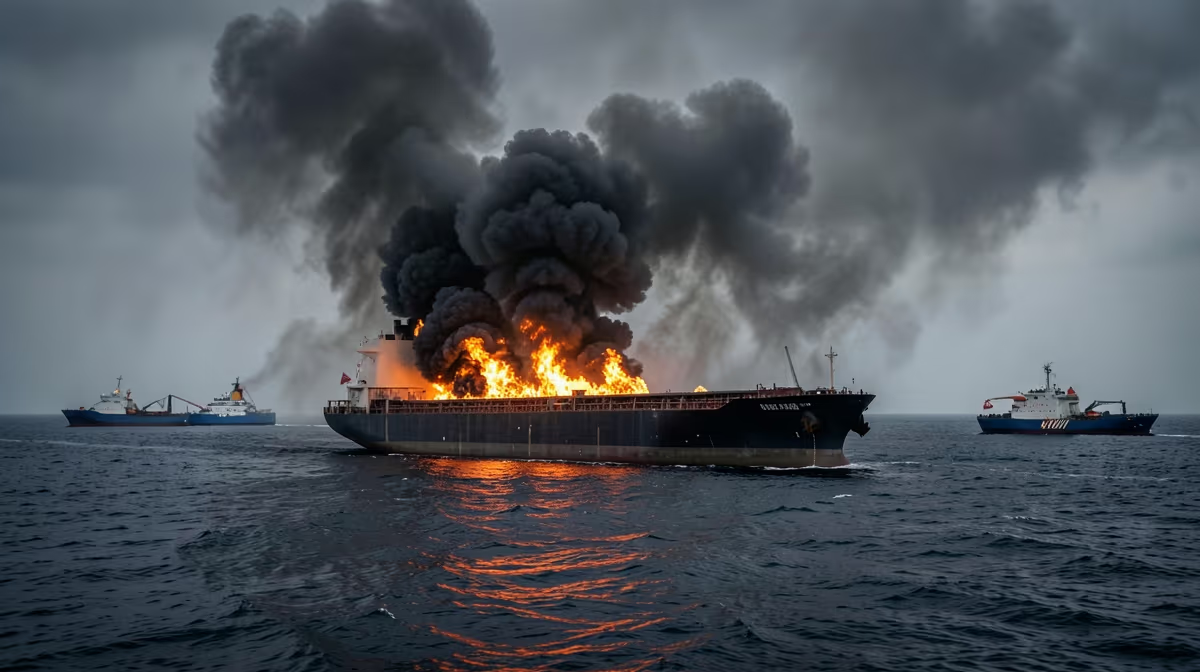
An oil tanker explodes hormuz waterways, triggering immediate concerns over international shipping and an urgent oil market impact across global trading floors. The massive blast, which occurred early Tuesday morning while transiting the strategic Strait of Hormuz, has sparked intense international concern over maritime security and global crude supplies in one of the world's most vital energy chokepoints.
Background of a Critical Maritime Chokepoint
The Strait of Hormuz is a narrow and strategically vital waterway linking the Persian Gulf with the Gulf of Oman and the Arabian Sea. Because a significant portion of the world's liquefied natural gas and petroleum passes through it, the region has historically been a flashpoint for geopolitical tensions and military posturing involving the United States, Iran, and other global powers. Historically, this environment mirrors the 1987-1988 Iran-Iraq Tanker War, which saw escalating attacks on neutral shipping in the Persian Gulf and culminated in US Operation Praying Mantis. The root cause behind vulnerabilities in this area points to the asymmetric disruption of critical maritime chokepoints by state-backed actors seeking to fracture Western security guarantees and test red lines without triggering total war. Security measures implemented by oil tankers transiting the Strait of Hormuz include heightened security protocols, such as utilizing armed security guards, increasing radar surveillance, and hardening vulnerable areas of the ship. Many operators also coordinate closely with naval authorities and transmit continuous tracking signals to avoid unexpected attacks, though the narrowness of the strait leaves vessels exposed to asymmetric threats.
What Unfolded in International Waters
The explosion occurred on an oil tanker in international waters just off the coast of Oman on Tuesday morning, prompting an immediate emergency response from regional maritime authorities and coalition naval forces patrolling the area. Plumes of thick black smoke were reported visible for miles as firefighting vessels deployed to combat the blaze raging across the vessel's deck. Shipping traffic through the narrow waterway, which carries roughly a fifth of the world's petroleum consumption, experienced immediate disruptions as commercial vessels were advised to exercise extreme caution. Emergency response teams and regional authorities rushed to secure the area, and international naval forces in the region are assisting with the emergency response and investigation. While the exact cause of the explosion remains under active investigation, military analysts and intelligence agencies are examining all possibilities, including a potential mechanical failure, a sea mine, or an external strike. Pentagon spokesperson Maj. Gen. Patrick Ryder addressed the situation during an emergency briefing in Washington, stating that officials are monitoring the situation in the Strait of Hormuz very closely and coordinating with regional partners and industry stakeholders to ensure the safety of navigation.
Economic Fallout and Market Reactions
Energy markets reacted swiftly to the incident, with crude oil futures jumping significantly in early trading amid fears of potential supply bottlenecks. The event has caused immediate panic in the global energy markets as fears grow that shipping lanes in the Middle East could become unsafe. This disruption results in immediate spikes in marine insurance premiums, localized maritime freight shocks, and algorithmic oil price surges that disproportionately impact Asian energy importers while offering windfall profits to non-OPEC producers and sanctioned crude brokers. The Strait of Hormuz is the world's most important oil transit bottleneck, carrying a massive percentage of the global petroleum supply. Any disruption or perceived threat to shipping in this region instantly causes global crude oil prices to surge, leading directly to higher prices at the gasoline pump for everyday consumers and increasing inflation pressures worldwide. Those affected by these developments include American drivers, global airline and shipping industries, energy-importing nations, financial markets, and the crews operating vessels in the Middle East.
Geopolitical and Political Dimensions
The incident serves as a stress test for the current US administration's deterrence posture in the Middle East, forcing a delicate balance between avoiding entanglement in a wider regional war and maintaining credibility with regional allies like Saudi Arabia and the UAE. Geopolitically, the event accelerates the decoupling of security architectures in the Persian Gulf, prompting China and India to assert greater diplomatic influence while questioning the long-term viability of the US Navy as the sole guarantor of global energy transit. Analysts also note a hidden angle involving the silent proliferation of advanced, difficult-to-trace cyber-electronic warfare capabilities targeting civilian vessel navigation systems, shifting grey-zone tactics away from traditional kinetic mines toward plausible-deniability sabotage. The timeline leading up to this event involved an escalation of regional proxy conflicts and tightening of secondary sanctions on Iranian oil exports, followed by the deployment of advanced electronic jamming and asymmetric naval assets near the Strait of Hormuz, culminating in the catastrophic explosion of the oil tanker.
Immediate Outlook and Projected Scenarios
In the next 24 hours, emergency response operations and firefighting efforts initiate in the Strait of Hormuz, while global crude oil futures spike by 5 to 8 percent in early trading and the US Navy deploys additional assets to secure the waterway. Looking toward the next 72 hours, an emergency UN Security Council session is called, insurance premiums for commercial shipping in the Persian Gulf skyrocket, and US intelligence agencies release preliminary assessments regarding the cause of the explosion. Analysts expect heightened regional tensions and short-term volatility in oil prices, though an immediate full-scale military conflict remains unlikely as diplomatic channels are prioritized. The best-case scenario involves an investigation proving the explosion was an internal mechanical or safety failure rather than a hostile attack, calming markets and stabilizing oil prices within days. Conversely, the worst-case scenario involves confirmation that the explosion was a deliberate attack leading to retaliatory military strikes, the effective closure of the Strait of Hormuz, and a severe global energy crisis.
Frequently Asked Questions
What happened to the oil tanker that exploded in the Strait of Hormuz?
Incidents involving explosions on oil tankers in the Strait of Hormuz typically stem from regional geopolitical tensions, suspected mine attacks, or missile strikes. These events severely disrupt maritime traffic in one of the world's most critical oil transit chokepoints. Security investigations usually follow to determine responsibility and assess environmental damage.
Why is the Strait of Hormuz so critical for global oil shipments?
The Strait of Hormuz is a narrow waterway connecting the Persian Gulf to the Gulf of Oman, through which a massive percentage of the world's petroleum passes daily. Any military conflict or tanker explosion in this region immediately threatens global energy supplies and causes crude oil prices to spike. Consequently, naval forces maintain a heavy presence to protect commercial shipping lanes.
Who was responsible for the oil tanker explosions in the Gulf?
Responsibility for tanker explosions in the Persian Gulf and Strait of Hormuz has frequently been a subject of international dispute, with Western nations and allies often pointing to Iran or its proxies. Iran has historically denied involvement in these maritime sabotage incidents. The lack of definitive, immediate proof often leads to complex diplomatic standoffs.
How do tanker explosions in the Strait of Hormuz affect gas prices in the US?
Explosions or security threats in the Strait of Hormuz instantly trigger fears of supply shortages in global energy markets. Because oil is a globally traded commodity, these disruptions cause international crude prices to rise, which directly translates to higher gasoline prices for US consumers at the pump. Energy markets remain highly sensitive to any instability in the Middle East.
Are US military forces protecting commercial oil tankers in the Middle East?
Yes, the US Navy and allied maritime coalitions routinely patrol the Middle East, including the Strait of Hormuz, to ensure the free flow of commerce and protect vessels. Following increased attacks and tanker explosions, nations often deploy additional warships and aircraft to escort commercial cargo. These operations aim to deter hostile actions and respond rapidly to maritime emergencies.
What security measures are oil tankers taking in the Strait of Hormuz?
Oil tankers transiting the Strait of Hormuz implement heightened security protocols, such as utilizing armed security guards, increasing radar surveillance, and hardening vulnerable areas of the ship. Many operators also coordinate closely with naval authorities and transmit continuous tracking signals to avoid unexpected attacks. Despite these precautions, the narrowness of the strait leaves vessels exposed to asymmetric threats.
Conclusion
The explosion aboard a commercial oil tanker in the Strait of Hormuz has been confirmed, resulting in an active fire, immediate emergency naval deployments, and an upward surge in global crude oil futures. Regional authorities and international maritime forces are currently engaged in emergency response and firefighting efforts, while intelligence agencies investigate the precise cause of the blast. Realistic next steps involve ongoing investigations into the origin of the explosion, potential diplomatic sessions at the United Nations, and continued naval security operations in the Persian Gulf as global markets monitor energy supply stability.


