
Oil Tanker U-Turn in Strait of Hormuz Signals New Regional Tensions
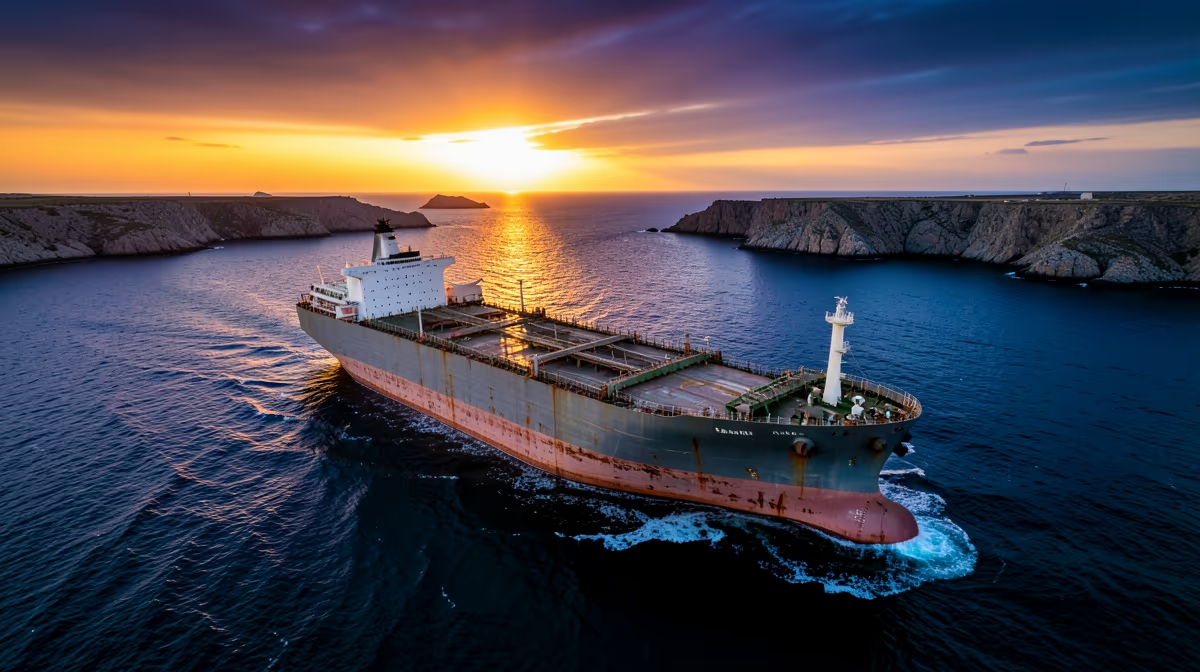
The sudden oil tanker U-turn in the Strait of Hormuz has sent ripples through global energy markets, highlighting the fragility of the international oil supply chain amid escalating geopolitical risk. As one of the world's most critical maritime chokepoints experiences uncharacteristic maneuvering, international observers are scrambling to interpret whether these course corrections signify localized safety precautions or a deeper shift in the regional security paradigm.
The Anatomy of the Maneuver
Multiple commercial oil tankers altered their transit routes in the Strait of Hormuz on Wednesday following escalating regional tensions and increased military posturing in the Persian Gulf. The unscheduled maneuvers reflect growing anxiety among shipping operators regarding the security of one of the world's most critical oil chokepoints. Satellite tracking data confirmed that several vessels diverted from their typical paths shortly after reports emerged of heightened Iranian naval activity in the vicinity.
The tactical U-turns indicate a preemptive shift in maritime safety protocols as corporations attempt to mitigate potential risks to cargo and crew. Analysts suggest this caution is a direct response to recent rhetoric and threats regarding the closure of the strategic waterway. While the shipping lanes remain technically open, the unpredictability of the maritime environment has led to a spike in insurance premiums and a slowdown in transit velocity. Global energy markets reacted with mild volatility, reflecting the sensitivity of crude oil supply chains to any disruption in this specific geography.
Navigational Realities and Security Risks
The Strait of Hormuz is a narrow chokepoint between Oman and Iran that serves as a global energy artery. Roughly 20 to 30 percent of the world's total global petroleum consumption passes through this strait daily. Under established international maritime protocols, all vessels traversing this corridor must follow Traffic Separation Schemes. These designated lanes are strictly managed to ensure the safe flow of global energy supplies and prevent collisions in one of the world's most critical maritime chokepoints.
While it is technically possible for an oil tanker to perform a U-turn in the strait, it is highly discouraged due to the extreme narrowness of the shipping lanes and the congestion of commercial traffic. Such maneuvers present significant navigational hazards. When a captain chooses to initiate such a turn, it often suggests that they have assessed an unacceptable level of risk in the region and are choosing to divert to international waters to avoid potential seizure or conflict.
Strategic Signaling and Tactical Response
The current situation is defined by a recalibration of freedom of navigation operations intended to avoid accidental kinetic conflict while maintaining a necessary naval presence. A spokesperson for the U.S. Fifth Fleet stated that they are monitoring the situation closely and remain committed to ensuring the freedom of navigation and the free flow of commerce throughout the region. Simultaneously, maritime security expert Dr. Sarah Jenkins has noted that these route changes are clear evidence that the private shipping sector is no longer willing to gamble on the status quo when faced with persistent regional instability.
The root cause appears to be strategic signaling and tactical de-escalation in response to heightened regional maritime security threats. This maneuver serves as a visible demonstration of US deterrence policy and a test of Iranian maritime oversight. Historically, the region has seen tanker seizures and military standoffs, paralleling the 2019 tanker crisis involving the Stena Impero and the subsequent buildup of the International Maritime Security Construct.
Projections for the Maritime Corridor
Within the next 24 hours, stakeholders can expect increased maritime surveillance by the US Navy Fifth Fleet and regional coalition partners. Observers will be monitoring tanker traffic trajectories to confirm if the U-turns signify mechanical issues, navigation caution, or tactical evasion. Over the next 72 hours, diplomatic back-channel communications are likely to occur to clarify the tankers' intent. Potential deployment of additional escort assets may follow if security threats are identified, alongside the release of official statements by shipping insurance agencies regarding risk premiums in the Gulf.
Experts predict that the U-turns are likely a precautionary measure due to localized security signaling rather than a precursor to immediate seizure. However, this reinforces the fragility of maritime transit security in the region. In the best-case scenario, the tankers resume their original headings without incident following clarification of regional security protocols. In the worst-case scenario, a U-turn could be followed by an attempted interception or kinetic engagement, triggering a spike in oil prices and a direct US military response to maintain the free flow of navigation.
Frequently Asked Questions
Can oil tankers turn around in the Strait of Hormuz?
While it is technically possible, it is highly discouraged due to the extreme narrowness of the shipping lanes and the risk of navigational hazards in a congested corridor.
Why would an oil tanker make a sudden U-turn near the Strait of Hormuz?
It is often a reaction to emerging security threats, geopolitical tensions, or orders from national authorities, signaling that the vessel's captain has chosen to divert to avoid potential seizure or conflict.
Are ships required to follow specific paths through the Strait of Hormuz?
Yes, all vessels must follow established Traffic Separation Schemes, which are strictly managed to ensure safe transit.
What happens if a tanker attempts an unauthorized turn in the Strait of Hormuz?
Such maneuvers can trigger immediate intervention from regional naval forces, including radio inquiries, boardings for inspection, or escort out of the area.
Does international law allow tankers to turn back before entering the Strait of Hormuz?
Yes, under the principle of innocent passage, vessels maintain the right to divert their course if the captain determines that entering the strait poses an unacceptable risk to safety.
How do geopolitical tensions affect oil tanker navigation in the Persian Gulf?
Tensions often lead to increased military patrols and temporary restrictions, causing operators to adjust routes or slow down, which can lead to delays in oil deliveries and price fluctuations.
Conclusion
The situation in the Strait of Hormuz remains fluid, characterized by a preemptive, cautious stance from commercial shipping operators in response to regional military posturing. While no hostile engagements have been confirmed, the tactical diversion of tankers highlights the extreme sensitivity of the global energy supply chain to fluctuations in maritime security. Moving forward, the focus remains on increased naval monitoring and diplomatic efforts to clarify transit protocols, with market participants closely watching for any signs of direct escalation that could impact global crude oil pricing and energy logistics.


.webp)
