
Russian Naval Activity Devon Coast Prompts Major Royal Navy Response
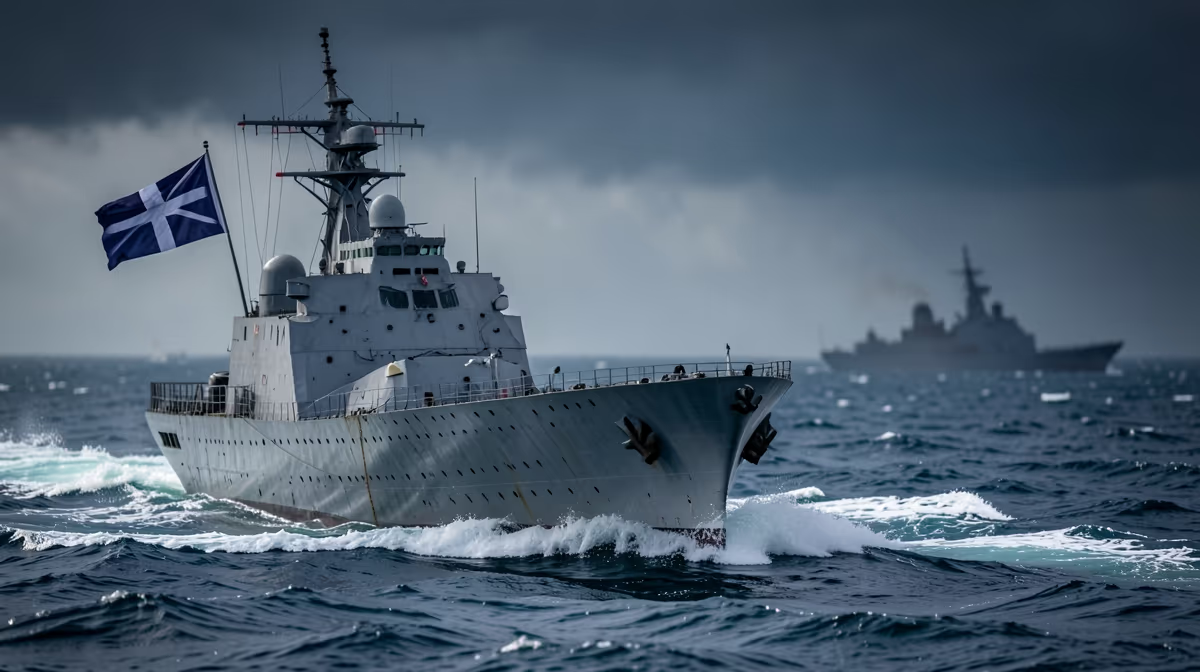
Deep beneath the surface of the North Atlantic and across the busy shipping lanes of the English Channel, a silent game of maritime positioning is currently unfolding. Reports of Russian naval activity devon coast have prompted a response from the Royal Navy as vessels are tracked near UK territorial waters, raising questions about the stability of the northern flank and the nature of modern naval brinkmanship.
What Unfolded
The United Kingdom Ministry of Defence has confirmed the monitoring of a Russian naval vessel transiting through the English Channel near the Devon coast, marking a continuation of heightened maritime surveillance in British territorial waters. The Russian warship, identified by maritime tracking experts as part of the Northern Fleet, was shadowed by the Royal Navy's HMS Mersey as it moved through the sensitive waters off the South West coast of England. Royal Navy assets are frequently deployed to escort Russian vessels as they navigate the busy shipping lanes of the English Channel, ensuring adherence to international maritime law and national security protocols.
While such movements are considered routine under the UN Convention on the Law of the Sea, the frequency of these deployments has drawn increased attention from defense analysts. The presence of the vessel near the Devon coastline occurs amid elevated geopolitical tensions, prompting a heightened state of readiness among British maritime forces tasked with patrolling the UK’s Area of Interest. Authorities have not reported any aggressive maneuvers or violations of sovereign waters during the transit. The Royal Navy continues to maintain a persistent presence in the region to provide a rapid response capability should any operational parameters shift during the Russian vessel's transit toward the Atlantic.
The Strategic Context
This activity highlights the ongoing tension between Western nations and Russia. Even when such movements are routine, the visible presence of foreign warships near the UK coast serves as a reminder of the heightened geopolitical climate and the importance of continuous coastal surveillance to maintain national security and maritime safety. The root cause of these maneuvers is often linked to persistent intelligence collection regarding the UK's nuclear deterrent infrastructure at HMNB Devonport and the North Atlantic seabed monitoring systems.
From a geopolitical perspective, the Kremlin leverages naval presence to project strength for domestic audiences while simultaneously testing the cohesion of the UK government's maritime security response. Furthermore, these movements mirror Cold War-era shadowing maneuvers, where Soviet trawler intelligence ships consistently monitored NATO naval movements off the British Isles. There is also a hidden dimension to these operations: the potential exploitation of civilian survey vessels masquerading as research ships to map underwater fiber-optic cables and pipeline infrastructure for potential sabotage.
Operational Realities and Economic Impacts
The English Channel is one of the world's busiest shipping lanes. It is standard protocol for the UK military to track and escort non-NATO warships passing through the area as part of their area of interest surveillance policy to ensure regional stability. For the local residents in Devon, as well as the fishing and commercial shipping industries, these movements represent a visible manifestation of regional security requirements.
The economic angle is significant, as the increased patrol costs for the Royal Navy and the disruption of commercial maritime routes can affect insurance premiums for regional port traffic. Furthermore, the persistent need for surveillance forces the UK to divert resources from international deployments to manage these domestic maritime security requirements. Historically, this trend has intensified since the 2014 annexation of Crimea, with a notable surge in frequency post-2022, as Russian long-range surveillance patrols have synchronized with electronic warfare testing and regional cyber-surveillance efforts.
Looking Ahead
The next 24 hours will likely see increased monitoring by Royal Navy surface vessels and RAF maritime patrol aircraft as the Russian naval task group continues its transit through the English Channel. Within the next 72 hours, the task group is expected to exit the UK Area of Interest, transitioning toward the Atlantic or Mediterranean while maintaining standard international transit protocols.
Experts suggest that this is a routine presence without provocation, as these maneuvers are likely tied to long-range exercise deployments or scheduled vessel rotations. The best-case scenario is that the Russian fleet maintains adherence to international maritime law with no disruption to commercial shipping or territorial water violations. Conversely, the worst-case scenario involves an unplanned emergency or tactical maneuvering that leads to a localized security alert, necessitating an escalation in interceptor activity and heightened regional tensions.
Frequently Asked Questions
Why have Russian warships been spotted near the Devon coast?
Russian naval vessels periodically transit through the English Channel and the Celtic Sea as part of routine movements between their Northern and Baltic fleets. While these passages are legal under international law, the Royal Navy monitors them closely to ensure they remain in international waters and do not pose a threat to UK security.
Is Russian naval activity off the Devon coast a security threat?
The Ministry of Defence treats these transits as routine, though they are subject to constant surveillance by the Royal Navy. While their presence is monitored, there is generally no immediate threat to UK sovereignty or public safety during these non-aggressive transits.
How does the Royal Navy monitor Russian ships near the UK?
The Royal Navy uses a combination of radar, satellite intelligence, and dedicated escort warships, such as Type 23 frigates, to shadow Russian vessels. These ships follow the Russian fleet until they have safely exited the UK's area of interest.
Are Russian naval ships allowed to sail near the Devon coast?
Yes, under the United Nations Convention on the Law of the Sea, foreign warships have the right of innocent passage through territorial waters. As long as the vessels remain in international waters or transit peacefully without hostile intent, their presence is considered lawful.
How often do Russian warships pass the Devon coast?
There is no fixed schedule for these movements, but sightings occur periodically throughout the year as Russian naval assets redeploy between major maritime hubs. The frequency often depends on current geopolitical tensions and the operational requirements of the Russian Navy.
Can I see Russian naval ships from the Devon coast?
While it is theoretically possible to see large warships if they pass relatively close to the shore, they typically remain well out at sea in international waters. Any sightings reported by the public are usually verified by official defence sources shortly after.
Conclusion
The current passage of Russian naval vessels through the English Channel serves as a reminder of the persistent maritime surveillance environment surrounding the United Kingdom. While the transit is consistent with international maritime law and is being managed by the Royal Navy through routine shadowing operations, it remains a focal point for defense analysts tracking the evolution of North Atlantic security. The Royal Navy continues to maintain a persistent presence to ensure national security, with the situation expected to conclude as the task group completes its transit toward the Atlantic. Continued monitoring remains the primary operational focus of the Ministry of Defence as these movements align with regional vessel rotations.


