
Shadow Fleet Tankers Are Quietly Upending Global Energy Markets
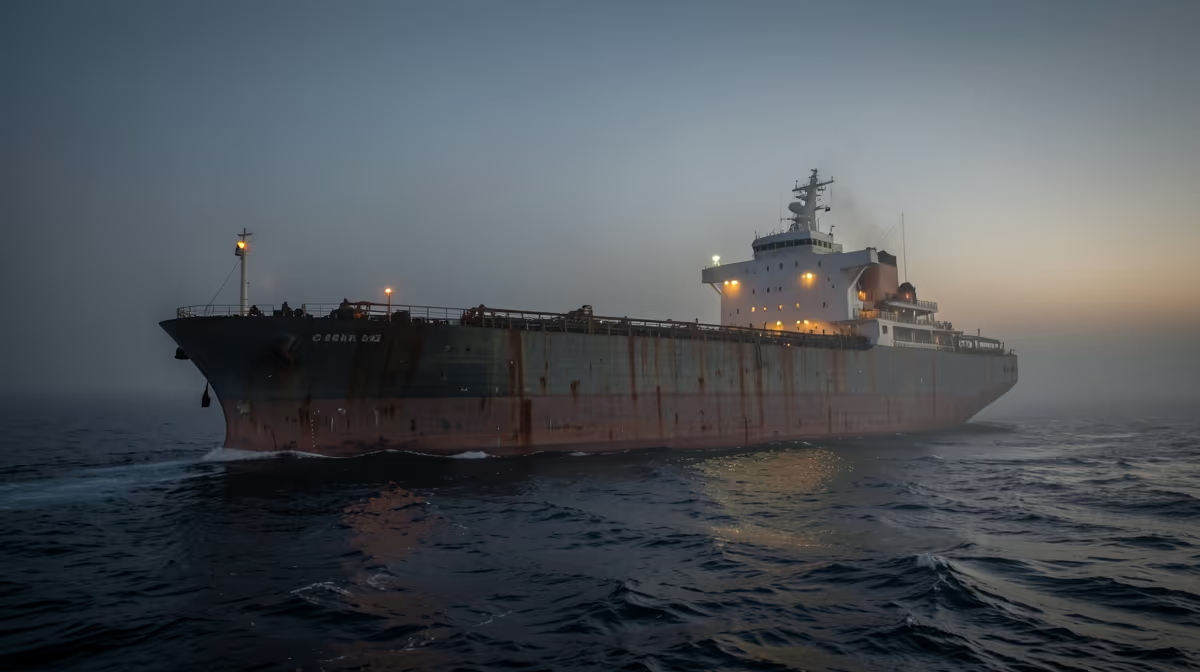
Deep beneath the surface of the world’s maritime trade routes, a massive, clandestine network of aging oil tankers is operating with near-total impunity to undermine international economic policy. As geopolitical tensions rise, the shadow fleet has become a critical focal point for maritime security experts monitoring illicit oil tankers and complex sanctions evasion tactics that threaten the integrity of global energy markets.
Defining the Shadow Fleet
A shadow fleet refers to a vast, informal network of oil tankers that operate outside of standard international regulations and insurance requirements to move crude oil from sanctioned nations to global markets. These vessels, often long past their expected retirement age, function as a parallel infrastructure for energy transport. They allow states such as Russia, Iran, and Venezuela to circumvent the stringent price caps and trade restrictions imposed by Western nations following the 2022 Russian invasion of Ukraine.
The operation relies on a sophisticated web of obfuscation. To bypass detection, these ships frequently engage in dark activities, including the disabling of their Automatic Identification System transponders. By going dark, they effectively vanish from satellite monitoring, allowing them to conduct ship-to-ship transfers in international waters. These mid-ocean handoffs are designed to mask the true origin of the cargo, effectively laundering the oil before it reaches its final destination, typically in Asian markets.
The Mechanics of Sanctions Evasion
The rise of these ghost ships is fundamentally rooted in the imposition of Western-led maritime insurance and price-cap sanctions. By rendering conventional commercial shipping channels inaccessible for sanctioned crude, these policies have forced petrostates to develop alternative logistics. This shift has institutionalized a high-cost, high-risk, and opaque global market.
The fleet is comprised of hundreds of tankers, many of which are over 20 years old. These vessels often operate without valid Protection and Indemnity insurance from reputable global firms. Instead, they rely on non-OECD jurisdiction providers, creating a system where the traditional levers of international trade enforcement, such as the G7 Price Cap Coalition or European Union maritime safety standards, struggle to maintain a foothold. This fragmentation of global maritime standards has led to an era where the enforcement of international law is being challenged by a shadow economy that values anonymity over safety.
Maritime Security and Environmental Risks
The proliferation of these vessels introduces a precarious risk to international waters, particularly in congested shipping lanes like the Bosphorus and the Strait of Malacca. Because these tankers operate with substandard maintenance and lack standard financial backing, the probability of a major environmental disaster is significantly higher than that of the mainstream commercial fleet.
Should a collision or structural failure occur, the lack of clear ownership and proper insurance coverage means there is no entity immediately accountable for cleanup costs. This creates an ecological nightmare for coastal nations, as the financial and logistical burden of responding to an oil spill would fall onto the impacted state. Regulatory bodies, including the International Maritime Organization, have recognized this systemic risk, noting that non-standard shipping practices pose a clear danger to the safety of navigation and global environmental protection.
Geopolitical and Economic Implications
Beyond the immediate safety concerns, the shadow fleet represents a subtle but profound erosion of trade enforcement hegemony. By establishing a non-Western maritime infrastructure, sanctioned regimes are creating a buffer against geopolitical pressure. This not only complicates the enforcement of oil price caps but also provides these nations with tactical leverage, as these vessels often serve as floating storage units that allow producers to regulate supply volumes independently of OPEC mandates.
Analysts view this phenomenon as a permanent feature of the modern energy landscape. The creation of this parallel market has led to increased volatility in oil prices and has forced global shipping insurance companies and environmental agencies to grapple with a sector that remains largely impervious to traditional oversight. While some jurisdictions are exploring stricter port state inspections to address the issue, the complex web of shell companies and offshore ownership structures makes definitive intervention a monumental task.
Future Outlook and Surveillance
Monitoring the fleet remains a high-stakes intelligence challenge. In the immediate 24-hour horizon, surveillance patterns have indicated increased AIS gaps and dark tracking near the Baltic Sea, suggesting continued reliance on clandestine transfers to obscure cargo origins. Over the next 72 hours, maritime task forces under the European Union are expected to heighten their surveillance, potentially leading to the detention of vessels that cannot provide verified insurance documentation.
Looking ahead, experts predict that the shadow fleet will likely increase in technical sophistication. The industry is seeing a transition toward even older, uninspected tankers that effectively bypass price cap enforcement while further degrading safety standards. While the best-case scenario involves international regulatory bodies reaching a consensus on stricter flag state accountability, the reality remains that a major accident could force an immediate and destabilizing shift in how the world manages maritime risk.
Frequently Asked Questions
What is a shadow fleet?
A shadow fleet refers to a group of oil tankers that operate outside of standard international regulations and insurance requirements to transport sanctioned crude oil. These vessels often use deceptive tactics, such as switching off tracking transponders, to bypass economic sanctions imposed on countries like Russia, Iran, and Venezuela.
Why do shadow fleets exist?
Shadow fleets exist primarily to circumvent international sanctions and export restrictions placed on oil-producing nations. By using older, often uninsured tankers with obscure ownership structures, these entities can continue to sell and transport oil globally despite legal prohibitions.
How do shadow fleet tankers operate?
These tankers frequently engage in ship-to-ship transfers at sea to mask the origin of their cargo and conceal the identity of the buyers and sellers. They also often manipulate their Automatic Identification Systems or go dark to avoid detection by satellite monitoring and maritime authorities.
What are the environmental risks of shadow fleets?
The primary environmental risk is the increased likelihood of catastrophic oil spills, as many shadow fleet vessels are aging tankers that lack proper maintenance and safety inspections. Because these ships often lack standard insurance, there is no clear financial coverage available to handle cleanup costs in the event of an accident.
Is it legal to use shadow fleet tankers?
Using shadow fleet tankers is generally illegal in jurisdictions that enforce sanctions against the oil being transported. Engaging with these vessels carries significant legal, financial, and reputational risks for shipping companies, insurers, and buyers participating in the trade.
How large is the global shadow fleet?
The size of the global shadow fleet is difficult to track precisely due to the secretive nature of its operations, but experts estimate it consists of several hundred tankers. The fleet has expanded significantly in recent years as more countries have faced tightened international sanctions.
Conclusion
The shadow fleet has successfully transformed into a resilient, albeit high-risk, component of the global energy supply chain. As confirmed by maritime authorities, the combination of disabled tracking, opaque ownership, and the absence of standardized insurance creates an environment where traditional enforcement mechanisms struggle to gain traction. While international discussions regarding stricter flag state accountability are underway, the current landscape remains defined by its lack of transparency and systemic environmental risk. Policymakers and industry analysts will continue to monitor the intersection of maritime surveillance and geopolitical stability as these vessels continue to navigate the blurred lines of global trade.


.webp)
