
SK Hynix Stock Signals a Massive Shift in the Global AI Chip Market
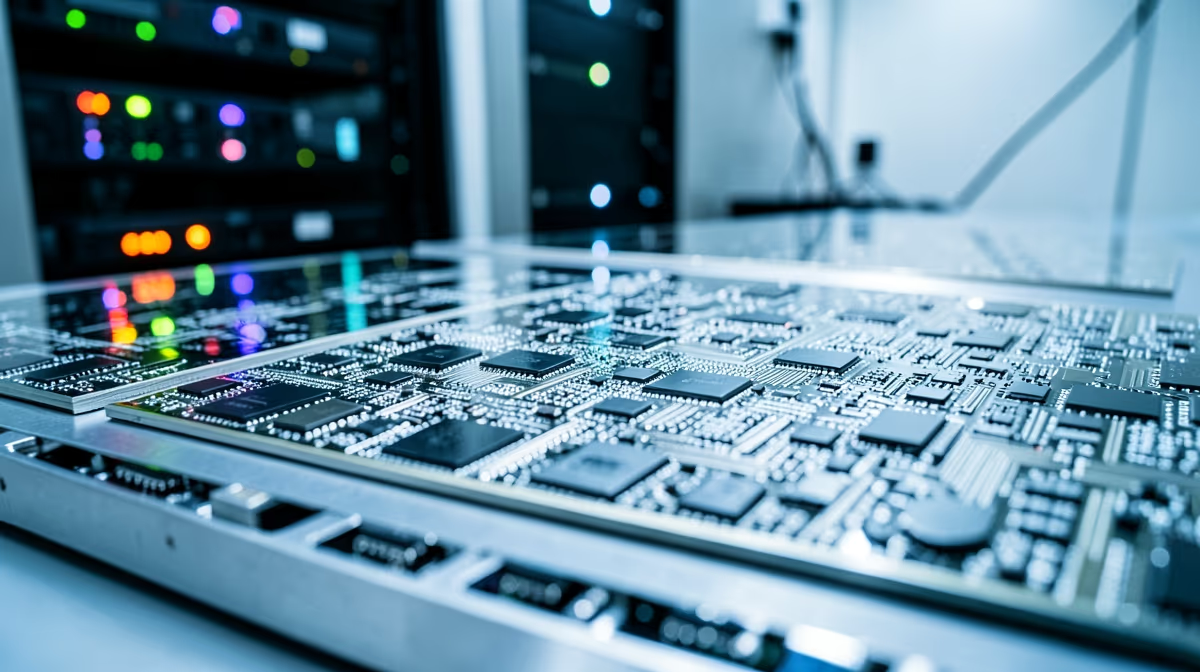
Hidden within the cooling systems of massive data centers, a specific class of semiconductor is currently dictating the speed at which our digital future evolves. SK Hynix stock has become a focal point for investors tracking the rapid expansion of the AI chip market and the broader semiconductor supply chain as the global appetite for high-bandwidth memory continues to outpace traditional production capabilities.
The Engine of the AI Boom
To understand why this South Korean firm has suddenly claimed center stage in global finance, one must look at the physical architecture of modern intelligence. SK Hynix is the world's second-largest manufacturer of memory chips, specializing in High Bandwidth Memory, or HBM. These chips are not like the standard memory found in a home laptop; they are sophisticated, layered components that act as the essential bridge between processing power and data retrieval.
Because generative artificial intelligence tools rely on massive datasets processed in real-time, they require the ultra-fast, high-capacity performance that only HBM can provide. As a primary partner and supplier for NVIDIA, the current leader in AI processing chips, SK Hynix has effectively become a critical node in the global tech ecosystem. When the company’s performance shifts, it serves as a canary in the coal mine for the entire AI hardware sector, signaling whether the multi-billion dollar investment in infrastructure is accelerating or hitting a bottleneck.
Geopolitical and Supply Chain Realities
The company’s position is not without profound complexity. Founded in 1983 as Hyundai Electronic Industries, the firm rebranded to SK Hynix after its acquisition by the SK Group in 2012. Today, it operates at the intersection of a volatile US-China tech trade war. US export restrictions have constrained the company’s ability to maximize output from its facilities in mainland China, forcing a strategic pivot toward US-based fabrication. This shift is highlighted by their recent commitment to massive capital investment for advanced packaging in Indiana, aimed at securing closer integration with the American technology market.
This regionalization is not merely a business strategy; it is a necessity driven by the vulnerability of the global semiconductor supply chain. Analyst assessments suggest that the HBM market is uniquely fragile, susceptible to geopolitical friction or potential maritime blockades that would cripple major clients like Microsoft, Google, and Apple. The current environment mirrors the 1980s US-Japan semiconductor trade disputes, where regional dominance prompted protectionist measures and forced a fundamental restructuring of how chips are produced and traded across borders.
Market Performance and Volatility
For investors, the volatility of the stock is a direct reflection of the broader semiconductor sector. While the firm has reported record-breaking revenue growth driven by the AI boom, market sessions are increasingly sensitive to shifts in capital expenditure forecasts from major hyperscalers. When Nvidia’s guidance cycles shift, the impact is felt almost immediately in the price action of SK Hynix.
Institutional investors currently find themselves in a phase of digestion. They are weighing the company's clear moat in HBM technology against the risk of broader macroeconomic data impacting global tech spending. While Goldman Sachs analysts have noted that the firm holds an effective monopoly on high-end HBM, the stock remains tethered to the reality of the semiconductor trade cycle. There is a continuous tension between the long-term sustainability of the AI supercycle and the possibility of inventory corrections that typically plague the cyclical memory chip market.
The Next Financial Horizon
Predictions for the immediate future suggest a period of high sensitivity. In the next 24 hours, the stock is expected to face volatility linked to overnight performance in South Korea and fluctuations in demand for advanced HBM3E chips. Moving into the 72-hour window, the market will likely enter a consolidation phase as investors assess how semiconductor trade policy and enterprise spending on AI infrastructure align with reality.
The best-case scenario for the company involves surpassing quarterly revenue expectations, supported by stronger-than-projected enterprise demand. Conversely, the worst-case scenario involves a downward correction, triggered either by bottlenecks in the supply chain or unexpected geopolitical constraints that limit cross-border tech exports. Ultimately, the expert consensus remains that the growth trajectory is intact, provided the firm can navigate the short-term pressures of tech sector corrections and maintain its lead in memory manufacturing.
Frequently Asked Questions
Can US investors buy SK Hynix stock?
SK Hynix is primarily traded on the Korea Exchange under the ticker 000660. While US investors can access it via Over-the-Counter markets using the ticker HXSCL, it is generally less liquid than major US-listed semiconductor stocks.
What is the ticker symbol for SK Hynix?
The primary ticker symbol for SK Hynix on the Korea Exchange is 000660. For those trading in the US market via OTC, the ticker symbol is commonly HXSCL.
Is SK Hynix a good investment for AI growth?
SK Hynix is considered a major player in the artificial intelligence sector due to its leadership in High Bandwidth Memory production. Its close partnership with companies like NVIDIA makes it a significant beneficiary of the current AI hardware boom.
How does SK Hynix compare to Samsung Electronics?
While Samsung Electronics is a massive conglomerate with diverse business interests, SK Hynix focuses heavily on memory semiconductors. Investors often choose SK Hynix for a more direct exposure to the DRAM and NAND flash memory cycles.
What factors affect the SK Hynix stock price?
The stock price is heavily influenced by global memory chip demand, pricing cycles for DRAM and NAND, and capital expenditure in the data center industry. Additionally, fluctuations in the South Korean Won and geopolitical tensions in the semiconductor supply chain play a role.
Where can I trade SK Hynix stock in the United States?
US investors can trade SK Hynix through major brokerage platforms that support international stocks or OTC securities. It is recommended to check with your specific broker to see if they facilitate trades for the HXSCL ticker.
Conclusion
SK Hynix stands as a pivotal entity in the global AI infrastructure race, with its HBM production capacity serving as the backbone for next-generation computing. While the company has secured a leading market position and maintains a robust order book, its stock remains subject to the inherent volatility of the semiconductor industry and the shifting landscape of global trade policy. Investors and stakeholders should anticipate ongoing fluctuations as the company scales its production in both South Korea and the United States, balancing the record-breaking demand for AI hardware against the complexities of a fragmented global supply chain. The coming quarters will clarify whether the current premium pricing for specialized memory chips can sustain the company’s recent valuation growth.


.webp)

.webp)
