
Strait of Hormuz LNG Shipments Face Growing Risk to Global Energy Security
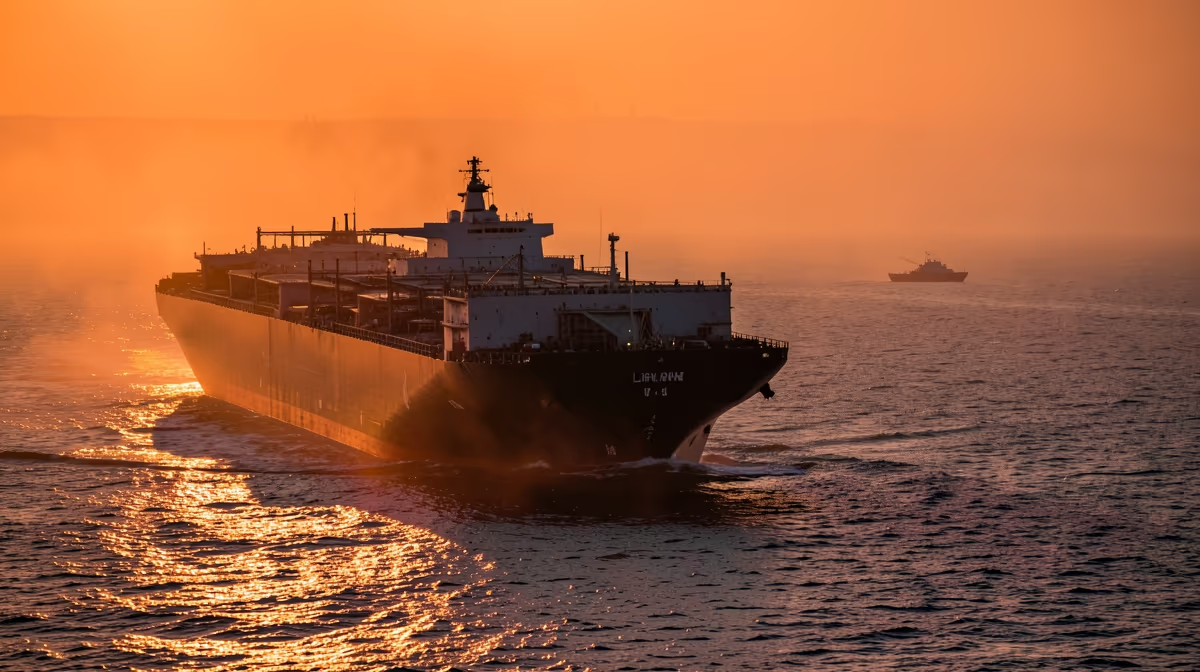
The United Kingdom is intensifying contingency planning for its energy supply chain as heightened geopolitical tensions in the Strait of Hormuz threaten the global flow of Liquefied Natural Gas (LNG) shipments. This narrow maritime chokepoint, stretching only 21 miles at its most constricted point, serves as the primary artery for a significant portion of the world’s energy, and any disruption to the movement of these massive tankers presents a profound challenge to international market stability.
The Mechanics of a Chokepoint
The Strait of Hormuz is the world's most important oil and gas transit gateway. It sits between Iran and Oman, functioning as a vital conduit for energy supplies that feed global industry and household demand. Approximately 20 percent of the world’s total oil consumption and a substantial volume of liquefied natural gas pass through this corridor every day. Because the global market is inherently interconnected, the transit of these energy volumes is not merely a regional matter; it is the backbone of global energy security. When this route is pressurized by military activity or regional conflict, the systemic ripple effects are felt instantly across international exchanges, including those critical to the British energy sector.
Analytical Perspectives on Systemic Risk
The current instability is rooted in a structural dependency: European energy security remains tethered to Qatari LNG volumes that must pass through this narrow maritime corridor. This situation has been exacerbated by intensifying regional maritime friction. From a political standpoint, the United Kingdom has pursued a strategic pivot toward Gulf Cooperation Council states in the post-Brexit era, seeking energy diversification. However, this policy has inadvertently created a fragile diplomatic reliance on maritime security in waters adjacent to Iranian influence. The Strait has effectively transformed into a tactical chessboard where regional powers leverage the threat of transit interference to influence Western policy and counteract economic sanctions. Beyond the state-level maneuvering, international shipping conglomerates and private maritime security firms continue to play a significant role, often benefiting from the risk premiums added to every cubic meter of LNG transiting the zone.
The Economic Anatomy of Maritime Volatility
For British households and the global manufacturing sector, the stakes are measured in inflationary pressure and wholesale price fluctuations. While the UK currently sources a large share of its natural gas from domestic production, Norway, and the United States, it cannot fully decouple from global pricing mechanisms. Market volatility is already visible on the ICE Endex exchange, where gas futures react sharply to reports of naval maneuvers in the Persian Gulf. The economic angle is defined by the logistical necessity of avoiding other regional disruptions, such as those in the Red Sea, which makes the Persian Gulf throughput essential. When insurance premiums for commercial vessels rise due to security concerns, these costs are passed down the supply chain, inevitably manifesting as higher household energy bills for the end consumer.
Naval Presence and Security Dynamics
International efforts to maintain freedom of navigation are currently characterized by increased naval patrols and heightened surveillance. Entities such as the International Maritime Security Construct work to ensure that commercial traffic remains unhindered, despite Iran’s periodic rhetoric regarding the closure of the waterway. Historically, this environment mirrors the 1980s Tanker War, where neutral energy transit became a primary target for psychological and economic warfare. Today, however, the digital integration of global markets means that the threat of a kinetic incident is often enough to force a price spike, even in the absence of an actual blockade. The UK government maintains that its supply channels remain robust, yet the sensitivity of energy traders to any hint of constriction highlights the enduring, fragile nature of global energy logistics.
Looking Ahead: The Next 72 Hours
The immediate forecast suggests that regional and international maritime forces will maintain a heightened state of alert to prevent any interruption of energy flows. Within the next 24 to 72 hours, observers should anticipate localized volatility in spot LNG pricing as markets process ongoing geopolitical rhetoric. Insurers are expected to continue adjusting war risk premiums for vessels entering the Persian Gulf, a move that reinforces the upward bias on shipping costs. While a total blockade remains unlikely due to the risk of direct conflict, the persistence of these security concerns ensures that the psychological pressure on energy markets will remain a defining feature of the near-term landscape.
Scenarios of Escalation and Diplomacy
Expert analysis suggests that a diplomatic de-escalation represents the best-case scenario, leading to the stabilization of insurance premiums and the continuation of normal shipment volumes. Conversely, the worst-case scenario involves a kinetic incident—such as the seizure of an LNG vessel—which would likely trigger a severe supply chain bottleneck. Such an event would force a rapid spike in European gas prices and almost certainly necessitate a more aggressive multinational naval intervention. The ongoing developments are subject to rapid change, and international diplomatic efforts remain focused on de-escalating the friction that threatens this critical maritime lane.
Frequently Asked Questions
What percentage of global LNG passes through the Strait of Hormuz?
The Strait of Hormuz is a critical chokepoint for global energy markets, with a significant portion of the world's liquefied natural gas (LNG) transiting through it daily. While much of the Middle East's oil passes through this route, Qatar, the world's leading LNG exporter, relies almost exclusively on the Strait to transport its supplies to global customers.
Why is the Strait of Hormuz important for UK LNG imports?
The UK relies on global LNG imports to maintain its energy security, particularly during periods of high demand. Disruptions in the Strait of Hormuz can lead to increased volatility in gas prices, affecting the cost and availability of LNG shipments destined for British import terminals.
How would a closure of the Strait of Hormuz affect global gas prices?
A closure or significant disruption in the Strait of Hormuz would likely trigger a sharp spike in global LNG prices due to supply fears. Because LNG markets are interconnected, the inability of major producers like Qatar to export through this route would tighten global supplies and force importers to seek more expensive alternatives.
Are LNG shipments through the Strait of Hormuz currently at risk?
Geopolitical tensions in the Persian Gulf periodically raise concerns regarding the safety of shipping lanes in the Strait of Hormuz. While major international navies maintain a presence to ensure freedom of navigation, any escalation in regional conflict remains a primary risk factor for energy traders and shipping companies.
Does the UK import most of its LNG from countries using the Strait of Hormuz?
The UK sources its LNG from a diversified group of nations, including the United States, Norway, and Qatar. While the US and Norway are major suppliers that do not use the Strait, Qatar remains a key partner, making the Strait of Hormuz a strategically relevant chokepoint for the UK's overall energy supply chain.
What contingency plans exist for LNG shipping disruptions in the Middle East?
Energy companies and governments mitigate risks by diversifying their supply sources and maintaining strategic gas storage levels. Furthermore, some exporters have developed pipelines or alternative export terminals that bypass the Strait of Hormuz, though these options are limited in their total capacity to replace the volume of transit through the chokepoint.
Conclusion
The stability of the Strait of Hormuz remains a fragile pillar of the global energy architecture. While the UK has diversified its energy sources to mitigate direct reliance on Persian Gulf throughput, the interconnected nature of the global LNG market ensures that any geopolitical friction in the region has immediate domestic consequences. Verified developments, including persistent naval maneuvers and rising insurance premiums, underscore the ongoing risk to commercial shipping. As international diplomatic efforts continue, the primary focus for policymakers and energy traders remains the maintenance of unhindered maritime transit and the monitoring of price sensitivity in response to regional instability.


