
Weather Forecast Tomorrow India: Unexpected Shifts Threaten Major Regions
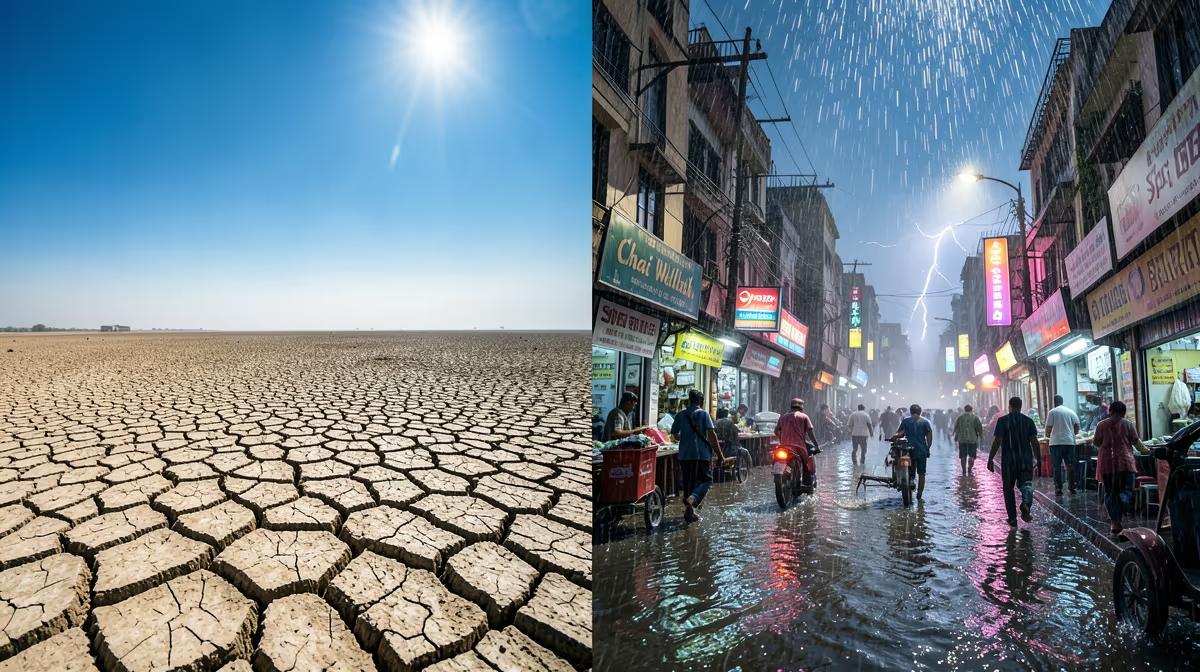
A massive atmospheric divergence is currently splitting the Indian subcontinent into two distinct climatic zones, forcing millions to prepare for a day of extreme temperature contrasts. While southern peninsular regions brace for heavy, moisture-laden downpours, the northwestern plains are trapped under a relentless dome of heat that continues to push mercury levels toward dangerous thresholds. Residents across the country must stay updated with the latest weather forecast tomorrow India to navigate these rapidly shifting environmental conditions.
Regional Monsoon Update and Rainfall Predictions
The India Meteorological Department has confirmed that a complex weather transition is underway, characterized by a strengthening cyclonic circulation affecting the southern peninsula. For residents in Kerala, coastal Karnataka, and parts of Tamil Nadu, tomorrow marks a period of heightened caution. Heavy to very heavy rainfall is anticipated, driven by this cyclonic activity. Local authorities in these regions have moved disaster response teams to a state of high alert, focusing on low-lying districts where localized flooding and waterlogging pose a tangible threat to infrastructure and daily movement.
Conversely, the northeastern states are experiencing a different moisture dynamic. Local atmospheric moisture is expected to trigger light showers throughout the day. While this precipitation is less intense than the conditions in the deep south, it remains a critical factor for agricultural planning and moisture management in those states. These variations highlight the localized nature of the pre-monsoon patterns that are currently influencing Indian geography.
Current Extreme Weather Alerts for India
While the south manages excess water, the North and Northwest are grappling with an unforgiving thermal event. Heatwave conditions are set to persist with significant intensity across parts of Rajasthan and the Kutch region of Gujarat. The latest predictive models indicate that maximum temperatures will likely breach the 42 degrees Celsius mark, creating severe health risks for the general public.
In these arid zones, the advice from meteorological experts is clear: avoid prolonged sun exposure during the peak afternoon hours and maintain rigorous hydration schedules. The heatwave is not merely a transient weather event but a persistent pressure trough that limits relief. Meanwhile, in the higher altitudes of Himachal Pradesh and Uttarakhand, the atmosphere tells a different story. Isolated thunderstorm activity is expected to provide a marginal, fleeting reprieve from the rising temperatures, illustrating the uneven distribution of relief across the Himalayan foothills.
Understanding Seasonal Climate Patterns Across States
The current atmospheric state of the nation is a direct result of a transition period where the retreating monsoon interacts with early season troughs. This interplay creates a volatile environment where the Indo-Gangetic plains feel the weight of an active western disturbance clashing with the incoming monsoon flow. Dr. Mrityunjay Mohapatra, Director General of the IMD, has noted that officials are monitoring convective activity with high precision. The divergence between moisture-laden southern winds and clear-sky heat stress in the north remains the dominant narrative for the next 24 hours.
For the average citizen, these shifts manifest as sudden visibility issues during morning hours due to mist and fog in the Northern plains, followed by intense, high-energy afternoons. The unpredictability of these transitions requires a cautious approach, especially for those commuting or managing agricultural assets, as the environmental stability of the coming week depends entirely on the movement of the Bay of Bengal pressure troughs.
The Economic and Structural Impact
The implications of these weather patterns extend well beyond the immediate comfort of commuters. Economically, the regional divergence presents a challenge to agricultural supply chains. Sustained heatwaves in the west and unpredictable heavy rainfall in the south create inflationary pressure on perishable commodities. As weather-sensitive crops face dual threats—moisture stress in the south and heat exhaustion in the west—the resulting volatility directly impacts Consumer Price Index projections for the upcoming quarter.
Furthermore, the situation has sparked discussions regarding state-level disaster management funding. Political discourse has emerged around resource allocation and interstate water sharing, as extreme weather events continue to highlight the fragility of infrastructure in urban centers. The rapid urbanization of flood-prone zones remains a hidden factor; regardless of the total volume of precipitation, the lack of permeable land in rapidly growing cities exacerbates the impact of even moderate rain events. This mirrors historical challenges, such as the 2013 North India floods, which serve as a persistent reminder of the vulnerability of critical infrastructure to unseasonal, high-intensity weather phenomena.
Future Outlook and Expert Predictions
Looking ahead to the next 72 hours, the national weather profile is poised for a shift as the Southwest Monsoon begins its onset over the Kerala coast and parts of the Northeast. This represents a critical transition period. The expert consensus points toward a best-case scenario where early, steady monsoon rains in the central and southern regions serve as a natural coolant, curbing the intensity of the heatwave and providing a lifeline for the agricultural sector.
However, the worst-case scenario remains a valid concern: if the monsoon onset experiences further delays while heatwaves persist in urban clusters, the result could be a combination of severe water shortages and health emergencies. The movement of the cyclonic circulation currently residing over the Arabian Sea is the primary variable being tracked. Meteorologists are determining whether this system will organize into a more significant weather event within the next two days, an occurrence that would fundamentally alter the climate trajectory for the remainder of the week.
Frequently Asked Questions
What is the weather forecast for tomorrow in India?
The weather across India varies significantly by region due to its diverse geography. You can check the specific forecast for your city by searching on Google or checking the IMD website for the most accurate updates.
Will it rain tomorrow in my city in India?
Whether it rains tomorrow depends entirely on your specific location and the current seasonal patterns. Please check your local weather app or search for your city name to see the latest precipitation probability for your area.
How can I check the weather report for tomorrow in India?
You can check the weather report by searching directly on Google for your city name followed by weather. Alternatively, reliable sources like the India Meteorological Department website or mobile weather applications provide detailed hourly forecasts.
Is there any heatwave alert for tomorrow in India?
The India Meteorological Department issues regular heatwave alerts during the summer months. It is recommended to visit the official IMD website or check national news portals to see if your specific district is under an active warning.
What will the temperature be tomorrow in India?
Temperature forecasts vary greatly depending on whether you are in North, South, East, or West India. Search for your specific city on a search engine to get the precise high and low temperature predictions for tomorrow.
Where can I find the most accurate weather forecast for tomorrow in India?
The India Meteorological Department is the most authoritative source for weather data in India. For quick, localized updates, trusted third-party services like Google Weather or various mobile applications are also highly reliable.
Conclusion
The current weather across India remains a study in contrasts, with heavy rainfall warnings in effect for the southern peninsula and persistent heatwave alerts for Rajasthan and Gujarat. As the country moves through this critical seasonal transition, the interplay between the retreating heat and the arriving monsoon will define the next 72 hours. Citizens are encouraged to prioritize safety by monitoring official bulletins from the India Meteorological Department and staying hydrated in high-heat zones. While the outlook suggests a potential stabilization of temperatures through the monsoon onset, the current divergence remains a significant challenge for regional infrastructure and agricultural stability.


