
Strait of Hormuz US Strikes Trigger Major Global Energy Security Alert
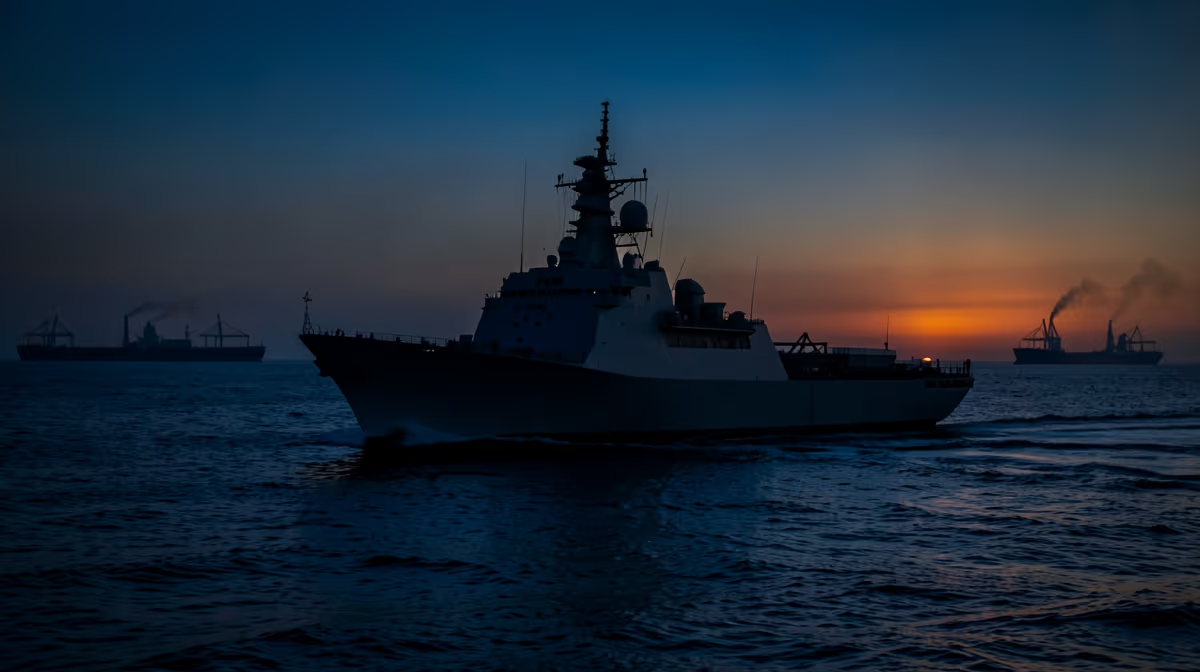
The precision-guided munitions deployed late Tuesday night against radar and surveillance infrastructure near the Strait of Hormuz mark a significant turning point in the ongoing struggle for maritime security. The escalating situation regarding the strait of hormuz us strikes has sent shockwaves through international markets, raising urgent concerns about the stability of the global oil supply chain.
The Anatomy of the Escalation
U.S. military forces conducted a series of targeted strikes against radar and surveillance infrastructure in the vicinity of the Strait of Hormuz late Tuesday, following a surge in maritime hostilities that threatened international shipping lanes. The operation was authorized by the Pentagon in response to recent harassment of commercial tankers by naval vessels linked to regional proxy forces. U.S. Central Command confirmed that the operations utilized precision-guided munitions to degrade the capability of coastal monitoring sites that had been tracking western vessels in the critical maritime chokepoint.
While the region has remained a geopolitical flashpoint for decades, this escalation marks the first direct U.S. kinetic action against military-adjacent infrastructure in the area this year. Diplomatic channels remain active as regional powers express concerns over the potential for a broader regional conflict stemming from these tactical engagements. The U.S. has described these strikes as defensive measures meant to deter future attacks on global maritime traffic, signaling a firm commitment to maintaining the flow of goods through this vital maritime highway.
Analyzing the Global Oil Supply Chain Risk
The Strait of Hormuz is a global artery for energy, with nearly one-fifth of the world’s total oil consumption passing through its narrow waters daily. Any military conflict here can cause immediate spikes in global fuel prices, leading to inflation and economic strain for everyday consumers far beyond the Middle East. Energy markets reacted sharply to the news, as the region’s stability is directly tied to the cost of crude oil.
The structural friction between Iranian regional hegemony and the U.S.-led policy of maritime containment within this critical energy chokepoint remains the root cause of the current tension. Analysts note that this conflict is currently operating in a gray zone, characterized by tactical strikes that avoid a total blockade, as a full closure of the Strait would be mutually disadvantageous for major regional exporters. However, the volatility of global energy pricing and the potential for increased insurance premiums for maritime logistics remain major areas of concern for the global economy.
Maritime Security and Geopolitical Tension
The current situation is defined by a deep-seated geopolitical anxiety. East Asian importers, who remain highly dependent on Persian Gulf oil, are currently recalibrating their diplomatic ties with Iran to ensure their energy security. This tension is further complicated by the covert expansion of cyber-warfare capabilities designed to disrupt port management systems and regional grid infrastructure, a factor that remains largely out of the public domain but weighs heavily on security assessments.
Historical parallels are frequently drawn to the 1987-1988 Operation Praying Mantis during the Tanker War, where naval skirmishes tested the boundaries of international transit rights. The timeline of this region—spanning from the 1980s conflict to the 2019-2020 tanker seizures and the present-day drone swarm threats—demonstrates a consistent pattern of asymmetric naval warfare. The Pentagon’s stance remains that these strikes were a necessary and proportionate response to ongoing threats, while regional security analysts warn that such actions significantly lower the threshold for a sustained military confrontation in the Persian Gulf.
Strategic Outlook for the Coming Days
In the next 24 hours, observers expect heightened surveillance and increased naval patrol density by the U.S. Fifth Fleet, accompanied by diplomatic back-channel communications aimed at de-escalating the rhetoric. As we move into the 72-hour window, the expectation is a continuation of standard transit operations with reinforced air cover, although markets will likely remain reactive, reflecting volatility regarding energy insurance premiums.
The best-case scenario involves back-channel de-escalation leading to a temporary maritime security agreement and a return to standard, unimpeded transit protocols. Conversely, the worst-case scenario involves a miscalculation that leads to direct kinetic combat, resulting in the closing of the Strait, a severe spike in global oil prices, and broader regional military escalation. For now, the focus remains on calibration, with all key players, including the United States Navy, the Islamic Revolutionary Guard Corps Navy, OPEC members, and the International Maritime Organization, monitoring the situation with extreme caution.
Frequently Asked Questions
What happens if the US strikes the Strait of Hormuz?
A military strike in the Strait of Hormuz could lead to a significant blockade, severely disrupting global oil supplies and causing energy prices to skyrocket. This would likely trigger a broader geopolitical conflict in the Middle East and draw international navies into a high-stakes maritime confrontation.
Why is the Strait of Hormuz important to the United States?
The Strait of Hormuz is a vital chokepoint for the global economy, as roughly one-fifth of the world’s petroleum consumption passes through it daily. For the United States, maintaining freedom of navigation in this area is critical to ensuring global energy security and supporting key regional allies.
Have there been any US military strikes in the Strait of Hormuz recently?
While the US has conducted various military operations and strikes against Houthi targets and regional proxies in response to maritime threats, there has not been a direct, full-scale US military strike against the Strait itself. Most US actions have focused on deterring harassment of commercial shipping and intercepting illicit weapons shipments.
What is the US strategy for protecting shipping in the Strait of Hormuz?
The US strategy relies on maintaining a persistent naval presence through the Fifth Fleet and forming international maritime security coalitions. These initiatives focus on escorting commercial vessels, increasing surveillance, and responding rapidly to any attempted seizures or aggressive maneuvers by Iranian forces.
How would a closure of the Strait of Hormuz impact India?
Since India imports a significant portion of its crude oil and natural gas from the Persian Gulf, a closure of the Strait would cause an immediate energy supply shock and spike inflation. It would force India to rely on costlier alternatives and could jeopardize the economic stability of trade routes vital to its energy security.
Could US intervention in the Strait of Hormuz lead to war?
Military intervention carries a high risk of escalation, as any direct conflict between the US and regional powers could quickly expand into a regional war. Diplomacy remains the primary tool used by world powers to prevent the Strait from becoming a theater for open military engagement.
Conclusion
The recent U.S. military strikes on radar and surveillance infrastructure have underscored the fragile nature of energy security in the Persian Gulf. While the operation was framed as a defensive measure to ensure the free flow of maritime traffic, the immediate reaction of global energy markets highlights the sensitivity of this vital chokepoint. Verified reports confirm the targeted destruction of specific monitoring sites following a period of persistent harassment of merchant vessels. As the region enters a period of heightened naval surveillance, the international community remains focused on preventing further escalation. The path forward remains dependent on the effectiveness of diplomatic back-channels and the restraint exercised by both U.S. forces and regional actors to avoid a wider, more damaging conflict.


.webp)


.webp)
