
United Airlines Tech Outage Exposes Hidden Fragility of US Aviation
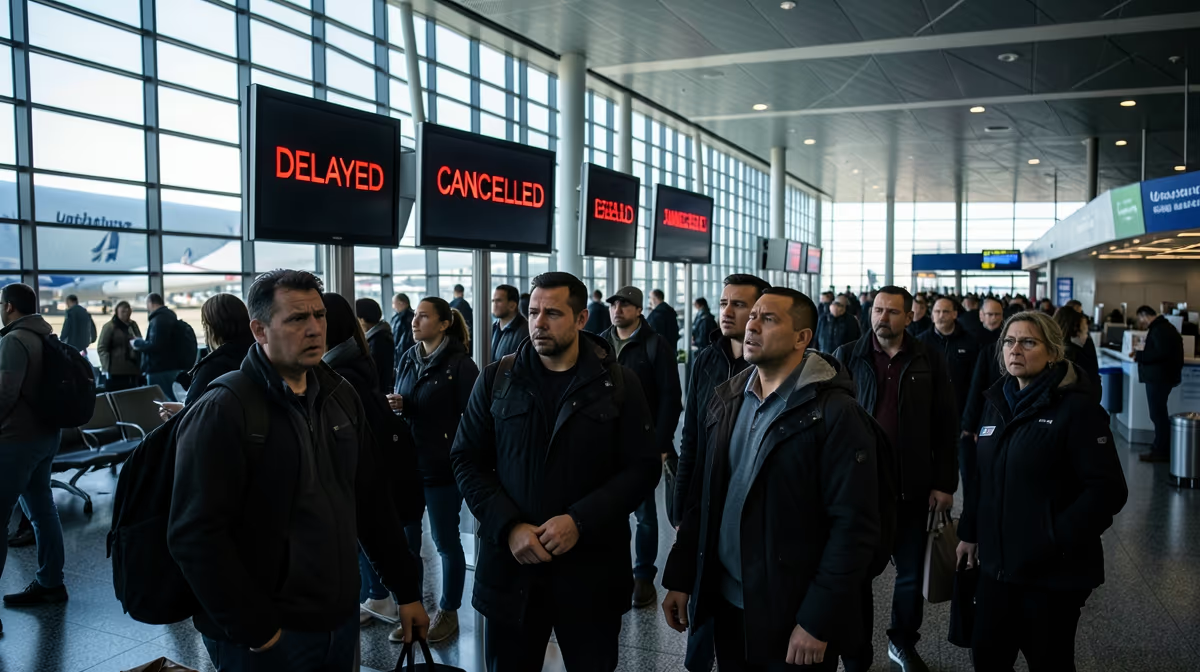
The intricate digital nervous system powering global aviation is proving to be dangerously fragile, as evidenced by the recent United Airlines technology outage that brought operations to a standstill across the United States. This sudden failure of internal computing networks not only grounded a massive fleet but also exposed the compounding risks inherent in our reliance on centralized, legacy software architectures.
Anatomy of a Systemic Failure
The disruption began shortly after 12:30 p.m. ET on Tuesday, September 5, 2023, when an internal network connectivity issue within United Airlines' dispatch and scheduling sub-systems crippled the carrier's ability to communicate with aircraft. This internal software configuration mismatch necessitated a swift and drastic response: a nationwide ground stop for all domestic flights. During this period, the Federal Aviation Administration coordinated closely with the airline, issuing a formal notice to air missions to ensure the safety of the airspace while engineers struggled to restore stability.
The operational pause lasted for approximately one hour. During this time, the consequences were immediate and severe. Passengers already on board aircraft were left stranded on tarmacs, while those in terminals across major hubs—most notably Chicago O'Hare, Newark, and Houston—faced mounting uncertainty, long lines, and a rapidly dissolving flight schedule. While the airline confirmed that no safety incidents occurred for aircraft already in flight, the ripple effects were profound, creating a bottleneck that impacted the remainder of the day's operations.
Infrastructure Resilience Under Scrutiny
At the heart of this disruption lies a structural challenge facing the aviation industry: the struggle to modernize aging legacy software stacks while maintaining the 24/7 uptime required for safe, global operations. These centralized systems are designed to handle massive volumes of data, but they often struggle to manage rapid-scale synchronization during peak load periods. When a core component of this digital architecture falters, the resulting cascading effect paralyzes the entire logistics chain.
For the average passenger, this translates into a day of missed connections and ruined plans. However, for analysts and security experts, the incident highlights a deeper systemic vulnerability. The reliance on highly interconnected, centralized systems creates a singular point of failure. This fragility is not merely an operational nuisance; it represents a significant security concern, as such vulnerabilities could theoretically be exploited by actors seeking to induce domestic chaos. The transition cost and technical debt associated with replacing these legacy systems are significant, often leading airlines to prioritize marketing-heavy consumer technology over the foundational infrastructure resilience required to prevent such gridlocks.
The Economic and Regulatory Fallout
The financial impact of such an outage is substantial, encompassing not only the direct costs of operational inefficiency and flight re-accommodation but also the long-term erosion of brand equity. Stock price volatility often follows these incidents as investors weigh the costs of technical failure against the company's ability to manage its infrastructure. Furthermore, the incident has drawn sharp attention from the Department of Transportation. There is growing bipartisan scrutiny regarding whether current regulatory enforcement is sufficient to compel airlines to prioritize the modernization of their digital backbones.
Historically, this event parallels the 2017 British Airways IT system crash, which similarly paralyzed global operations due to a lack of decentralized redundancy. As the industry moves forward, it faces pressure to move away from rigid, centralized models toward more robust, decentralized backup systems. Without these investments, airlines remain tethered to the risk of repeating these cycles of instability, leading to potential regulatory fines and legislative intervention aimed at mandating higher standards for passenger protection and infrastructure compliance.
Recovery and Operational Stabilization
In the 24 hours following the outage, the primary focus for United Airlines shifted toward the operational recovery phase. This involved clearing the massive backlog of delayed and canceled flights, finalizing rebooking processes for thousands of displaced travelers, and verifying that internal IT systems were not only back online but fully stable. Throughout the next 72 hours, the carrier transitioned toward normalizing its schedule, a process that required meticulous verification of flight plans and the initiation of a formal post-mortem analysis of the software failure.
Managing the public relations fallout remains a critical component of this recovery. The airline is under pressure to navigate customer compensation requests and travel waivers while mitigating the frustration of passengers who bore the brunt of the disruption. While the best-case scenario involves the efficient re-accommodation of all passengers with minimal long-term impact, the worst-case, which airlines must actively avoid, involves recurring system instability. Such an outcome could lead to prolonged congestion, sustained passenger dissatisfaction, and increased scrutiny from regulators who are already questioning the resilience of the national transportation grid.
Frequently Asked Questions
Why did United Airlines have a technology outage?
United Airlines experienced an internal network connectivity issue that affected its dispatch and scheduling systems. These types of failures typically stem from software configuration mismatches or problems within legacy computer networks that handle flight planning and crew management.
Can I get a refund if my United Airlines flight is canceled due to a technical issue?
Yes. If your flight is canceled due to a technical outage, you are entitled to a full refund to your original form of payment if you choose not to be rebooked, per federal regulations.
How do I check my flight status after a United Airlines system outage?
You can visit the official United Airlines website or use their mobile app. It is also recommended to monitor your email or text messages for flight alerts directly from the carrier.
What should I do if I am stranded due to a United Airlines tech outage?
You should attempt to rebook your flight using the airline’s app or website, as this is often faster than waiting for customer service in person. If you are at the airport, speak with an agent and keep all receipts for necessary expenses, such as meals or lodging, for potential reimbursement.
Are United Airlines flights back to normal after the technology outage?
To confirm the status of operations, please visit the United Airlines Travel Updates page on their official website for real-time information regarding ongoing disruptions or recovery status.
Does United Airlines provide compensation for delays caused by technology failures?
While cash compensation is not legally required for technical delays, the airline may provide travel credits, vouchers, or frequent flyer miles as a gesture of goodwill. You should contact customer care to inquire about potential compensation.
Conclusion
The United Airlines technology outage serves as a stark reminder of the fragile state of modern aviation infrastructure. While the ground stop was lifted within an hour, the event triggered a cascade of delays and cancellations that rippled through the national transportation network, underscoring the necessity for better technical redundancy. Moving forward, the carrier must address the systemic technical debt inherent in its legacy systems while navigating increased scrutiny from regulatory bodies like the DOT. For passengers, the priority remains monitoring official channels for updates and understanding their rights to refunds and support during such disruptions. The industry now faces a critical junction where the focus must pivot from expansion to the hardening of the essential digital networks that keep the world connected.


.webp)


.webp)
