.webp)
Ukraine Caspian Sea Strikes Mark New Phase That Changes Everything
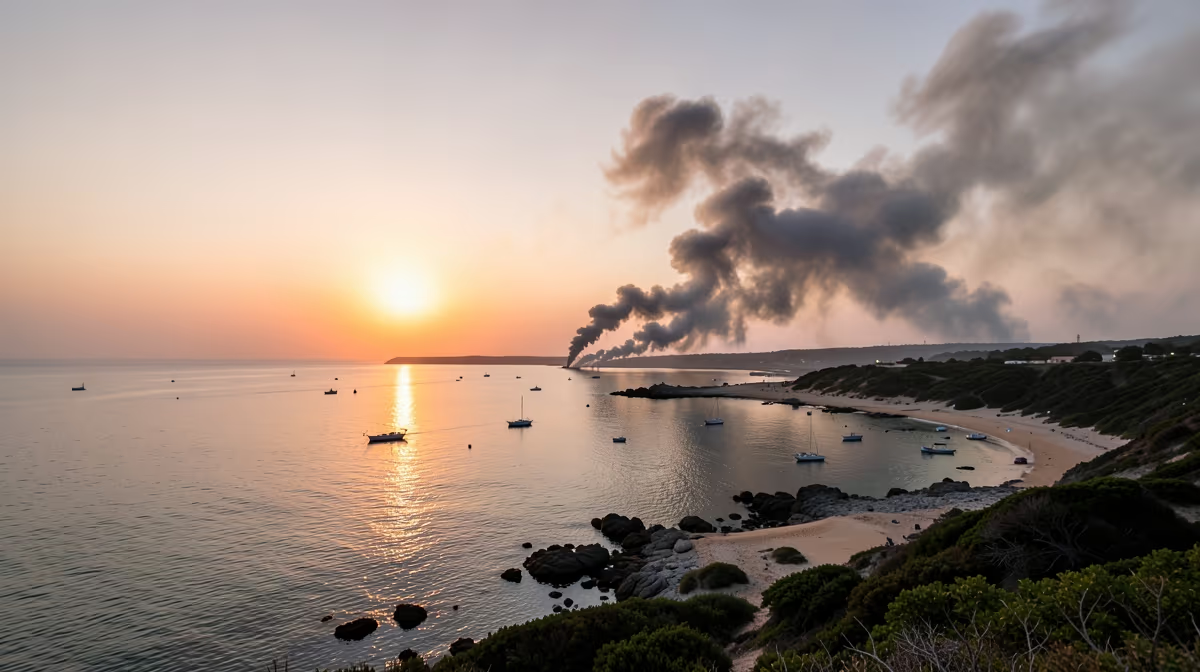
Geographic boundaries defining military sanctuary are rapidly dissolving as strategic capabilities extend toward interior waterways. Recent developments show that ukraine caspian sea strikes are expanding the geographical scope of the ongoing war, testing the limits of traditional air defense and pushing the boundaries of modern conflict into secondary basins traditionally viewed as secure.
Strategic Importance of the Caspian Sea Basin
The Caspian Sea region serves as a crucial transit and logistics corridor for Russia, linking it to countries like Iran. Moscow has historically used Caspian shipping routes to transport military supplies, including drones and ammunition, to support its military operations. Furthermore, the basin has functioned as a relatively secure launching pad for Russian Kalibr cruise missiles targeting critical infrastructure inside Ukraine.
Bordered by several nations including Russia, Iran, Kazakhstan, Turkmenistan, and Azerbaijan, the enclosed body of water holds immense geopolitical and economic significance. The Caspian Sea region is located hundreds of miles away from the Ukrainian border, deep inside Russian territory, making it an area of keen interest for military observers and regional neighbors who monitor these developments closely due to potential security risks.
How Ukraine Executed the Long Range Strikes
Ukrainian long-range strike drones targeted the Russian naval assets and port facilities in the Caspian Sea region, marking an unprecedented expansion of military reach. Satellite imagery and local reports indicated explosions near port facilities utilized by the Russian Caspian Flotilla. While air defenses were activated in the area, the full extent of the damage to naval vessels or logistical infrastructure remains under assessment by Western intelligence agencies.
Military strategists suggest this operation demonstrates Ukraine's accelerating domestic production of long-range unmanned aerial vehicles capable of evading sophisticated radar networks. These long-range operations rely on advanced, domestically produced Ukrainian drones capable of flying hundreds of miles to disrupt Russian military logistics, supply chains, and command centers that support the invasion.
Underlying Drivers and Analytical Perspectives
The root cause of these operations stems from Ukraine's strategic imperative to degrade Russian military logistics, supply chains, and energy export infrastructure far beyond its immediate borders to neutralize the sanctuary advantage. This approach tests the boundaries of Western weapons restrictions while projecting strength to domestic populations and international allies amid fatigue.
From a geopolitical standpoint, these actions represent an encroachment into Russia's traditionally secure Central Asian and Caucasian near abroad, complicating Moscow's relations with regional powers like Iran, Kazakhstan, and Azerbaijan. Economically, the expansion introduces risks regarding the disruption of Caspian energy corridors, maritime trade, and increased insurance and operational costs for Russia shadow fleet and Caspian basin partners. Analysts assess that while long-range strikes into the Caspian region demonstrate expanding Ukrainian asymmetric reach, they will remain sporadic due to extreme distance and reliance on scarce deep-strike munitions, prompting Russia to reinforce air defense in the Caspian basin.
Near-Term Intelligence and Diplomatic Responses
Intelligence sharing and satellite monitoring by Western allies over the Caspian basin are expected to increase over the next 24 hours, alongside diplomatic consultations between Russia and Central Asian littoral states regarding maritime security. Following this window, enhanced electronic warfare countermeasures by Russian forces in the Caspian region and potential diplomatic warnings from Moscow to transit countries will likely materialize.
Key players involved in managing the evolving security dynamics include the Ukraine Armed Forces, Russian Ministry of Defense, United States Department of Defense, and the Kazakhstan Government. Impact areas span Caspian Sea maritime logistics, energy transit corridors, US-Russia intelligence dynamics, and the interconnectivity between Black Sea and Caspian security.
Potential Scenarios and Future Outlook
The best-case scenario involves strikes remaining limited, prompting increased diplomatic engagement on regional security without escalating into broader regional instability or disrupting critical energy flows. Conversely, the worst-case scenario entails escalation leading to collateral damage on international commercial shipping or energy infrastructure in the Caspian, triggering severe economic fallout and a broader geopolitical crisis involving Central Asian states.
Frequently Asked Questions
Has Ukraine struck targets in the Caspian Sea region?
Ukraine has not directly launched military strikes within the Caspian Sea itself due to the geographic distance. However, Ukrainian long-range drone technology and intelligence operations have targeted Russian military assets and supply chains thousands of miles away, indirectly impacting operations connected to that theater. Most maritime conflict involving Ukrainian drones has been concentrated in the Black Sea and the Sea of Azov.
Why is the Caspian Sea important to the Russia-Ukraine war?
The Caspian Sea region serves as a crucial transit and logistics corridor for Russia, linking it to countries like Iran. Moscow has reportedly used Caspian shipping routes to transport military supplies, including drones and ammunition, to support its war effort in Ukraine. Because of this strategic supply line, the broader region remains an area of keen interest for military observers.
Can Ukrainian drones reach the Caspian Sea?
Ukraine has demonstrated the capability to develop long-range uncrewed aerial vehicles that can travel vast distances exceeding a thousand miles. While theoretical range could allow drones to approach the Caspian basin, actual deployments there would face immense challenges, including heavily defended airspace and complex routing. Consequently, verified Ukrainian drone strikes remain focused much closer to its own borders and interior Russian military infrastructure.
What role does Iran play in the Caspian Sea regarding the Ukraine conflict?
Iran borders the southern coast of the Caspian Sea and maintains close military ties with Moscow. The Caspian corridor has facilitated the transfer of military equipment, such as Shahed suicide drones, from Iran to Russia. These weapons have been frequently used by Russian forces against Ukrainian civilian and energy infrastructure.
Are Russian naval forces safe in the Caspian Sea?
The Caspian Sea is largely enclosed by Russia, Iran, Kazakhstan, Turkmenistan, and Azerbaijan, making it a heavily controlled body of water. While Russia's Caspian Flotilla is removed from direct Ukrainian naval counter-attacks, naval assets are still vulnerable to broader strategic shifts or long-term geopolitical pressures. Nevertheless, it remains a much safer sanctuary for the Russian Navy compared to the contested waters of the Black Sea.
How does the Black Sea conflict compare to the Caspian Sea situation?
The Black Sea is a primary theater of naval warfare in the Russia-Ukraine conflict, where Ukraine has successfully sunk numerous Russian warships using asymmetric drone and missile tactics. In contrast, the Caspian Sea is an enclosed inland sea far from the active combat zone with no direct naval engagements involving Ukraine. The two regions are separated by hundreds of miles of Russian territory, completely isolating the Caspian from immediate maritime skirmishes.
Conclusion
The expansion of Ukrainian long-range strike capabilities toward the Caspian Sea basin highlights a shifting paradigm in modern conflict, where geographic distance no longer guarantees absolute sanctuary for military logistics and naval infrastructure. Verified developments show that domestic unmanned aerial vehicles have reached the region, triggering air defense responses and prompting western intelligence agencies to assess the damage to Russian facilities. As diplomatic consultations and electronic warfare countermeasures unfold across the Caspian basin, regional stability and maritime logistics will continue to face heightened scrutiny from international observers and littoral states alike.


.webp)
.webp)
