
United States Midterm Election Results Signal Major Structural Shift
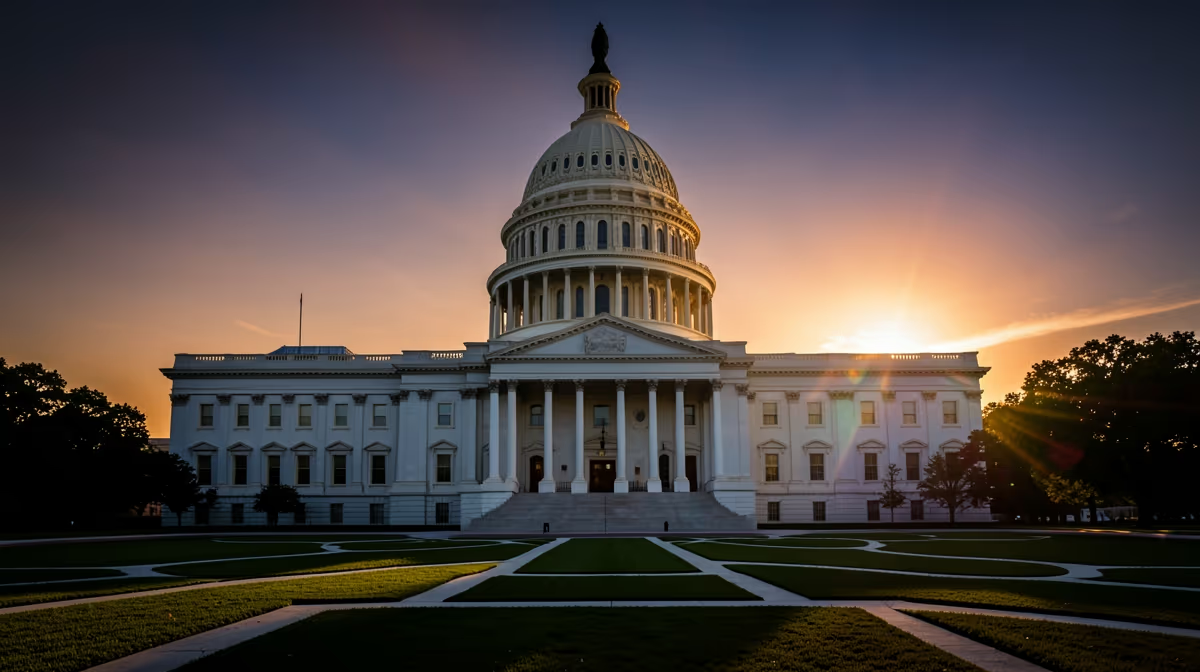
The intricate mechanics of American governance are often put to their sternest test when the nation reaches the halfway point of a presidential term. The United States midterm election remains a pivotal moment for domestic policy, as voters determine the balance of power in Congress. Understanding these US congressional shifts is essential for predicting the future legislative landscape and the long-term policy implications of midterms for the American public. By serving as a de facto referendum on executive performance, these cycles recalibrate the legislative agenda and ripple outward to influence global trade alliances, defense spending, and the trajectory of emerging technologies like artificial intelligence.
The Mechanics of the Legislative Report Card
Midterm elections occur every two years, exactly halfway between presidential elections, acting as a national report card for the current administration. Voters elect all 435 members of the House of Representatives for two-year terms and approximately one-third of the 100 seats in the Senate for six-year terms. Because Congress is the primary body responsible for drafting federal law, the party that secures a majority in either chamber gains the power to influence the legislative agenda, hold committee chairmanships, and oversee the confirmation process for judicial and executive appointments.
The constitutional basis for these elections is rooted in the need for regular institutional accountability. Historically, the party not currently occupying the White House tends to gain seats during these cycles. This trend serves as a vital check and balance, often signaling public dissatisfaction with the pace of policy implementation or economic management. When the opposition party wins control of one or both chambers, it frequently leads to political gridlock, effectively limiting the president's ability to enact their preferred legislative priorities for the final two years of their term.
Analyzing the Policy Implications of Midterms
The consequences of these elections extend far beyond the borders of Washington. For policymakers and global investors, a shift in congressional control dictates the viability of fiscal policies, tax structures, and regulatory environments. As legislative leverage shifts, so too does the ability of political parties to mobilize their grassroots bases to prioritize specific committee oversight. This redistribution of power is not merely a domestic concern; it serves as a signal to international allies and adversaries regarding the reliability and long-term consistency of American foreign policy commitments.
Geopolitical analysts observe that stability in US domestic policy is a prerequisite for sustained international cooperation on trade alliances and defense funding. When domestic polarization deepens, the predictability of American international relations can fluctuate, impacting how other nations navigate their own security assessments. Simultaneously, the internal struggle over national budget allocations directly influences everything from infrastructure investment to the regulatory framework governing the rapidly evolving landscape of artificial intelligence.
The Root Causes of Electoral Volatility
The current environment is defined by systemic political polarization, a condition exacerbated by diverging socioeconomic realities and a measurable erosion of institutional trust. These factors have transformed the traditional midterm cycle into a high-stakes campaign for structural control. Increasingly, the influence of dark money and the rise of algorithmic narratives—which operate outside traditional media frameworks—have reshaped how local constituencies perceive their interests and their role in the electoral process.
Historical parallels, such as the 1994 midterm elections, provide a lens through which to view these shifts. Like the present era, that period functioned as a referendum on an incumbent administration and resulted in a significant power realignment that forced a major pivot in legislative productivity. Today, the mobilization of these grassroots bases is focused on consolidating influence within key congressional committees, which act as the gatekeepers for legislation concerning healthcare, economic policy, and environmental regulation.
Anticipating the Electoral Timeline
As the election cycle reaches its conclusion, the focus shifts to the intense final get-out-the-vote efforts and the management of logistical challenges in battleground precincts. The immediate next 24 hours are characterized by heightened monitoring of polling station security and a concentrated push to maximize voter turnout in contested districts. Beyond the immediate polling window, the next 72 hours will be dominated by the counting of mail-in ballots and the potential for legal challenges regarding ballot validity, which are governed by specific state-level protocols.
The expert prediction suggests a narrow margin in the House favoring the opposition party, with the Senate outcome remaining a toss-up determined by late-counted urban and suburban ballots. Whether the nation experiences a swift, transparent vote count that restores confidence in democratic institutions, or finds itself mired in prolonged uncertainty due to contested results, will have massive implications for market stability and legislative viability. The worst-case scenario involves a constitutional crisis stemming from the refusal to certify outcomes, while the best-case remains a period of functional, albeit challenging, bipartisan cooperation.
The Human Impact and Public Engagement
Every citizen in the United States is affected by the resulting federal and state policies, regardless of their individual voting record or party affiliation. These elections directly determine the legislative direction of the country, influencing national policies on inflation, healthcare access, and the overall fiscal health of the American economy. Because state legislatures and gubernatorial offices are often on the ballot simultaneously, the midterm cycle also dictates the governance of localized issues, such as education, public safety, and state-level infrastructure.
Voter turnout remains the most critical variable in this dynamic. While the legislative process remains fixed by constitutional timelines, the demographic composition of voters in swing districts continues to evolve. As voters evaluate candidates, the focus remains on economic pressures and the temperament of the electorate regarding the pace of progress. For the average American, the outcome is a tangible determinant of their daily life and future prosperity.
Frequently Asked Questions
When is the next United States midterm election?
The next United States midterm elections are scheduled to take place in November 2026. These elections occur halfway through a president's four-year term, typically falling two years after a presidential election.
What is the purpose of a midterm election in the US?
Midterm elections are held to elect members of the United States Congress, including all seats in the House of Representatives and about one-third of the Senate. These elections serve as a way for voters to evaluate the performance of the current administration and determine the balance of power in the legislative branch.
Who can vote in the United States midterm elections?
Any United States citizen who is at least 18 years old by Election Day and meets their state's registration requirements is eligible to vote. Voters must typically register in their specific state of residence before the registration deadline set by that state.
How do midterm elections affect the president's agenda?
Midterm elections often result in a shift of power in Congress, which can significantly hinder or facilitate a president's ability to pass legislation. If the president's party loses control of one or both chambers, it usually becomes much more difficult to enact new laws or confirm judicial appointments.
What is on the ballot besides congressional seats in midterm elections?
In addition to federal congressional races, midterm ballots often feature elections for state governors, state legislators, and various local officials like mayors and city council members. Voters may also see ballot measures, propositions, or referendums that allow them to vote directly on specific state or local policy issues.
How are midterm election results different from presidential election results?
While presidential elections determine who holds the executive branch, midterm elections focus exclusively on the composition of the legislative and state-level governments. Historically, the party that holds the presidency often loses seats in Congress during midterm elections due to public dissatisfaction or typical political pendulum swings.
Conclusion
The United States midterm election serves as a essential mechanism for democratic feedback, balancing executive power with legislative oversight. Through the election of House and Senate representatives, the public directly influences the nation’s trajectory regarding fiscal policy, international alliances, and domestic governance. As the country moves from the final days of campaigning into the period of ballot verification and certification, the focus remains on the integrity of the process and the subsequent legislative shift. Whether through continued gridlock or new coalition-building, the results of this midterm cycle will define the political and economic landscape for the next two years.


.webp)
