
Oil Tanker U-Turn in Strait of Hormuz Stuns Global Energy Markets
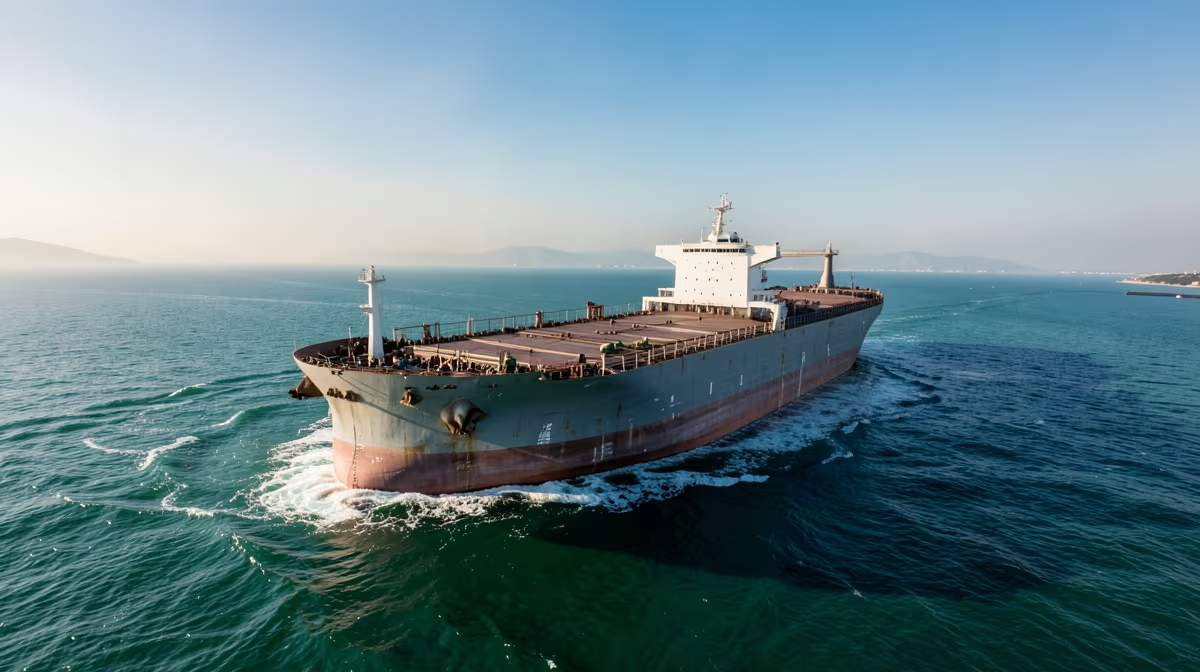
A commercial oil tanker made an abrupt U-turn in the Strait of Hormuz on Wednesday after reportedly receiving a radio challenge from Iranian maritime authorities, underscoring ongoing instability in the world's most critical oil chokepoint. The sudden oil tanker u-turn in the Strait of Hormuz has sent shockwaves through international markets, highlighting the fragility of the global energy supply chain amidst escalating Middle East conflict.
The vessel, which had been transiting through the narrow waterway connecting the Persian Gulf to the Gulf of Oman, altered its course sharply toward international waters following communication with Iranian naval assets. While the tanker's identity and specific cargo remain under review by shipping tracking firms, the maneuver mirrors previous incidents where Iranian forces have contested the passage of foreign-flagged commercial ships. The U.S. Fifth Fleet, based in Bahrain, has acknowledged awareness of the incident and continues to monitor regional maritime activity to ensure the free flow of commerce. This event follows a series of heightened security alerts in the region, as international powers scramble to secure energy supply lines against potential sabotage or seizure.
The Strategic Chokepoint
The Strait of Hormuz acts as the world's most vital artery for energy, with roughly 20 percent of the total global petroleum consumption passing through this narrow passage between Iran and Oman. When a large tanker deviates from its course in this region, it often signals heightened security risks or geopolitical tension. These movements are closely monitored as indicators of broader instability. Historically, the strait has served as a stage for diplomatic standoffs and military posturing, particularly between the United States and Iran regarding sanctions enforcement and maritime freedom of navigation. The region has a history of tankers being harassed, seized, or challenged by regional military forces, making every navigational anomaly a matter of intense international concern.
Unfolding Maritime Dynamics
The verified facts of the encounter indicate that a commercial tanker performed a 180-degree turn in the Strait of Hormuz following radio communications with Iranian forces. No shots were fired, and the vessel was not seized; instead, it successfully exited the immediate proximity of the Iranian-monitored zone. The U.S. Fifth Fleet remains cognizant of the maneuver, which serves as a reminder of the fragile balance of power maintained by naval patrols. Analysts identify this incident as a form of strategic signaling amidst heightening asymmetric maritime tensions. The maneuver appears to function as a coercive diplomatic instrument, allowing regional actors to project force and assert control over the chokepoint without initiating direct, full-scale kinetic conflict.
The Economic Ripple Effect
The economic implications of such tactical shifts are immediate and far-reaching. Global oil prices often react instantly to any perceived threat to shipping routes in this area. When tankers alter their transit patterns, slow down, or congregate in holding areas, insurance premiums and freight rates typically experience upward pressure. This creates volatility in global crude futures, as the market interprets these navigational changes as potential risks to supply chain continuity. For the average consumer in the United States and abroad, any restriction or significant delay in the flow of energy through the strait could lead to higher costs for gasoline and heating fuel, demonstrating the direct link between maritime security and the cost of living.
Expert Assessments and Historical Parallels
Maritime security analysts view this event through the lens of historical precedent, notably the 1987-1988 Tanker War during the Iran-Iraq conflict. That period highlighted the recurring vulnerability of the region to state-level intimidation. Current expert predictions suggest a tense standoff, where such U-turns are identified either as precautionary measures taken by vessel operators in response to reported naval exercises, or as calculated signaling tactics by regional actors. The role of automated maritime tracking anomalies is also significant, as shipping companies now use sophisticated AIS data to distinguish between routine transit and potential tactical deception. A U.S. Navy spokesperson emphasized the commitment to upholding the international rules-based order, while observers note that these maneuvers are rarely accidental and are designed to send clear signals of regional reach.
Anticipating Regional Developments
In the next 24 hours, the focus will remain on increased naval patrols and intelligence gathering by the U.S. Fifth Fleet to monitor traffic patterns following the unexpected maneuver. Within 72 hours, it is expected that diplomatic back-channel communication between Washington, Tehran, and major shipping companies will take place to clarify intentions and prevent miscalculation in the maritime corridor. The best-case scenario is that these maneuvers are confirmed as routine safety diversions due to weather or technical issues, leading to a swift return to normal operations. Conversely, the worst-case scenario involves the possibility that these movements reflect an escalation in naval harassment, potentially triggering a localized military skirmish that could temporarily impede shipping traffic and cause a sharp spike in crude oil futures.
Frequently Asked Questions
Why would an oil tanker perform a U-turn near the Strait of Hormuz?
An oil tanker might perform a U-turn near the Strait of Hormuz due to heightened geopolitical tensions, security warnings, or instructions from national authorities to avoid potential interference. Captains often maneuver to wait in safer waters if they receive reports of vessel seizures or military drills in the region.
Are oil tankers required to pass through the Strait of Hormuz?
While the Strait of Hormuz is a vital global chokepoint for oil exports, it is not strictly mandatory for all vessels. However, bypassing it is often logistically impossible or cost-prohibitive for tankers departing from major Persian Gulf oil terminals in Saudi Arabia, Iraq, and Kuwait.
How do recent tensions impact oil tanker navigation in the Strait of Hormuz?
Increased military presence and regional conflicts frequently force oil tankers to alter their transit patterns, slow down, or congregate in holding areas. These tactical navigation choices are designed to minimize risks to the crew and cargo while awaiting escort or clearance from security forces.
Can oil tankers turn around quickly if the Strait of Hormuz closes?
Large crude oil tankers have a massive turning radius and significant momentum, meaning they cannot make sharp or immediate U-turns. If the Strait were to close suddenly, these vessels would likely need to drift or anchor in designated waiting zones until the situation is resolved or safe passage is guaranteed.
Who monitors oil tanker movements in the Strait of Hormuz?
Tanker movements in the Strait of Hormuz are monitored by a combination of maritime authorities, naval forces from various nations, and private maritime security firms using Automatic Identification System (AIS) tracking. This surveillance ensures that vessel operators have real-time data regarding safety threats and traffic congestion.
Does a U-turn by a tanker in the Middle East affect oil prices?
Market analysts often view unusual tanker movements or sudden U-turns as potential signals of supply chain disruptions or military escalation. If a major tanker pivots away from the Strait of Hormuz, it can trigger immediate uncertainty in the global energy market, frequently causing crude oil futures to spike.
Conclusion
The unexpected U-turn of a commercial oil tanker in the Strait of Hormuz has highlighted the precarious state of maritime security in the Middle East. While the vessel has safely moved away from the Iranian-monitored zone and no direct conflict occurred, the incident remains a significant indicator of regional geopolitical friction. Intelligence and naval monitoring are expected to intensify as stakeholders evaluate the maneuver. Moving forward, the global energy market will continue to watch for signs of further escalation, as the stability of this critical transit route remains essential for the consistent flow of global oil supplies.


.webp)
