
Oil Tanker U-Turn in Hormuz Signals Looming Energy Market Crisis
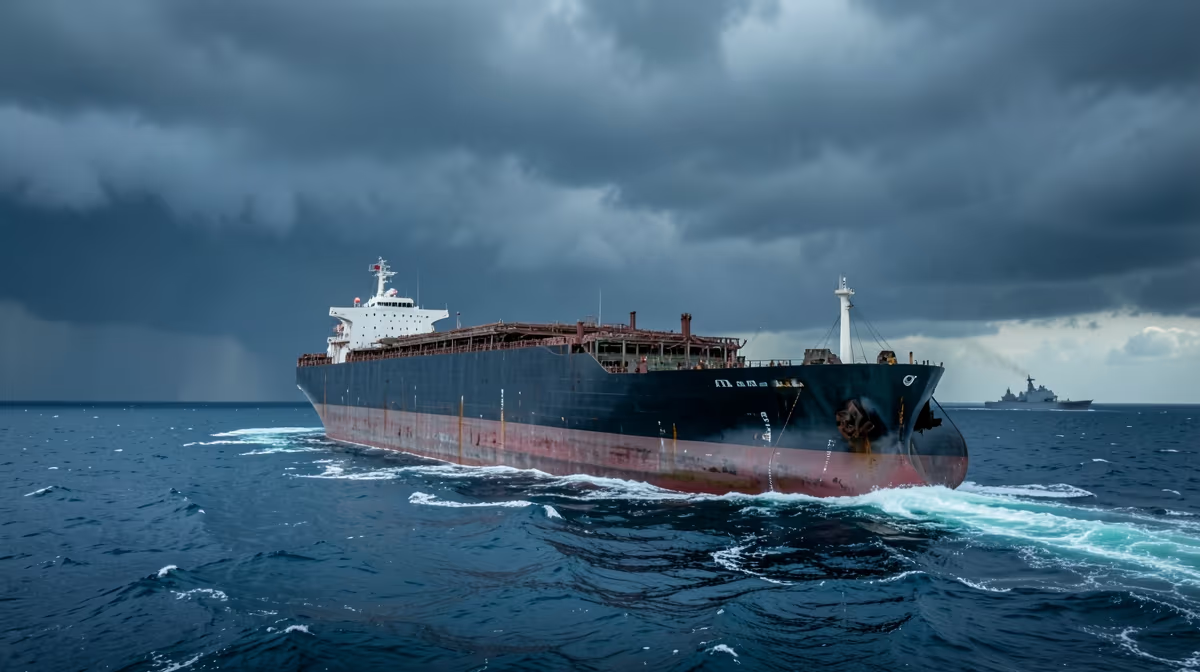
Multiple commercial oil tankers reversed course in the Persian Gulf early Thursday after U.S. and allied officials issued heightened security warnings regarding maritime navigation through the Strait of Hormuz. The sudden oil tanker u-turn in the Strait of Hormuz has sent shockwaves through global markets, highlighting the fragility of energy security 2026.
The Mechanics of the Maritime Disruption
The sudden maneuvers follow a period of intensifying tensions in the region, with U.S. Central Command increasing patrols to deter what officials describe as illegal Iranian attempts to seize or harass merchant vessels. Logistics tracking data indicated that at least three major tankers abruptly changed their headings away from the waterway, opting to wait in international waters rather than risk transit during the period of heightened alert. Energy analysts suggest that the rerouting is a precautionary measure driven by increased insurance premiums and direct advisories from naval authorities. While no specific engagement occurred on Thursday, shipping companies are maintaining a wait-and-see approach as regional military assets remain in a high state of readiness.
Verified Maritime Developments
At least three tankers altered their course away from the Strait of Hormuz on Thursday. The U.S. Navy has recently increased its naval and aerial presence in the Persian Gulf to monitor the situation. The Strait of Hormuz represents a critical chokepoint for approximately 20% of global oil transit, making it the most important oil transit point in the world. As of this report, no direct military engagement between U.S. and Iranian forces has been reported. The current status confirms that commercial vessels have diverted their paths due to security warnings, and the U.S. has augmented its regional military footprint. The situation remains a developing story as analysts wait to see if these vessels will resume their original routes or if the diversions indicate a sustained shift in global oil supply chain operations.
Why the Strait of Hormuz Remains a Flashpoint
The Strait of Hormuz has long been a flashpoint for international conflict, serving as a vital artery for global energy. Roughly one-fifth of the world’s daily oil supply passes through this narrow corridor. Any disruption or perceived threat in this area causes immediate volatility in oil prices, which directly impacts fuel and energy costs for consumers and businesses in the United States and globally. Since 2019, Iran has periodically seized tankers in response to Western sanctions and regional military friction. This history of interference makes any unusual ship movement in the area a matter of high-stakes international security, necessitating a rapid response from the U.S. Navy Fifth Fleet and international observers.
Analytical Perspectives on Strategic Signaling
The root cause of these maneuvers appears to be a combination of navigational deterrence and strategic signaling in response to heightened regional maritime insecurity. From a political perspective, the U.S. seeks to project naval hegemony while pressuring Tehran to curb proxy-led maritime disruptions. Economically, the artificial inflation of insurance premiums and spot freight rates creates a significant tax on global energy transit. Geopolitically, this serves as a calculated show of force intended to reassure regional allies of U.S. security commitments despite a broader strategic pivot toward the Indo-Pacific. Analysts also note the significant role of high-frequency satellite monitoring and private intelligence firms in forcing public reactions to routine tanker movements, creating a complex feedback loop of information and military posturing.
Predicting the Near-Term Horizon
Over the next 24 hours, expect increased maritime reconnaissance and the deployment of additional U.S. naval assets to monitor the tanker transit, accompanied by high-level diplomatic communication with regional allies to verify cargo and ownership. Within 72 hours, the intent behind the u-turns should become clearer, potentially revealing whether the cause was technical malfunction or a direct response to diplomatic pressure. During this window, shipping insurance premiums for the Strait of Hormuz are expected to spike. While the current consensus among experts suggests the situation stems from a mix of navigation issues and precautionary maneuvering to avoid potential Iranian interdiction, the worst-case scenario remains a localized military standoff if a vessel were to be boarded or diverted by regional naval forces.
Frequently Asked Questions
Why do oil tankers make U-turns in the Strait of Hormuz?
Oil tankers may perform U-turns or sudden course changes in the Strait of Hormuz due to heightened regional security tensions, safety concerns, or shifting maritime directives. These maneuvers are often taken as a precautionary measure to avoid potential conflict or to comply with updated transit instructions.
Is it common for ships to turn around near the Strait of Hormuz?
While routine commercial transit is standard, sudden U-turns are considered abnormal and typically indicate a response to external threats or intelligence reports. Shipping companies frequently adjust paths to navigate around localized instability.
What happens if an oil tanker stops or turns in the Strait of Hormuz?
When a tanker stops or reverses course in this critical waterway, it can lead to increased surveillance from regional naval forces and potential logistical delays for global energy supplies.
How do geopolitical tensions affect oil tanker routes in the Persian Gulf?
Geopolitical tensions often force tanker operators to reroute or delay transit to protect crews and cargo from seizure or military intervention. These shifts can lead to volatility in global oil markets.
Are oil tankers allowed to turn around in international waters near Hormuz?
Yes, vessels are generally permitted to maneuver in international waters, provided they follow international maritime laws and maintain safe navigation protocols. However, erratic movements are subject to intense scrutiny by regional coastal states.
What role does the US Navy play when tankers divert in the Strait of Hormuz?
The US Navy and its coalition partners maintain a presence in the region to monitor maritime traffic and ensure freedom of navigation. They provide security oversight and communications support to commercial vessels during safety risks.
Conclusion
The situation in the Strait of Hormuz underscores the ongoing vulnerability of global energy supply chains to regional geopolitical friction. While no direct military engagement has occurred, the precautionary rerouting of major tankers reflects a high-stakes environment where security warnings dictate the flow of international commerce. Moving forward, the focus remains on whether these tankers resume their transit or if the regional maritime environment will continue to tighten under the pressure of heightened naval activity. Stakeholders in the energy sector should expect continued volatility as international monitors and naval forces maintain their watch over one of the world's most critical maritime chokepoints.


.webp)
