
US Weighs $100000 Fee for Foreign Students That Changes the Workforce
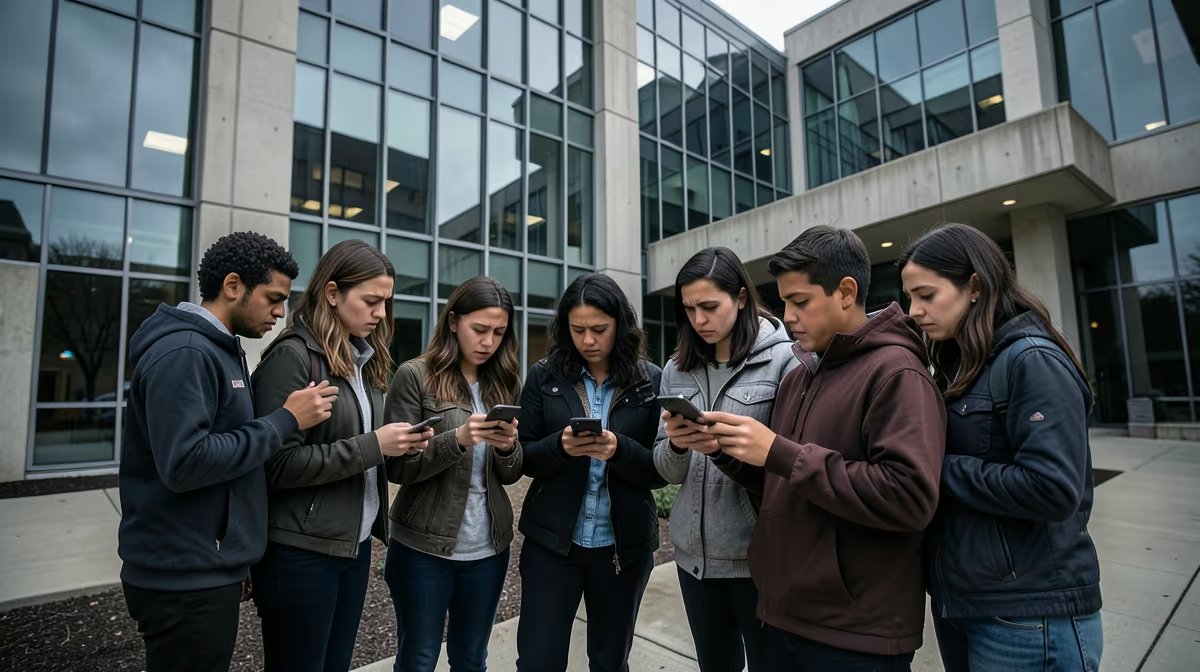
The United States government is reportedly discussing a major policy shift that means the US weighs $100000 fee for foreign students wanting to work after graduation, impacting thousands of international scholars and future workforce pipelines. Behind closed doors in federal agencies, policymakers are evaluating whether to introduce a substantial financial barrier that would fundamentally reshape how global talent enters and navigates the American employment landscape.
The potential fee would fundamentally alter the Optional Practical Training (OPT) program and H-1B visa pathways, which currently allow hundreds of thousands of international graduates to gain valuable work experience at American companies each year. Proponents within the administration argue the measure would protect domestic labor markets and ensure that employers heavily invest in the local workforce. This discussion arises from domestic political pressure to prioritize native-born graduates in the tech and corporate labor markets amidst growing populist economic anxiety. By leveraging protectionist labor policies, proponents aim to address concerns within the domestic job market, reflecting a broader political appeal for America First initiatives.
However, higher education institutions, business leaders, and technology sector advocates have expressed deep concern over the proposal. Critics warn that such a high financial barrier could deter top global talent from choosing U.S. universities, ultimately driving skilled graduates and innovation toward competing economies in Europe, Canada, and Asia. While discussions remain ongoing within federal agencies, no formal regulation or executive order has been finalized. Stakeholders across the academic and corporate sectors are closely monitoring the situation as policymakers weigh the economic impacts of restricting post-graduation employment pathways.
The United States is currently considering a major change that could make it much more expensive for international students to stay and work in the country after they graduate. Right now, many students finishing their degrees in fields like science, technology, engineering, and math use a program called Optional Practical Training, or OPT, to gain real-world work experience. Under the new proposal being discussed, these graduates might have to pay a steep fee of up to $100,000 just for the privilege of working here. This idea is being weighed as officials look for ways to generate revenue and rethink how immigration and foreign worker programs are funded. However, the proposal has caught the attention of educators, business leaders, and students alike, because such a massive cost would completely change the financial calculus for young people coming to America for their education.
Historically, the United States has welcomed international graduates through programs like OPT to fill workforce shortages, particularly in tech and science fields, allowing them to work for one to three years after graduation without needing an immediate H-1B work visa. The proposed policy directly targets these post-completion work authorization programs. If implemented, this fee could drastically reduce the number of international students who choose to study in the US. Many talented students come to American universities with the hope of gaining a few years of global work experience, but a six-figure price tag would put that goal out of reach for almost everyone except the wealthiest individuals, potentially harming US competitiveness in global industries. Furthermore, this dynamic introduces a hidden risk regarding American university funding models, which heavily rely on full-tuition-paying international students who anticipate post-graduation employment in the United States.
From a geopolitical standpoint, imposing a six-figure levy risks eroding American soft power and intellectual hegemony. Experts note that driving top-tier global talent toward rival economic hubs like the European Union, Canada, and China mirrors historical parallels such as the 1920s national origin quota systems that severely restricted immigration and shifted global intellectual capital toward Europe. The imposition of a steep barrier to entry could starve United States corporations of specialized foreign talent while shifting recruitment costs directly onto international graduates.
Immediate pushback from higher education associations, immigration lawyers, and tech industry representatives is anticipated as these groups demand clarification on the reported $100,000 fee proposal. Over the next seventy-two hours, the Department of Homeland Security and White House officials face intense media scrutiny, prompting either a formal clarification, a policy defense, or a walk-back regarding the feasibility of such a fee. Key players navigating this developing situation include the Department of Homeland Security, United States Citizenship and Immigration Services, higher education institutions, tech industry coalitions, and foreign students. The primary impact areas involve international student enrollment, the United States labor market, higher education revenue, and the science, technology, engineering, and math workforce pipeline.
Industry experts predict that the proposal will likely face immediate legal challenges over executive authority and could severely damage the country's competitive edge in attracting global talent if implemented. In a best-case scenario, the administration clarifies the report as a misinterpretation or early-stage exploratory idea that is ultimately dropped, preserving international student pathways. Conversely, the worst-case scenario involves the policy moving forward through regulatory channels, triggering an immediate drop in international student applications and a brain drain toward competitor nations like Canada and the United Kingdom.
Frequently Asked Questions
Why is the US considering a 100000 dollar fee for foreign students?
The proposed fee is being discussed as a potential measure to regulate the influx of international graduates entering the domestic labor market. Lawmakers are exploring ways to ensure that foreign workers benefiting from US education contribute significantly to the economic system. However, this remains a subject of policy debate and is not an officially enacted law.
Who would be required to pay the 100000 dollar post graduation fee?
If implemented, the fee would target international students holding F-1 visas who wish to transition into the US workforce after completing their degrees. This primarily affects those applying for programs like Optional Practical Training or subsequent work visas. Specific exemptions for certain degree levels or nationalities have not been finalized.
Has the 100000 dollar fee for international students been approved?
No, the 100000 dollar fee is currently a matter of policy discussion and proposal rather than a finalized rule. Immigration regulations require a lengthy legislative and administrative rulemaking process before taking effect. Students currently studying or planning to study in the US do not need to pay this fee at this time.
How would a 100000 dollar fee impact international student enrollment in the US?
Educational experts warn that such a steep fee could significantly deter international students from choosing US universities. Many prospective students might opt for more affordable and welcoming study destinations like Canada, the UK, or Australia. This drop in enrollment could subsequently impact the revenue and cultural diversity of American higher education institutions.
What is OPT and how does it relate to the proposed fee?
Optional Practical Training allows international students with F-1 visas to work in the US for up to 12 months, or 37 months for STEM graduates, related to their major. The proposed 100000 dollar fee would reportedly apply to graduates seeking to utilize this employment pathway. It aims to alter the cost-benefit analysis of retaining foreign talent within the US economy.
What are the alternatives for international students if the fee is implemented?
If the fee becomes law, international graduates might increasingly look for remote work opportunities with multinational companies based outside the US. Others may choose to return to their home countries or migrate to nations with more favorable post-study work policies. Additionally, some graduates might pursue higher academic degrees to delay entering the workforce and paying the fee.
Conclusion
Federal discussions regarding the implementation of a $100,000 post-graduation work fee for international students remain ongoing within government agencies, with no official final rule or statutory implementation enacted yet. The specific regulatory mechanism, timeline for implementation, and potential exemptions or modifications to the fee proposal are still evolving. As academic and corporate stakeholders monitor developments, the administration faces mounting pressure from educational and industry groups to clarify its regulatory agenda concerning international graduate work authorizations.


.webp)
