
USA World Cup 2026 Plans Signal a Massive Shift for American Sports
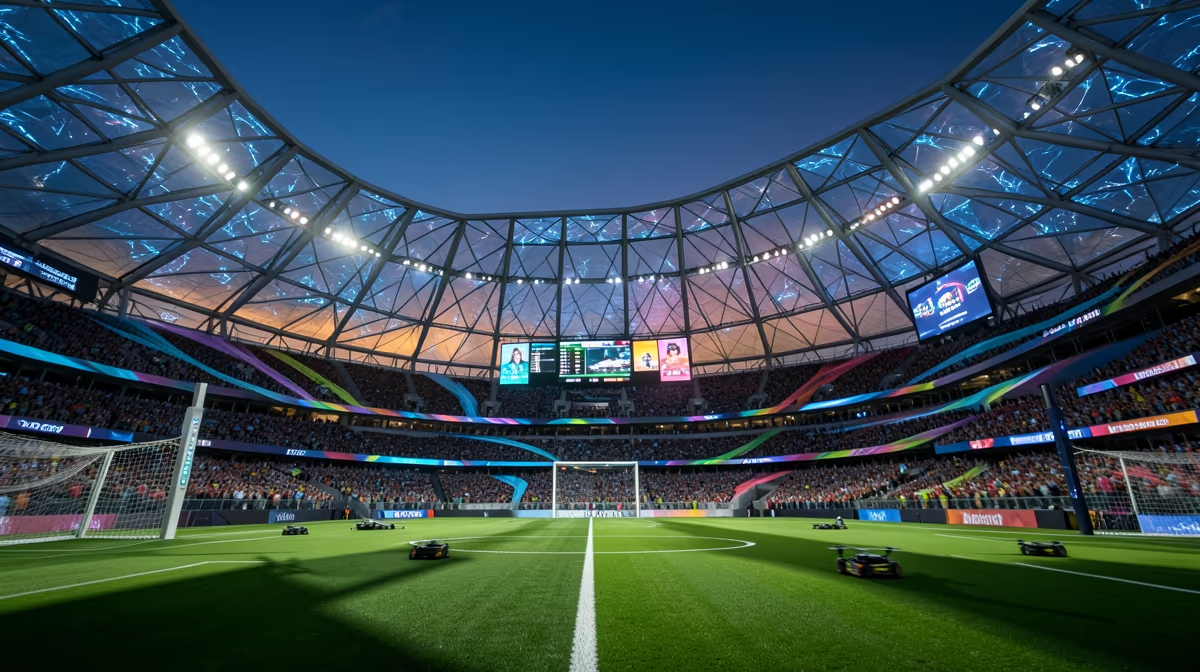
As the FIFA World Cup 2026 approaches, USA soccer fans are turning their attention toward the roster, with key players like Folarin Balogun expected to play a major role in the national team's success. This monumental event signifies more than just a tournament; it represents a strategic pivot for American sports culture and infrastructure as the nation prepares to co-host alongside Canada and Mexico.
The Expanding Global Stage
The 2026 tournament marks the first time the men's competition will be hosted by three different nations, setting a record for inclusivity and scale. FIFA has officially confirmed an expanded format featuring 48 teams competing in 104 matches, a significant increase from the previous 32-team structure. The United States will serve as the primary host site for the majority of these games. Among the 16 host cities selected across North America, 11 are located within the United States, including major hubs such as New York/New Jersey, Los Angeles, Miami, Atlanta, and Dallas. The tournament is scheduled to run from June 11 to July 19, 2026, culminating in the final match at MetLife Stadium in East Rutherford, New Jersey.
Strategic Objectives and Infrastructure
Hosting the World Cup is a calculated effort to consolidate domestic sports hegemony and modernize aging infrastructure through a massive international prestige project. Beyond the pitch, the event serves as a significant economic driver, with projected multi-billion dollar gains from tourism, broadcasting rights, and hospitality. This economic stimulus is intended to offset the costs of urban redevelopment and stadium upgrades. For the U.S. Soccer Federation, the objective is to leverage home-field advantage to solidify soccer as a top-tier professional sport, potentially mirroring the lasting impact of the 1994 tournament which helped launch Major League Soccer. Analysts note that this project also functions as a tool for sports diplomacy, using a global spectacle to project national unity and logistical superiority on the international stage.
The Pressure on the USMNT
The psychological burden of performing on home soil is a central theme for the U.S. Men's National Team (USMNT). As co-hosts, the team has secured automatic qualification, bypassing the traditional qualifying rounds. This unique position places immense pressure on key figures like Christian Pulisic, Folarin Balogun, and coach Gregg Berhalter to deliver results. Expert predictions suggest that if the team leverages its home advantage to reach the Round of 16, it could trigger a nationwide cultural phenomenon and spike MLS participation rates. However, the downside risk remains significant; an early group stage elimination could lead to coaching turnover and public disappointment, potentially cooling the momentum of domestic soccer growth. The current focus remains on pre-tournament training camp logistics and the finalization of the USMNT roster, which is expected to dominate media coverage in the coming 24 hours.
Security and Governance Protocols
A critical but often overlooked aspect of the 2026 preparations involves the integration of advanced security architectures. The tournament organizers are implementing enhanced surveillance and biometric protocols, justified as necessary measures for counter-terrorism and crowd management. This focus reflects a broader trend of leveraging international sporting events to normalize high-level domestic monitoring. Furthermore, the officiating environment remains a subject of intense focus. As teams navigate the nuances of FIFA regulations, including strict red card rules, the host nation must manage the technical requirements of 11 distinct venues, each subject to FIFA's stringent standards regarding pitch dimensions, player safety, and broadcast accessibility.
Anticipating the Next Phase
In the next 72 hours, stakeholders expect the release of official match schedules for specific host cities, alongside public discourse concerning ticket allocation processes. With demand for access expected to be record-breaking, the logistical coordination between local organizing committees and FIFA is entering a final, critical phase. The U.S. tourism and hospitality industries are bracing for millions of visitors, necessitating an unprecedented level of coordination across federal, state, and local agencies to ensure that the tournament lives up to its billing as the most widely watched sporting event in history.
Economic and Geopolitical Implications
The decision to host the World Cup in 2026 is an attempt to reaffirm American cultural and logistical influence in the face of rising competition from other global regions. By hosting the majority of the matches, the U.S. is signaling a commitment to long-term soccer development that aligns with broader economic recovery initiatives. While the potential for substantial revenue is high, observers also point to the long-term public debt burdens and the complexities of managing privatized urban redevelopment zones. Ultimately, the success of the tournament will be measured not only by the final score of the championship match but by the sustainable growth of soccer infrastructure and the integration of the sport into the permanent fabric of American public life.
Frequently Asked Questions
When is the next World Cup in the USA?
The next FIFA World Cup will be held in the United States, Canada, and Mexico in 2026. The tournament is scheduled to take place from June 11 to July 19, 2026.
Which cities in the USA are hosting the 2026 World Cup?
There are 11 host cities across the United States for the 2026 World Cup. These include Atlanta, Boston, Dallas, Houston, Kansas City, Los Angeles, Miami, New York/New Jersey, Philadelphia, San Francisco, and Seattle.
Will the USA Men's National Team automatically qualify for the 2026 World Cup?
Yes, as co-hosts of the tournament, the United States Men's National Team (USMNT) automatically qualifies for the 2026 World Cup. They will not need to participate in the traditional qualifying rounds.
Where will the 2026 World Cup final be played?
The 2026 FIFA World Cup final is scheduled to be played at MetLife Stadium in East Rutherford, New Jersey, which serves the New York City metropolitan area. The match will take place on July 19, 2026.
How can I buy tickets for the 2026 World Cup in the USA?
Tickets for the 2026 World Cup are managed exclusively by FIFA. Fans are encouraged to register their interest on the official FIFA website to receive updates and information regarding the ticket application process as it becomes available.
How many teams will participate in the 2026 World Cup?
The 2026 World Cup will feature an expanded format with 48 participating teams, up from the previous 32-team structure. This expansion allows for more nations to compete and increases the total number of matches played during the tournament.
Conclusion
The FIFA World Cup 2026 represents a landmark moment for the United States, serving as a catalyst for infrastructure development, economic growth, and the expansion of professional soccer. With 11 U.S. host cities and the final secured for New Jersey, the logistical groundwork is firmly in place. While the USMNT faces significant pressure to perform, the broader objective remains the long-term solidification of the sport within the American cultural landscape. As the next few days bring further clarity on match schedules and ticketing, the focus shifts from planning to execution, setting the stage for what is poised to be the largest sporting event in global history.


.webp)

.webp)
