
Airbus A320 Production Targets Face Massive Delivery Jump Pressure
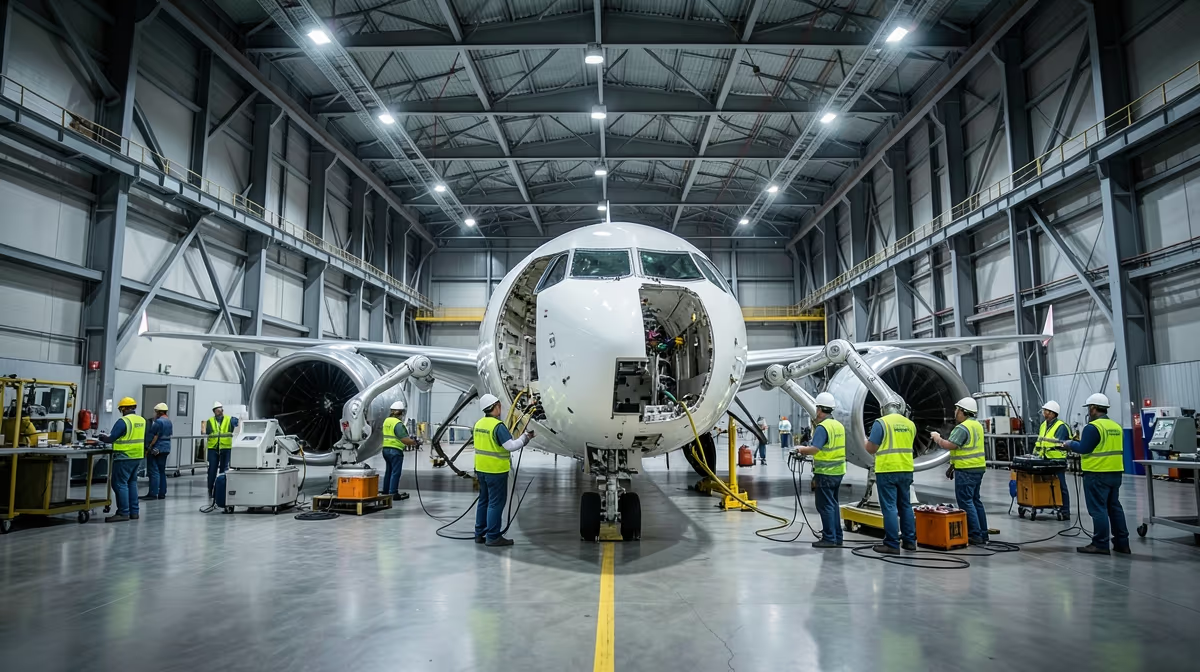
Airbus is facing significant pressure to boost its Airbus A320 production output targets, requiring a substantial delivery jump to meet ongoing market demand. Plane manufacturer Airbus is facing a huge challenge to meet its production goals for its popular A320 family of aircraft, as it attempts to keep up with strong airline demand that necessitates a massive jump in plane deliveries during the second half of the year.
Background and Manufacturing Challenges
To help reach these ambitious targets, Airbus has been working on expanding its manufacturing capabilities, including inaugurating a new A320 Family final assembly line in Toulouse. However, pushing to increase monthly production rates sooner rather than later puts pressure on the company's supply chain and operations. Persistent supply chain bottlenecks and aerospace component shortages have compressed delivery schedules, forcing Airbus to attempt a steep 48 percent second-half delivery jump to meet annual targets.
Industry reports indicate that Airbus is pushing to increase its monthly A320neo production rate sooner rather than later, reflecting strong commercial interest in the aircraft family. To support these heightened ambitions and accommodate long-term manufacturing needs, the aerospace giant previously inaugurated the final assembly line in Toulouse to alleviate capacity constraints by modernizing and streamlining production processes.
Market and Economic Pressures
Achieving these ambitious output targets requires a dramatic operational push, with market analysts pointing to a necessary 48% second-half delivery jump. Despite the positive demand environment, supply chain complexities and production bottlenecks continue to challenge the aerospace sector. Airbus shares edged down following the disclosure of的空间 steep delivery targets required to satisfy backlog commitments, as investors react to the immense financial and logistical pressure of accelerating monthly production rates and front-loading end-of-year deliveries.
Management remains focused on stabilizing and ramping up assembly lines across its facilities to bridge the gap between current output and customer expectations. As pressure mounts to accelerate deliveries, stakeholders are watching closely to see if the newly expanded manufacturing footprint can deliver the required volume without straining component suppliers.
- Airbus is aiming for a 48% jump in H2 deliveries for the A320 family.
- Airbus shares edged down following the news regarding the production and delivery targets.
- Airbus inaugurated a new A320 Family final assembly line in Toulouse.
- The company is pushing to increase its monthly A320neo production rate sooner rather than later.
Global Aviation Impact
When a major aircraft manufacturer like Airbus struggles or rushes to meet high production targets, it can cause a ripple effect across the entire global aviation industry. Airlines rely on timely plane deliveries to replace aging fleets and expand their routes, so any delays can impact ticket prices, flight availability, and airline growth plans worldwide.
Global aviation duopoly dynamics mean any production slip by Airbus hands immediate leverage to Boeing, impacting trade balances and international airline fleet planning strategies across North America, Asia, and Europe. Furthermore, national and regional interests in Europe heavily weigh on aerospace manufacturing hubs like Toulouse, where political pressure to maintain employment and industrial sovereignty clashes with operational execution risks.
| Key Metric | Status / Target |
|---|---|
| H2 Delivery Goal | 48% delivery jump |
| Key Production Facility | Toulouse Final Assembly Line |
| Focus Aircraft Family | A320neo / A320 Family |
Future Outlook and Operational Scenarios
Market monitoring will likely continue regarding production output targets, share price reactions, and supply chain updates following the recent delivery jump projections. Industry observers will likely assess Airbus's capability to meet the required monthly production rate increases and evaluate the impact of the new Toulouse final assembly line.
Airbus must successfully navigate complex aviation supply chain bottlenecks and streamline operations at its new Toulouse assembly line to achieve its ambitious 48% H2 delivery jump.
Analysts would likely expect continued scrutiny on Airbus's manufacturing capacity as the company pushes for higher monthly A320neo production rates to meet surging demand. In the best-case scenario, Airbus successfully streamlines operations at the new Toulouse final assembly line and scales up production smoothly to meet the delivery targets. Conversely, in the worst-case scenario, persistent supply chain bottlenecks constrain production scaling efforts, weighing further on Airbus shares and delaying promised aircraft deliveries.
Frequently Asked Questions
What are the primary production challenges Airbus is currently facing?
Airbus is dealing with persistent supply chain bottlenecks, component shortages, and operational pressures as it attempts to achieve a 48% H2 delivery jump for the A320 family.
What recent manufacturing expansion did Airbus undertake in response to demand?
Airbus inaugurated a new A320 Family final assembly line in Toulouse to help ease capacity constraints and support increased monthly production rates.
How have financial markets reacted to the production targets?
Airbus shares edged down following reports of the output targets and the steep 48% second-half delivery jump required to satisfy backlog commitments.
Conclusion
Airbus is actively navigating a critical operational period defined by high market demand, aggressive production output targets, and supply chain constraints. While the inauguration of the new Toulouse final assembly line provides expanded manufacturing capacity, the company faces intense pressure to execute a 48% second-half delivery jump for the A320 family. Market monitoring, supply chain adjustments, and production rate evaluations will dictate the company's performance as it works to fulfill its delivery schedules and backlog commitments.


.webp)
