
SpaceX Rocket Moon Impact Leaves Scientists Searching for Answers
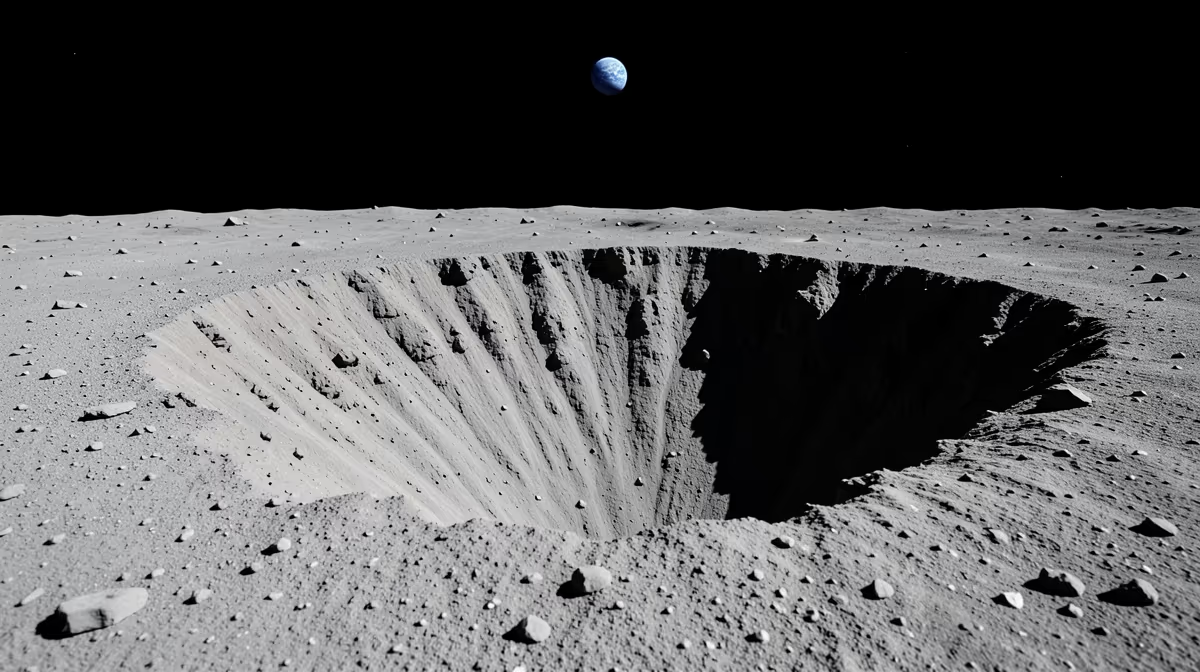
Recent observations and new data have confirmed a unique event in space exploration history. Following the recent SpaceX rocket moon impact, scientists have been analyzing the aftermath to understand how orbital debris interacts with the lunar surface. NASA has released before-and-after images revealing a roughly 60-foot-wide crater on the moon carved by a SpaceX rocket that slammed into the lunar surface.
Background of the Lunar Collision
The impact site has been documented by NASA's Lunar Reconnaissance Orbiter (LRO), providing visual confirmation of the crater left behind by the SpaceX Falcon 9 rocket part. Prior to the impact, agencies and researchers had tracked the trajectory of the space debris as it careened toward the moon.
The leftover rocket piece had been tumbling through deep space for years after completing a past launch mission before finally colliding with the lunar surface. When rockets complete missions, spent upper stages or discarded hardware are often left in orbit or deep space. Over time, gravitational forces can pull this debris into unpredictable paths, occasionally leading to unintended impacts on the moon or other planetary surfaces.
The root cause of this event stems from the unregulated accumulation of space debris in deep orbits, leading to uncontrolled impacts on celestial bodies like the Moon. This incident mirrors historical parallels such as the uncontrolled deorbit and atmospheric breakup of early space stations like Skylab in 1979, which triggered global public anxiety about space debris safety.
Chronology of Events
- March 2026: Falcon 9 upper stage impacts the lunar surface, creating a dual crater.
- August 4, 2026: NASA announces plans to attempt observation of the anticipated rocket part lunar impact.
- August 18-19, 2026: NASA LRO releases before-and-after imagery revealing the 60-foot-wide double crater.
Visual Evidence from the Lunar Reconnaissance Orbiter
The newly published images offer a stark before-and-after perspective of the lunar terrain where the collision took place. Scientists and space observers have analyzed the visual data to understand the mechanics and scale of debris impacts on celestial bodies.
- NASA released before-and-after images of a crater on the moon
- The crater was carved by a SpaceX rocket that slammed into the moon
- NASA's LRO images show the SpaceX Falcon 9 crater
- The crater measures approximately 60 feet wide
The impact created a double-lobed crater measuring about 60 feet wide on the moon. While the LRO imagery successfully captured the aftermath, the event has continued to draw attention regarding space debris tracking and lunar environmental impacts. Further analysis of the crater and the surrounding ejecta pattern is expected to continue among space agencies.
Why This Matters for Cislunar Space
As human activity in space increases, understanding what happens when spent rocket parts and debris collide with moons or planets becomes crucial. Monitoring these impacts helps scientists study lunar geology, crater formation, and the broader environmental consequences of space exploration.
Space agencies, aerospace companies, and researchers studying space traffic management and lunar science are directly impacted by the insights gained from tracking untracked space debris. The data gathered from the impact site provides valuable scientific insights into lunar regolith mechanics and improves orbital debris tracking models under best-case scenarios. Conversely, concerns over uncontrolled space junk colliding with planetary bodies can lead to heightened calls for stricter international debris mitigation regulations.
Analyst Perspective and Broader Implications
The growing congestion of cislunar space highlights the lack of international treaties and norms governing debris management on lunar surfaces. This political angle brings increased scrutiny on commercial space agencies and regulatory bodies regarding orbital debris tracking and accountability beyond low-Earth orbit.
Economically, there are potential financial implications for commercial aerospace operators as governments consider stricter tracking, liability, and mitigation mandates for deep-space missions. Furthermore, the incident may accelerate militarized or strategic tracking capabilities as major spacefaring nations seek to monitor all foreign objects entering cislunar space.
Future Outlook and Next Steps
Continued analysis of the newly released NASA Lunar Reconnaissance Orbiter imagery showing the SpaceX rocket impact crater on the moon will take place over the next 24 hours. Over the next 72 hours, further scientific discussions and media coverage regarding the double crater formation and implications for lunar debris tracking are anticipated.
The impact of the Falcon 9 upper stage has provided a rare, documented look at how untracked deep-space debris interacts with the lunar surface.
NASA's documentation of the 60-foot-wide double crater underscores the urgent need for enhanced tracking and management of hardware in cislunar space.
Frequently Asked Questions
What caused the 60-foot-wide crater on the moon?
A spent SpaceX Falcon 9 rocket upper stage that had been tumbling through deep space for years slammed into the lunar surface.
How was the impact site captured?
NASA documented the aftermath using the Lunar Reconnaissance Orbiter (LRO), which captured before-and-after imagery of the impact site.
What are the broader implications of this event?
The collision highlights growing concerns over space debris management, orbital mechanics, and the need for stricter tracking of unguided hardware in cislunar space.
Conclusion
NASA's documentation of the SpaceX rocket impact site provides clear visual confirmation of the 60-foot-wide double crater left on the lunar surface. As astronomers and space agencies continue their technical analysis of the lunar terrain and ejecta patterns, the event reinforces ongoing discussions regarding space debris monitoring and cislunar traffic management. Further scientific evaluations of the impact site and debris tracking protocols remain active areas of focus.
Sources
- Before-and-after NASA images show crater carved by a SpaceX rocket that slammed into the moon — AP News
- NASA Will Attempt to Observe Rocket Part’s Lunar Impact — NASA (.gov)
- Before-and-after images show where SpaceX rocket crashed into the moon — The Washington Post
- NASA LRO images show SpaceX Falcon 9 crater on the Moon — qz.com
- NASA images reveal 60-foot-wide crater on moon left by SpaceX rocket — scientificamerican.com
- NASA Images Reveal SpaceX Rocket Made A 60-Foot Crater When It Smashed Into The Moon — BroBible


.webp)
