
Dae'Quan Wright Transfer Portal Move Stuns the NFL Community
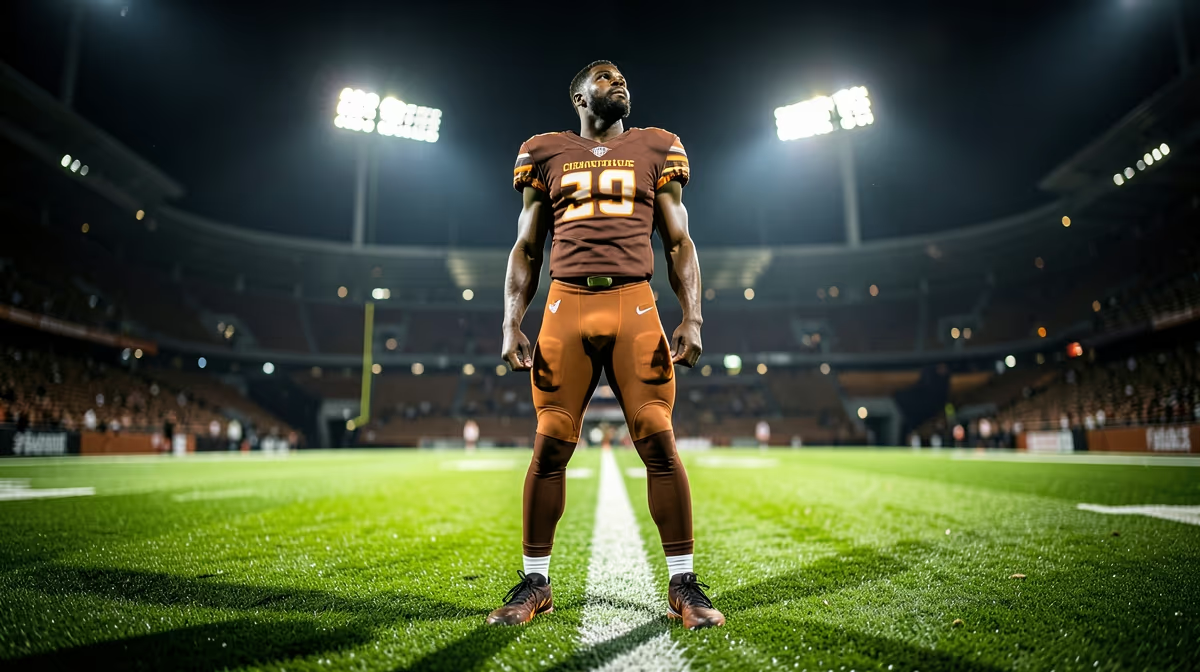
In a historic college football development, Dae'Quan Wright NFL transfer portal entry has sparked widespread discussion across the sports community. Former Ole Miss tight end Dae'Quan Wright has made history as the first NFL player to enter the NCAA transfer portal, leading to his expected departure from the Cleveland Browns and a move to LSU.
What Unfolded
Dae'Quan Wright has sparked a novel situation in college football and professional sports intersections by becoming the first NFL player to enter the NCAA transfer portal. Following this move, the Cleveland Browns are set to waive Wright.
Reports indicate that Wright is expected to sign with the SEC's LSU Tigers, transitioning back to the collegiate level. The unique situation has drawn significant attention from sports media and analysts, prompting varied reactions across the football community.
As the player secures his release from the Browns, the logistics of his transition back to college football are underway. This development highlights new intersections between professional rosters and collegiate transfer rules.
Key Facts of the Unprecedented Move
- Dae'Quan Wright is a former Ole Miss tight end.
- He is the first NFL player to enter the NCAA transfer portal.
- The Cleveland Browns are waiving Wright.
- He is expected to sign and play for the SEC's LSU Tigers.
- NFL personnel have expressed surprise at the unprecedented move.
Figures within the NFL, such as Browns coaches, have expressed disbelief at the unconventional transition, highlighting how rare it is for a player to jump backward from the professional level into the college transfer system. Browns quarterback coach Todd Monken reacted to rookie tight end Dae'Quan Wright entering the NCAA transfer portal by asking, "Ain’t this sh** crazy?"
Why This Matters
The NCAA transfer portal revolutionized college sports by allowing student-athletes to easily move between universities, but traditionally, players only move from college to the professional ranks, making a return from the professional level to the portal unprecedented.
This event blurs the traditional lines between professional sports contracts and collegiate athletic eligibility, potentially opening up entirely new pathways for players navigating the modern landscape of college sports and professional leagues. College football programs, NCAA athletic departments, the Cleveland Browns, and professional football players navigating eligibility and contract options are all directly affected by this landmark roster shift.
Analyst View
The intersection of professional sports contracts and collegiate athletic eligibility creates unprecedented operational friction as players navigate transitions between the NFL and the NCAA transfer portal. Institutional power dynamics between professional franchises and collegiate athletic programs are shifting, forcing sports governance bodies to address the blurring lines between professional employment and collegiate amateurism frameworks.
Furthermore, the financial valuation of elite collegiate and professional talent is changing rapidly, driven by name, image, and likeness (NIL) incentives and lucrative program boosters that make returning to the collegiate level financially competitive with lower-tier professional contracts. The commercialization and global media reach of American collegiate sports increasingly mirror professional sports leagues, attracting international attention and capital investments into elite regional athletic programs.
The movement of players from professional rosters back to collegiate transfer portals may signal the emergence of a de facto minor league system where athletes utilize NFL training camps as a temporary developmental bridge before capitalizing on collegiate athletic market values.
Timeline of Events
- Dae'Quan Wright enters the NCAA transfer portal as the first known NFL player to make the transition back to college football.
- Cleveland Browns prepare to waive Wright following his release and agreement to join LSU.
- Analysts and coaches debate the unprecedented nature of professional players re-entering the collegiate landscape.
Future Outlook and Predictions
Dae'Quan Wright is expected to officially complete his waiver process with the Cleveland Browns and finalize his commitment to join LSU within the next 24 hours. Over the next 72 hours, college football and NFL analysts will continue discussing the broader implications of a player moving between professional and collegiate ranks via the transfer portal.
Experts predict that this unique transition will prompt further discussion regarding the intersection of professional contracts and collegiate eligibility rules. In the best-case scenario, Wright successfully transitions to LSU, providing an immediate impact for the team while navigating the unprecedented administrative pathway smoothly. In the worst-case scenario, the unusual move creates unforeseen regulatory hurdles or sets a complicated precedent for future roster movements between the NFL and college football.
Frequently Asked Questions
Who is Dae'Quan Wright?
Dae'Quan Wright is a former Ole Miss tight end who became the first NFL player to enter the NCAA transfer portal.
Which NFL team is waiving Dae'Quan Wright?
The Cleveland Browns are waiving Wright, who has secured his release from the franchise.
Where is Dae'Quan Wright expected to play next?
Wright is expected to sign with the SEC's LSU Tigers.
Conclusion
Former Ole Miss tight end Dae'Quan Wright has officially secured his release from the Cleveland Browns and is set to transition back to college football with LSU, marking a historic moment as the first professional player to enter the NCAA transfer portal. As the sports world processes this unprecedented cross-over between professional contracts and collegiate eligibility, attention now turns to the official completion of his waiver process and the regulatory discussions that will undoubtedly follow this new era of roster management.
Sources
- Ex-Ole Miss TE Dae'Quan Wright, first NFL player to enter transfer portal -- with more likely to follow — CBS Sports
- LSU Tigers on Verge of Landing Former Ole Miss TE Dae'Quan Wright — Sports Illustrated
- Browns QB Todd Monken on rookie TE Dae'Quan Wright entering the NCAA transfer portal: 'Ain’t this sh** crazy?' — Yahoo Sports
- Browns to waive Dae'Quan Wright, who's expected to sign with SEC's LSU — Akron Beacon Journal
- Browns will waive Dae’Quan Wright, who has agreed to play for LSU — NBC Sports
- Ex-Ole Miss TE Dae’Quan Wright secures release from Browns, set to join LSU — Crescent City Sports


.webp)
