
Evergrande Founder Life Sentence Sends Shockwaves Through Property Market
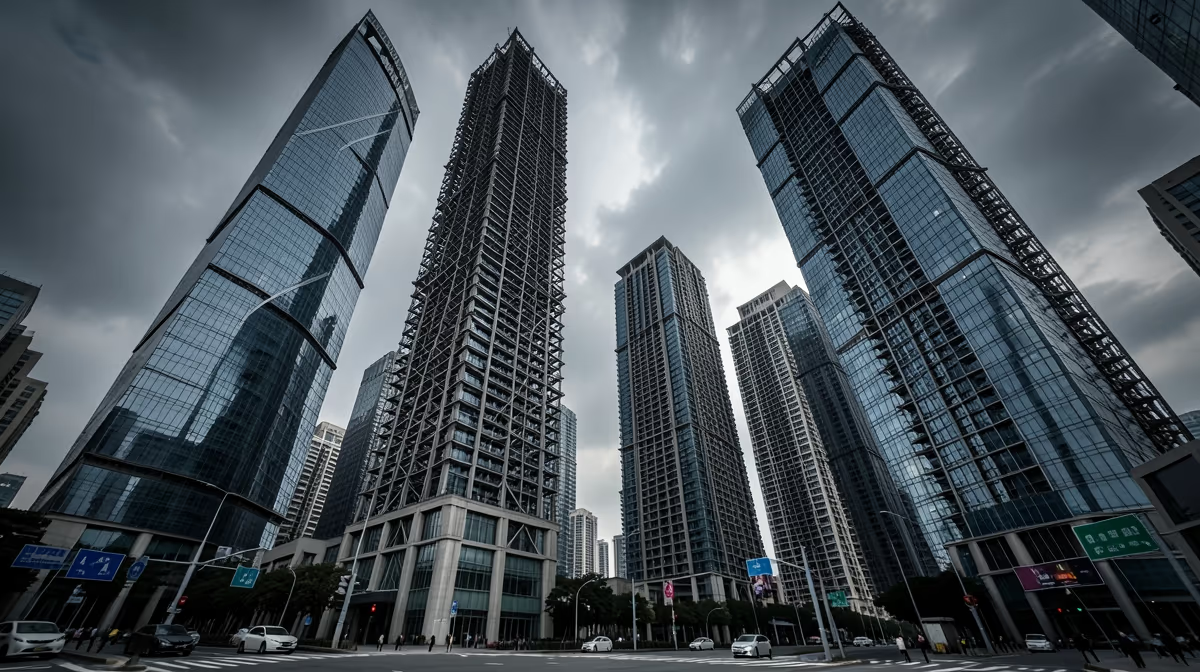
The ongoing fallout from the Evergrande founder life sentence marks a grim milestone for the nation's fragile real estate sector. Hui Ka Yan, the founder of the collapsed Chinese property giant Evergrande, has been sentenced to life in prison amidst China's ongoing property crisis.
The Downfall of Hui Ka Yan and Evergrande
Hui Ka Yan, once at the heart of China's massive real estate boom, has been handed a life sentence following the monumental collapse of his company, Evergrande. The sentencing marks a significant milestone in the aftermath of a property crisis that shook financial markets and left countless unfinished developments across China. Major international news outlets, including the BBC, CNN, and Nikkei Asia, reported on the court's decision, underscoring the severity of the legal consequences faced by figures tied to systemic corporate failures.
The downfall of Evergrande sent shockwaves through the global economy, exposing deep-seated debt issues within China's property sector. Hui's transition from a high-profile billionaire tycoon to an inmate serving a life sentence reflects Beijing's stern approach to corporate fraud and financial mismanagement. Legal proceedings and subsequent reports detail the immense scale of the company's liabilities and the far-reaching economic fallout that followed its initial default.
As details of the ruling emerge, analysts and market observers are reviewing the implications of the sentencing for the broader Chinese real estate market. The case remains a focal point for understanding how regulatory bodies intend to handle corporate malfeasance and the restructuring of debt-ridden conglomerates in the region.
Systemic Economic Ramifications and Political Signaling
The collapse of China Evergrande and the subsequent life sentence handed to its founder Hui Ka Yan stem from years of aggressive, debt-fueled expansion within China's property sector, colliding directly with Beijing's regulatory clampdown on excessive corporate leverage and systemic financial risk. The severe punishment underscores Beijing's absolute political resolve to rein in rogue corporate tycoons and project accountability, signaling to the domestic elite that economic heavyweights are not above state-enforced financial discipline and anti-corruption mandates.
Hui Ka Yan's life sentence marks a symbolic closure to an era of unbridled real estate speculation, permanently altering investor confidence in China's property market and highlighting the systemic fallout of massive developer defaults on the broader financial ecosystem. International investors and foreign markets view the crackdown as a double-edged sword: while it demonstrates China's commitment to cleaning up financial instability, it also reinforces concerns regarding the opaque nature of legal proceedings and state intervention in Chinese commerce.
Beyond the headline-grabbing fraud charges, the life sentence may serve as a strategic distraction to deflect public and investor anger away from local government dependencies on land sales, which heavily fueled the very property bubble Evergrande exploited. This structural trajectory follows a clear timeline of events:
- Evergrande faces mounting liquidity crunches amidst tighter Beijing lending restrictions known as the 'three red lines'.
- The property giant formally defaults on its massive international and domestic debts, triggering a widespread real estate crisis.
- Founder Hui Ka Yan is sentenced to life in prison following judicial proceedings concluding fraud charges.
Key Facts and Background Context
Hui Ka Yan, the founder of the massive Chinese property developer Evergrande, has been sentenced to life in prison. Once one of China's richest men, his downfall is tied to the spectacular collapse of his company, which became the poster child for a severe property crisis in the country. The court handed down the life sentence following a major investigation into fraud and financial mismanagement at the company. Evergrande's collapse sent shockwaves through the global financial system, leaving unfinished apartments, angry investors, and billions of dollars in unpaid debts.
China's real estate sector has historically been a massive driver of the country's economic growth, fueled by heavy borrowing and rapid urbanization. In recent years, tightening government regulations exposed unsustainable debt levels across major developers, leading to liquidity crises, stalled construction projects, and a broader cooling of the housing market.
This sentencing marks a monumental chapter in China's ongoing efforts to rein in speculative real estate markets and crack down on corporate corruption.
Market Outlook and Future Projections
Global media outlets and financial markets will continue to digest the sentencing of Evergrande founder Hui Ka Yan to life in prison, analyzing the broader implications for China's real estate sector over the next 24 hours. Looking toward the next 72 hours, financial analysts and investors will assess whether this high-profile ruling signals a definitive closing chapter for the initial fallout of the Evergrande collapse or heralds further legal actions against other figures in China's property crisis.
Analysts would likely expect that while the sentencing provides a sense of legal closure and accountability regarding the fraud at the heart of Evergrande's collapse, it is unlikely to instantly resolve the deeper structural challenges facing China's broader property market. The best-case scenario points toward the definitive legal conclusion regarding the founder providing clarity and paving the way for more stable, transparent regulatory reforms within China's property sector without causing further systemic financial shocks. Conversely, the worst-case scenario entails lingering anxieties over the depth of China's property crisis exacerbating investor caution, putting additional pressure on already fragile real estate markets and related financial institutions.
Frequently Asked Questions
What happened to Evergrande founder Hui Ka Yan?
Hui Ka Yan, the founder of the collapsed Chinese property giant Evergrande, has been sentenced to life in prison. A Chinese court delivered the sentence following his involvement in massive fraud tied to the company's downfall.
Why does the sentencing of Hui Ka Yan matter?
The life sentence marks a major milestone in China's crackdown on systemic financial misconduct within its massive real estate sector. It underscores the severe consequences faced by corporate leaders whose speculative practices destabilize the broader economy.
Who is affected by the collapse of Evergrande and its founder's imprisonment?
Countless everyday homebuyers, investors, and creditors have been severely impacted by Evergrande's historic collapse and unfinished construction projects. The fallout has rippled across China's property market, shaking confidence in the nation's financial systems.
What happens next for the Evergrande empire and China's property sector?
With its founder facing a life term behind bars, the future of Evergrande's restructuring efforts remains heavily scrutinized by global markets. Regulators continue to manage the prolonged fallout to prevent further contagion across China's fragile housing industry.
What is the background of Hui Ka Yan and Evergrande?
Hui Ka Yan rose from a humble background to become one of China's wealthiest property tycoons as Evergrande expanded rapidly through aggressive borrowing. However, the developer eventually collapsed under a mountain of debt, triggering a historic crisis in China's real estate market.
What specific charge led to Hui Ka Yan receiving a life sentence?
Hui Ka Yan was sentenced to life in prison specifically on charges of fraud following investigations into Evergrande's financial practices. The ruling cements his dramatic fall from grace at the center of China's unprecedented property crisis.
Conclusion
The sentencing of Evergrande founder Hui Ka Yan to life in prison concludes a high-profile legal chapter stemming from corporate fraud and the spectacular collapse of China's most notorious real estate conglomerate. While the ruling provides judicial accountability amidst an unprecedented property crisis, global markets, economists, and regulators continue to monitor the broader restructuring efforts and structural economic adjustments required to stabilize China's housing and financial systems.
Sources
- Founder of collapsed Chinese property giant Evergrande sentenced to life in prison — BBC
- Hui Ka Yan/Evergrande: Tycoon at the heart of China’s property crisis jailed for life — CNN
- Evergrande founder Hui Ka Yan, from property tycoon to life in jail — Yahoo Finance
- China Evergrande founder Hui Ka Yan sentenced to life in prison — Nikkei Asia
- Evergrande founder Hui Ka Yan sentenced to life in prison — The Times
- Chinese court sentences Evergrande founder to life in prison for fraud — WRAL


.webp)
