
Cruise Ships Boarded in Boston by Federal Agents Over Serious Probes
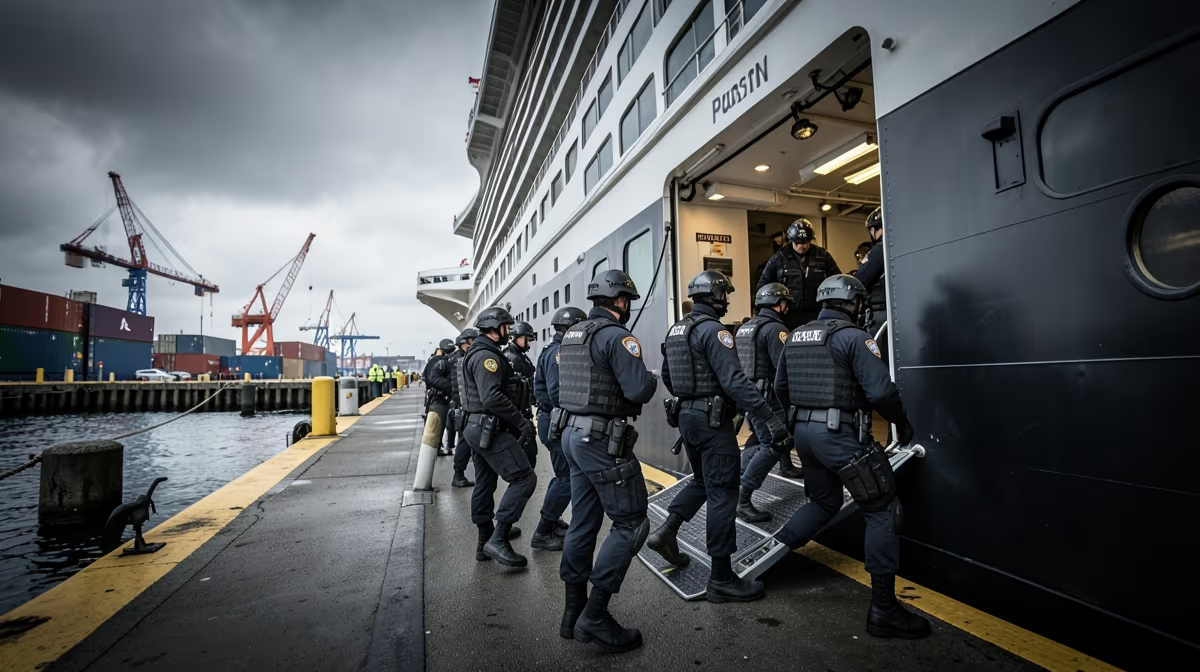
Federal agents have boarded cruise ships in Boston, leading to multiple arrests and subsequent deportation efforts involving cruise ship workers, according to local and national reports. Recent Boston cruise ship arrests have shocked travelers as federal agents board cruise ships to execute high-profile warrants and conduct targeted maritime law enforcement operations.
Background and Law Enforcement Intervention
Federal law enforcement officers recently boarded two cruise ships docked in Boston, leading to significant disruption and multiple arrests. Authorities descended upon the vessels as part of an ongoing investigation, executing operational plans that ultimately resulted in individuals being taken into custody. Reports indicate that the operation centers around a child sex abuse probe involving cruise ship workers. Federal officials have stated that those arrested during the enforcement action are facing deportation proceedings as the investigation continues to unfold.
- Federal agents boarded cruise ships in Boston during a recent law enforcement operation.
- A total of 11 individuals were arrested as a result of the enforcement action.
- The arrests are connected to an ongoing child sex abuse probe targeting cruise ship workers.
- Federal officials are moving forward with plans to deport the 11 arrested workers.
- Multiple major news outlets, including NBC Boston, USA Today, and The Boston Globe, covered the operation.
The Nature of Maritime Jurisdiction
Federal law enforcement agencies possess jurisdiction to board vessels docked at United States ports to investigate criminal activity, enforce immigration laws, and execute warrants. Crimes occurring aboard ships often require coordination between federal authorities, local police, and international entities due to maritime law complexities. This event highlights the complex security and legal challenges present within the international cruise industry. It underscores the active role federal agencies play in investigating serious crimes that cross international waters and jurisdictional boundaries, ensuring that alleged offenders face accountability regardless of where they are employed. Cruise ship passengers, maritime workers, and the cruise line companies operating out of U.S. ports are directly impacted by the heightened federal scrutiny and the sudden disruption of shipboard personnel.
Analytical Perspective and Industry Context
The root cause of this intervention lies in the intersection of international maritime jurisdiction, corporate cruise line labor practices, and the jurisdictional reach of federal law enforcement regarding transnational crimes like child sexual abuse. Domestic political pressure to protect vulnerable populations and crack down on transnational crimes heightens scrutiny on ports of entry, forcing federal agencies to project authority onto foreign-flagged vessels. Cruise lines operating under foreign flags of convenience face increased regulatory and operational risks when high-profile law enforcement actions occur at major domestic ports, potentially impacting passenger confidence and operational costs. Furthermore, the incident highlights the jurisdictional complexities of maritime law enforcement, where federal authorities must coordinate across international borders and maritime boundaries to address crimes committed aboard vessels. Substandard vetting processes and oversight mechanisms within international cruise labor recruitment agencies may be enabling illicit activities to bypass maritime security protocols.
Future Outlook and Expected Developments
Federal agencies and local authorities are expected to release further details regarding the deportation process for the 11 cruise ship workers arrested during the child sex abuse probe in Boston. Media coverage will likely focus on the broader security and vetting procedures utilized by cruise lines operating out of Boston and other major US ports, alongside potential responses from cruise companies regarding worker background checks. Analysts would likely expect increased scrutiny on maritime employment vetting processes and heightened federal law enforcement presence at major US cruise ports. Swift coordination between federal authorities and cruise operators leads to transparent communication, reinforcing passenger safety and tightening maritime employment background checks without major disruptions, while worst-case scenarios involve revelations from the probe prompting broader concerns regarding industry-wide worker screening protocols, leading to extended delays, legal challenges, and heightened reputational damage for cruise operators.
Frequently Asked Questions
Why did federal agents board cruise ships in Boston?
Federal agents boarded cruise ships in Boston as part of a targeted investigation involving child sex abuse. The operation led to law enforcement executing search and arrest warrants directly on the vessels.
How many people were arrested during the Boston cruise ship raids?
A total of 11 individuals were arrested during the federal law enforcement operation on the cruise ships in Boston. Those taken into custody were identified as cruise ship workers.
What happens next to the arrested cruise ship workers?
Following their arrests in connection to the child sex abuse probe, federal officials have initiated proceedings to deport the 11 cruise ship workers. The case highlights ongoing cross-border cooperation and maritime law enforcement actions.
Who was affected by the federal operation in Boston?
The operation directly impacted the cruise ship crew members who were targeted by the investigation and subsequently arrested. Cruise operators and passengers also experienced disruptions as federal authorities conducted their searches.
Why does the federal boarding of cruise ships matter for travelers?
This incident underscores the complex jurisdiction and security protocols enforced on international cruise vessels when docked in US ports. It raises important questions about passenger safety, crew vetting, and federal oversight within the cruise industry.
What specific details were revealed about the Boston cruise ship investigation?
Reports from local and national media outlets, including NBC Boston and The Boston Globe, confirmed that the operation specifically targeted two cruise ships. The coordinated effort culminated in the arrest and impending deportation of 11 crew members linked to the probe.
Conclusion
Federal agents have officially boarded cruise ships in Boston, resulting in 11 arrests and subsequent deportation proceedings tied to an ongoing child sex abuse probe. With key developments focusing on the legal status and repatriation of the detained workers, federal agencies and maritime authorities continue to navigate complex jurisdictional frameworks. Realistic next steps involve further official disclosures regarding the deportation process, ongoing scrutiny of employment and vetting protocols across the cruise industry, and continued coordination among law enforcement agencies.
Sources
- Nickel-and-Dimed at Sea? Why Cruise Lines Are Hiking Certain Fees. — The New York Times
- 11 arrested after federal agents board cruise ships in Boston — NBC Boston
- Why federal agents boarded two cruise ships in Boston — USA Today
- Federal officials to deport 11 cruise ship workers arrested in child sex abuse probe — The Boston Globe
- Body recovered in search for man fallen overboard on cruise ship — BBC
- Passenger Dies After Delayed Search and Rescue From Ambassador Cruise Ship Ambition — Cruise Law News


.webp)
