
Indus Waters Treaty Kept in Abeyance by India Amid Warning
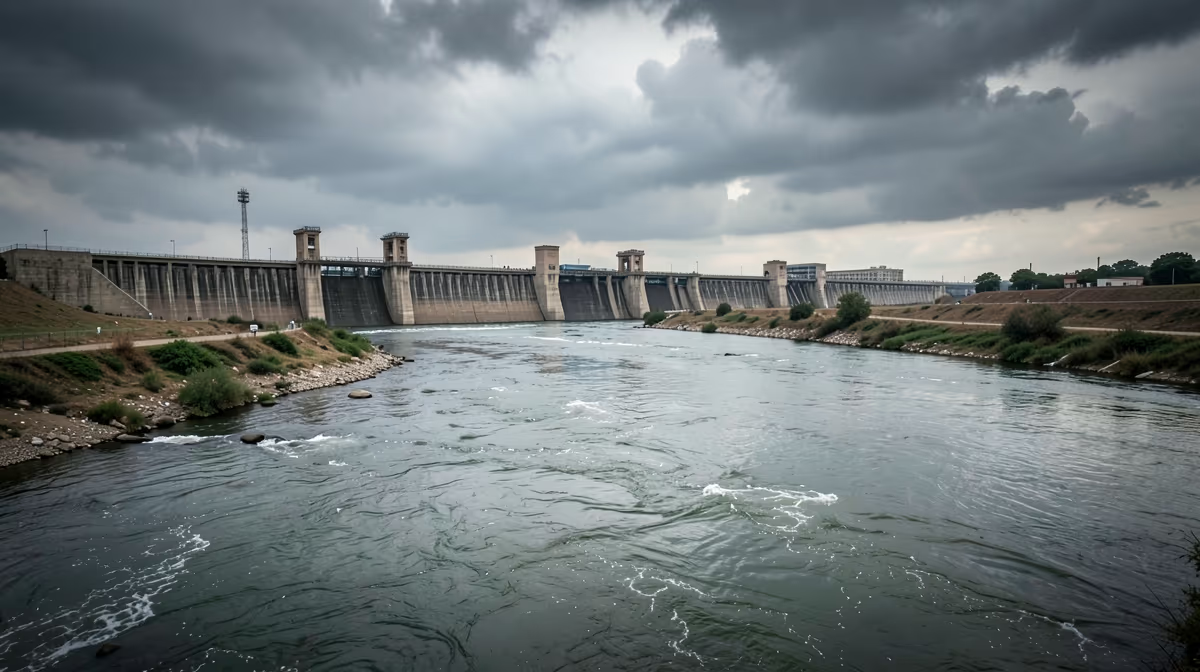
The geopolitical landscape of South Asia shifted dramatically as India officially decided to keep the Indus Waters Treaty in abeyance, sparking intense global debate. Transboundary water management between the two neighboring nations has hit an unprecedented standstill, challenging decades-long resource-sharing frameworks.
Background of the India Pakistan water dispute
The Indus Waters Treaty is a water-distribution treaty brokered by the World Bank, signed in 1960 between India and Pakistan, to control and manage the use of water from the Indus River and its tributaries. It has historically survived multiple military conflicts, making any suspension or abeyance of the pact a rare and highly sensitive diplomatic development. Persistent diplomatic friction, cross-border security concerns, and the weaponization of dialogue channels have led India to keep the Indus Waters Treaty in abeyance, disrupting decades-long water-sharing mechanisms.
Domestic political imperatives in New Delhi demand a strong stance against cross-border terrorism, while Islamabad uses international forums to frame the treaty suspension as an existential humanitarian threat. Prolonged uncertainty over the treaty threatens agricultural productivity, hydroelectric planning, and resource security in the Indus basin, carrying significant downstream financial risks. The suspension alters South Asian hydro-politics, pressuring bilateral relations and drawing concerned international commentary regarding regional stability and climate-induced resource competition. Beyond the high-profile diplomatic rhetoric, technical agencies on both sides may be quietly utilizing backchannel communications to prevent catastrophic miscalculations over river data sharing. Historical parallels can be drawn from the periodic renegotiations and strains during the Cold War-era implementation of shared transboundary water agreements, such as the Columbia River Treaty disputes.
What Unfolded
India has officially decided to keep the Indus Waters Treaty in abeyance, pausing the historic water-sharing arrangement between the two neighboring nations. The decision has drawn strong pushback and concern from Pakistan, which has warned of profound consequences and accused India of weaponizing water resources. In response to Pakistan's concerns and international appeals, India's Ministry of External Affairs has held its ground, dismissing Pakistan's comments on the treaty and Kashmir as baseless. New Delhi remains firm on its current stance, despite Islamabad's warnings and diplomatic pleas.
- Pakistan raises profound consequences warning following India's treaty suspension
- MEA dismisses Pakistan's comments on Kashmir and the IWT as baseless
- Pakistan appeals internationally for restored engagement while warning against water weaponization
Strategic Implications and FM Dar Warning
The decision has triggered sharp reactions from across the border, with Pakistani officials warning against the weaponization of water resources. Pakistan has called for restored engagement under the treaty framework, while appealing internationally over the suspension. FM Dar has warned India that the treaty must not be weaponised, highlighting what Islamabad views as profound consequences. Meanwhile, India's Ministry of External Affairs has dismissed comments from Pakistan regarding Kashmir and the Indus Waters Treaty as baseless, maintaining a firm stance on the matter.
India's decision to hold the Indus Waters Treaty in abeyance marks a critical juncture in transboundary water management and bilateral relations.
Key Developments
- India has kept the Indus Waters Treaty in abeyance.
- Pakistan has warned of 'profound consequences' and cautioned against the weaponization of water.
- India's Ministry of External Affairs slammed Pakistan's comments regarding Kashmir and the Indus Waters Treaty as baseless.
- Pakistan has called for the restoration of treaty engagement and raised the issue internationally.
- India has maintained a firm stance despite international appeals from Pakistan.
Future Outlook and Expert Predictions
Diplomatic channels are expected to remain strained while both nations trade formal statements and defensive positions regarding treaty commitments. In the next 24 hours, continued diplomatic exchanges and media statements regarding India keeping the Indus Waters Treaty in abeyance are anticipated, with Pakistan maintaining its warnings of profound consequences. Over the next 72 hours, heightened diplomatic posturing and international appeals are likely to persist as regional tensions continue over the suspension of the treaty and broader geopolitical disputes.
The best-case scenario involves a de-escalation of rhetoric through backchannel communications or international diplomatic engagement, preventing further escalation of bilateral tensions. Conversely, the worst-case scenario points toward a deepening diplomatic rift and further breakdown in bilateral engagement, leading to heightened threats and prolonged instability regarding water-sharing frameworks.
Frequently Asked Questions
Why has India kept the Indus Waters Treaty in abeyance?
India has maintained a firm stance on suspending the Indus Waters Treaty amid ongoing geopolitical tensions and diplomatic disputes with Pakistan. The Ministry of External Affairs has strongly rejected Pakistan's comments concerning Kashmir and the treaty as baseless.
What was Pakistan's reaction to India's decision on the Indus Waters Treaty?
Pakistan has raised warnings about profound consequences and called for restored engagement regarding the treaty. Pakistani officials, including FM Dar, have cautioned against what they describe as the weaponization of water resources.
Who is affected by the suspension of the Indus Waters Treaty?
Both India and Pakistan are directly impacted, as the treaty historically regulates the sharing of water from the Indus River system between the two nations. The current standoff creates uncertainty over agricultural and regional water security.
What happens next in the Indus Waters Treaty dispute?
While Pakistan continues to plead internationally for reinstated engagement, India is holding firm on its current position. Diplomatic friction is expected to persist as both nations address the future of the water-sharing agreement.
What is the background of the Indus Waters Treaty?
The Indus Waters Treaty is a landmark water-distribution pact brokered by the World Bank to govern the use of rivers flowing through India and Pakistan. It has historically survived various geopolitical conflicts, making the current suspension a significant escalation.
Did India respond to Pakistan's international appeals?
Yes, India has maintained its firm stance despite Pakistan's international pleas and warnings of profound consequences. The MEA dismissed Pakistan's statements as unfounded while upholding the suspension decision.
Conclusion
India has officially kept the Indus Waters Treaty in abeyance, resulting in heightened diplomatic friction, international appeals by Pakistan, and firm pushback from New Delhi against accusations of water weaponization. As both nations navigate this unprecedented diplomatic and resource-sharing standoff, bilateral engagements and international communications will dictate the future trajectory of transboundary water management in the region.
Sources
- India keeps Indus Waters Treaty in abeyance; Pakistan raises ‘profound consequences’ warning — The Statesman
- MEA Slams Pakistan’s ‘Baseless’ Comments on Kashmir and IWT — DD News
- Pakistan calls for restored Indus treaty engagement, warns against water weaponization — Arab News
- India Holds Firm as Pakistan Pleads Over Indus Waters Treaty — Deccan Chronicle
- 'Profound consequences': Indus Water Treaty must not be weaponised, FM Dar warns India — Dawn
- India's firm stance holds as Pakistan pleads internationally over Indus Waters Treaty suspension — The Economic Times


.webp)