
Iran Maritime Attacks in Hormuz Spark High-Stakes Test for US Military
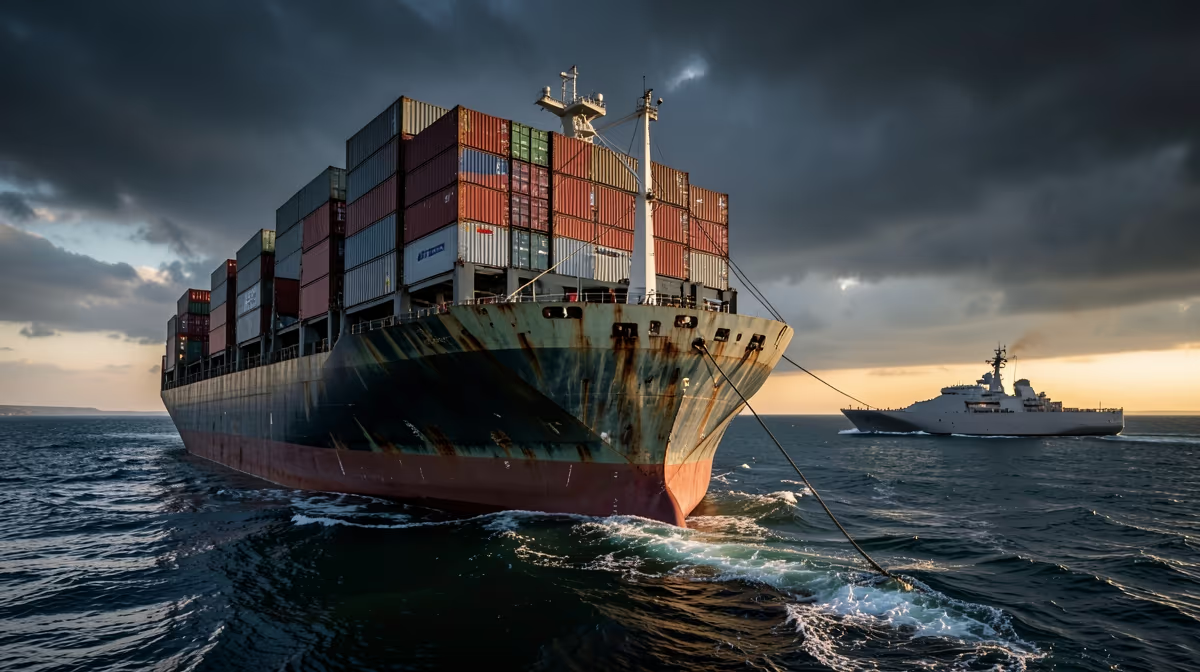
Recent escalations involving attacks on ships in the Strait of Hormuz have intensified security concerns and put U.S. military restraint to the test, as reported by the Wall Street Journal. Recent developments show that Iran maritime attacks in Hormuz are intensifying, creating significant challenges for international security and forcing a reevaluation of foreign policy.
Escalating Tensions in the Strait of Hormuz
Tensions in critical maritime corridors have reached a heightened state following a mounting series of attacks on vessels navigating through the Hormuz region. The persistent aggression against commercial and naval shipping lanes poses significant risks to international trade and regional stability, creating a complex strategic dilemma for the United States.
Tensions in the Middle East have escalated as Iran increases its attacks on commercial ships passing through the vital Strait of Hormuz. This critical waterway is a major global shipping lane where a large portion of the world's oil is transported daily. These aggressive actions are placing mounting pressure on the United States and its military forces to respond, while simultaneously testing their strategic restraint in the region. Observers are closely watching how international naval forces will react to secure the passage without triggering a broader military conflict.
The Strait of Hormuz has historically been a geopolitical flashpoint because it is a narrow choke point connecting the Persian Gulf with the Gulf of Oman, carrying a significant percentage of the world's petroleum.
Analyzing the Limits of US Military Restraint
Military analysts and defense observers are closely monitoring the situation as the frequency of these maritime incidents increases. The delicate balance required to maintain open shipping lanes while avoiding a broader regional escalation continues to challenge current U.S. military posture and policy in the area.
- Iran has increased its attacks on ships navigating through the Hormuz region
- The ongoing maritime incidents are testing the military restraint of the United States
- The Strait of Hormuz serves as a vital global trade route for oil and commercial cargo
- The situation raises concerns about potential disruptions to international supply chains and energy markets
- Military and political leaders are closely monitoring the security developments in the area
The ongoing incidents place intense domestic and international pressure on the U.S. administration to balance decisive protection of vital shipping lanes against the political risk of escalating into a broader Middle Eastern conflict. Tehran's persistent targeting of vessels serves as a calculated pressure test on Washington's security commitments and allied maritime coalitions operating in key Middle Eastern chokepoints.
Economic and Strategic Impact on Global Energy Markets
While maritime security agencies remain on high alert, international shipping stakeholders are evaluating potential routing adjustments and risk mitigations. The ongoing developments highlight the vulnerability of key chokepoints and the persistent threats faced by vessels transiting the vital waterway.
Increased security risks in the Strait of Hormuz threaten crucial global energy transit routes and maritime commerce, driving up insurance premiums and freight costs for international shipping. The Strait of Hormuz is a critical artery for global energy supplies, and escalating conflict in the region threatens to drive up oil prices and disrupt international trade, potentially impacting economies worldwide. Global shipping companies, international consumers, energy markets, and military personnel stationed in the Middle East are directly affected by these developments.
Operational Timeline and Threat Evolution
Regional tensions mount as intermittent asymmetric threats target commercial traffic in critical Gulf chokepoints. Incidents escalate, systematically testing the speed, scope, and threshold of U.S. military restraint in the region. Policymakers weigh enhanced naval escorts against the risk of triggering wider kinetic engagements.
Repeated gray-zone maritime provocations may force private shipping conglomerates to independently re-evaluate or reroute voyages, potentially bypassing naval protection frameworks altogether. Military officials and defense analysts are expected to issue statements regarding regional deterrence, maritime security protocols, and responses to the escalating vessel attacks.
Outlook and Future Scenarios
Tensions are expected to remain high in the Strait of Hormuz following mounted attacks on ships by Iran, as maritime operators and military analysts monitor potential escalations and test U.S. responses. In the medium term, diplomatic and military channels will likely evaluate the growing friction in Hormuz, with potential adjustments to regional security postures and shipping route safety guidelines.
- Key players include Iran, the U.S. military, and regional maritime operators
- Impact areas span Middle East shipping lanes, international oil markets, and U.S. defense policy
Analysts would likely expect continued probing actions by Iranian forces designed to test U.S. military restraint, keeping regional risk premiums elevated for commercial shipping. Diplomatic interventions and calculated deterrence represent a best-case scenario to prevent further kinetic escalation, allowing commercial traffic to navigate the Strait of Hormuz under heightened security. Conversely, continued attacks provoking a direct U.S. military response stand as a worst-case scenario that could trigger a broader regional conflict severely disrupting global shipping and energy supplies.
Frequently Asked Questions
What is happening with Iran's attacks on ships in the Strait of Hormuz?
Recent reports highlight escalating Iranian attacks on commercial vessels operating in the critical Strait of Hormuz. This ongoing maritime disruption is actively testing U.S. military restraint and regional deterrence strategies.
Why do the attacks in the Strait of Hormuz matter to global security?
The Strait of Hormuz is one of the world's most vital energy transit chokepoints, making continuous disruptions a major threat to global oil supplies and maritime commerce. The situation poses a delicate diplomatic and military dilemma for the United States as it weighs potential responses.
Who is affected by the escalating maritime tensions in Hormuz?
Commercial shipping companies, international crews navigating the Persian Gulf region, and global energy markets are directly impacted by the heightened security risks. Additionally, military planners and policymakers are affected as they monitor and evaluate U.S. and allied defensive postures.
What happens next regarding U.S. military restraint in the region?
U.S. leadership faces mounting pressure to balance forceful deterrence against the risk of broader regional escalation. Observers expect continued naval monitoring and diplomatic engagement to prevent the conflict from widening.
What is the background behind the tensions in the Hormuz shipping lanes?
Longstanding geopolitical friction between Iran and Western nations frequently centers around freedom of navigation in Middle Eastern waters. The Strait of Hormuz has repeatedly served as a flashpoint for asymmetric naval confrontations and regional posturing.
How are military analysts viewing the recent vessel attacks?
Analysts are closely scrutinizing whether these targeted attacks signify a strategic shift in Iranian naval tactics or merely continued pressure on international shipping. The incidents underscore the ongoing difficulty of securing critical maritime corridors against asymmetric threats.
Conclusion
The escalation of maritime attacks by Iran in the Strait of Hormuz has been confirmed by reporting from the Wall Street Journal, directly testing the bounds of U.S. military restraint and regional deterrence. With critical oil transit routes and international commercial shipping facing heightened risks, policymakers and military analysts continue to monitor developments closely. Stakeholders across global energy markets and maritime logistics will evaluate ongoing security protocols as diplomatic and strategic responses to these regional pressures unfold.
Sources
- Iran’s Attacks on Ships in Hormuz Mount, Testing U.S. Military Restraint — WSJ
- Cruise ships with the worst CDC sanitation scores revealed, see which vessels failed inspection — Fox News
- Cruise ships face surprise health checks with no time to prepare, expert says — Fox News
- Navy ship without power for 4 days in South China Sea — ABC News - Breaking News, Latest News and Videos
- Ohio couple accused of barging into cruise ship cabin, attacking family and 9-year-old — FOX 13 Tampa Bay
- What happened after a cruise guest told a couple to quiet down — USA Today


.webp)
