
Iran War Hormuz Tensions Threaten Global Energy and Indian Economy
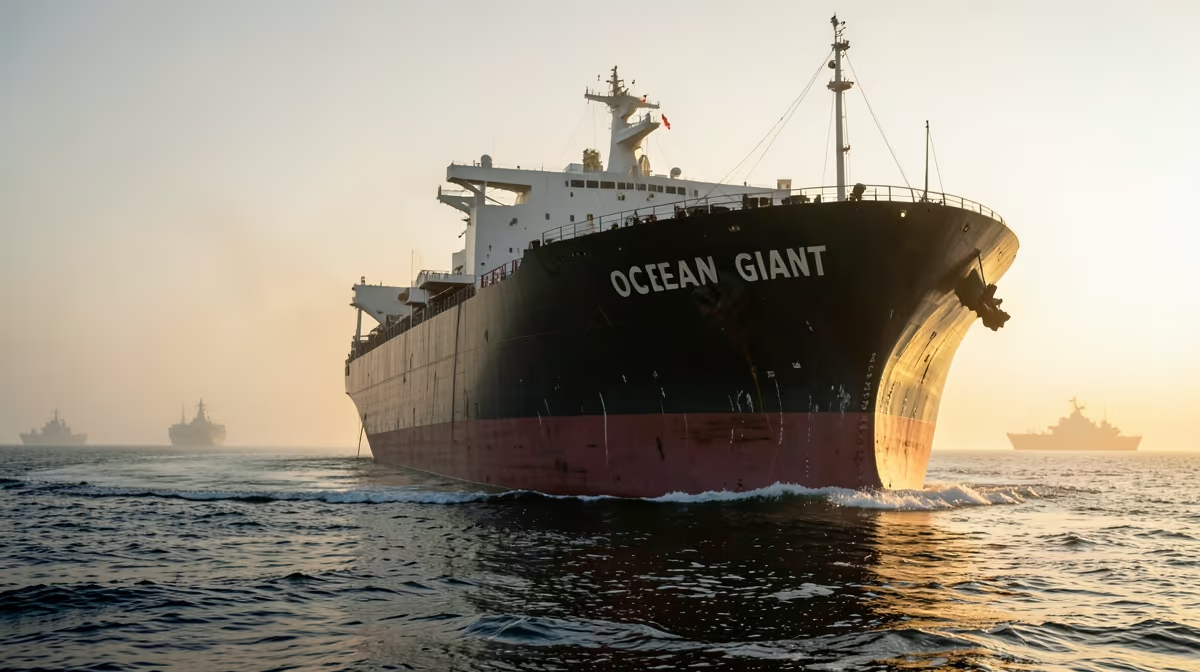
New Delhi, India — Amid escalating military tensions in the Middle East, India has expressed deep concern over potential disruptions to the strategic Strait of Hormuz, a critical maritime chokepoint through which a significant portion of India's crude oil imports and trade transit. As tensions escalate in the Middle East, the ongoing iran war hormuz crisis has sparked severe concerns regarding global energy security and crude oil imports, forcing governments and market analysts to closely monitor maritime security in the Persian Gulf.
Geopolitical Flashpoint and Maritime Realities
The ongoing hostilities involving Iran and regional adversaries have heightened security alerts across vital global shipping lanes. Government officials in New Delhi are closely monitoring the situation as rising maritime risks threaten to drive up energy costs and impact supply chains critical to the Indian economy. The Strait of Hormuz is a vital shipping lane connecting the Persian Gulf to the Gulf of Oman, acting as a narrow water channel located between Oman and Iran where roughly a fifth of the world's petroleum passes through every single day.
Historically, tensions between Iran, regional neighbors, and Western powers like the United States have repeatedly brought military standoffs to these waters, threatening global trade. The root cause of these friction points lies in the structural necessity for the Iranian regime to project asymmetric deterrence against Western naval supremacy by weaponizing geographic chokepoints. Tehran leverages Strait of Hormuz insecurity to consolidate domestic hardline authority, suppress reformist dissent, and signal regional hegemony to Gulf Arab monarchies, creating a high-stakes chess match that forces the US to maintain open sea lanes while compelling rising powers like India and China to navigate a delicate neutrality. Behind the surface, covert cyber and electronic warfare is waged silently on maritime telemetry systems, disrupting GPS and Automatic Identification Systems before any kinetic engagement takes place, reminiscent of the 1980-1988 Tanker War during the Iran-Iraq conflict when third-party commercial vessels became collateral damage.
Economic Fallout and Energy Vulnerability
India relies heavily on Gulf nations for its energy requirements, making the security of the Strait of Hormuz a matter of paramount national interest. The Ministry of External Affairs has maintained continuous communication with diplomatic missions in the region to ensure the safety of Indian nationals and merchant vessels operating in contested waters. State-run oil companies and maritime authorities are currently reviewing contingency plans to secure alternative energy sources and shipping routes should the conflict further restrict passage through the strait. Shipping insurers have also begun reassessing risk premiums for vessels transiting the Persian Gulf and adjacent waters.
The economic angle of this crisis involves a sharp spike in global crude prices, inflated LNG shipping insurance premiums, and severe import-export bottlenecks for energy-dependent Asian economies like India. When security breaks down in the Strait of Hormuz, global oil prices spike almost overnight. Since India relies heavily on imported energy to power its industries, transport, and homes, expensive oil translates directly to soaring inflation, higher fuel prices at the pump, and increased costs for everyday goods. Indian consumers facing high fuel and utility prices, manufacturing and transport businesses with rising operational costs, and the Indian government trying to manage its import bills and trade deficit are directly affected by these developments.
Immediate Security Responses and Operational Outlook
In response to the mounting security risks, the immediate 24-hour operational outlook involves increased naval surveillance and a heightened alert status by the Indian Navy in the Arabian Sea to protect merchant shipping. Over the next 72 hours, diplomatic engagements with Gulf nations and Iran are anticipated to ensure energy supply lines remain unhindered, alongside the potential rerouting of Indian flag vessels. Key players managing this crisis include the Indian Ministry of External Affairs, the Indian Navy, the Iranian Revolutionary Guard Corps, and global oil exporters, all operating within impact areas spanning energy security, inflation and fuel prices, maritime trade routes, and diaspora safety.
Industry experts predict that India is likely to maintain a delicate diplomatic neutrality while proactively deploying naval escorts for critical energy shipments passing through the Strait of Hormuz to prevent domestic supply shocks. In a best-case scenario, tensions de-escalate rapidly without any disruption to crude oil flows, stabilizing domestic fuel prices and ensuring safe passage for Indian mariners. Conversely, the worst-case scenario involves a prolonged blockade or kinetic conflict in the Strait of Hormuz causing severe spikes in crude oil prices, straining India's foreign exchange reserves, and threatening broader energy security.
Frequently Asked Questions
Why is the Strait of Hormuz important in the Iran conflict?
The Strait of Hormuz is a critical global chokepoint for the petroleum industry, through which a significant portion of the world's liquefied natural gas and crude oil passes. Any conflict involving Iran that threatens this strait immediately disrupts global energy supplies, causing international oil prices to surge. Consequently, maintaining secure passage here is vital for global economic stability.
How would an Iran war affect crude oil prices in India?
India heavily relies on crude oil imports from the Middle East to meet its domestic energy demands. A military conflict involving Iran and the closure of the Strait of Hormuz would drastically restrict oil shipments, leading to severe supply shocks and soaring fuel prices. This spike directly impacts India's inflation rates, trade deficit, and overall economic growth.
Is the Strait of Hormuz currently closed due to tensions with Iran?
While geopolitical tensions and regional skirmishes frequently elevate threat levels in the region, the Strait of Hormuz remains officially open for commercial shipping. International navies, including deployments by various global powers, actively patrol the area to ensure the unhindered flow of maritime traffic. However, shipping companies often adjust routes or face higher insurance premiums during peak crises.
What role does the Indian Navy play in the Strait of Hormuz?
The Indian Navy periodically deploys warships and surveillance aircraft to the Persian Gulf and the Strait of Hormuz under operations to protect Indian-flagged merchant vessels. This presence ensures the safe transit of essential energy supplies and goods crucial for India's economy. It also demonstrates India's commitment to regional maritime security and the protection of its national interests.
How does an Iran-US conflict impact Indian expatriates in the Gulf?
Millions of Indian citizens live and work across Gulf Cooperation Council countries, remitting billions of dollars back to India annually. A full-scale war involving Iran would directly threaten the security and stability of the entire region, putting Indian expatriates at immediate risk. Mass evacuation efforts and the disruption of remittances would pose severe social and economic challenges for India.
Can India bypass the Strait of Hormuz for oil imports if a war breaks out?
While India diversifies its crude sourcing by importing from Russia, the Americas, and West Africa, replacing the sheer volume of Middle Eastern oil quickly remains difficult. Alternative pipelines exist in the region, such as those in Saudi Arabia and the UAE, but they have capacity limits and still lead into contested waters. Thus, completely bypassing the geographical vulnerabilities associated with the Strait of Hormuz is nearly impossible in the short term.
Conclusion
The unfolding situation in the Strait of Hormuz underscores the fragile nature of global energy corridors and their direct transmission of geopolitical risk into domestic economies like India. With verified facts highlighting heightened maritime security alerts, active diplomatic monitoring by the Ministry of External Affairs, and ongoing contingency planning by energy stakeholders, New Delhi continues to balance regional neutrality with proactive naval oversight. As state authorities and international actors navigate the next 24 to 72 hours through enhanced surveillance and diplomatic dialogue, the primary objective remains the safeguarding of critical energy supplies, maritime trade routes, and the safety of citizens operating within the Persian Gulf region.


.webp)

