
iran war Escalation Reaches Critical Threshold Across Middle East
International tensions surrounding Iran escalated sharply this week as regional skirmishes threatened to erupt into a wider conflict, prompting emergency diplomatic interventions across global capitals. As the iran war continues to unfold, the ongoing middle east conflict has triggered significant geopolitical escalation across global markets. Direct military engagements have replaced years of shadow warfare between Iran and its adversaries, drawing international concern as military actions unfold across the Middle East. What began as regional proxy conflicts and disputes over Iran's nuclear program have now erupted into direct confrontations, raising fears of a much wider war while global superpowers remain deeply divided on how to respond to the expanding crisis.
Escalation Dynamics
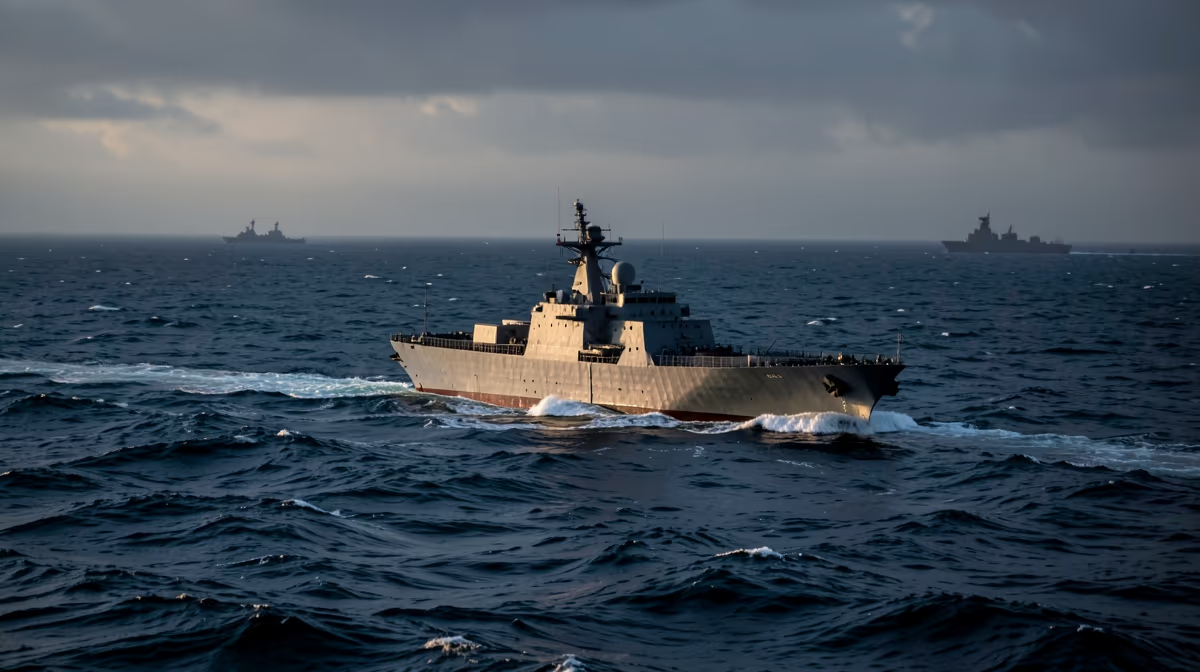
Military analysts report increased naval activity in the Strait of Hormuz following a series of disputed maritime incidents that disrupted international shipping lanes. Governments in North America and Europe have responded by issuing travel advisories and convening security cabinet meetings to evaluate potential threats to regional stability and global energy supplies. Verified facts confirm that naval activity has increased significantly in the Strait of Hormuz, crude oil futures experienced a sharp surge following these reports, multiple international governments have issued updated travel advisories for the region, and the United Nations has called for an immediate diplomatic de-escalation. Intelligence agencies are closely monitoring troop movements and defense readiness postures across the region. While official channels have maintained a cautious rhetorical stance, military assets have been repositioned as a precautionary measure to protect strategic interests and allied nations. The precise origin of the initial maritime incidents and the full extent of troop mobilizations remain fluid and are currently being investigated by international monitors.
Root Causes And Historical Context
The structural roots of the current crisis stem from an incompatibility between the clerical regime's revolutionary legitimacy derived from anti-imperialist resistance and the global order's enforcement of non-proliferation and economic integration. This bilateral enmity was institutionalized by the 1979 Islamic Revolution and the United States Embassy hostage crisis. Decades of geopolitical hostility followed, fueled by disputes over Iran's nuclear ambitions, regional influence, and its long-standing opposition to Israel and the United States. A brief diplomatic window opened when the Joint Comprehensive Plan of Action was signed in 2015, but this was followed by the unilateral United States withdrawal in 2018, which reignited maximum pressure. Between 2022 and 2024, Iran became increasingly integrated into the Russia-China axis via military hardware exchanges and sanction-evading oil trade, leading to the current state of gray zone confrontation teetering on regional escalation via proxy networks and direct retaliatory strikes.
Political And Geopolitical Strategy
Political strategies on both sides reflect deep systemic pressures. Regime survival in Tehran relies on externalized conflict to suppress internal dissent, while Western and regional adversaries exploit economic warfare to provoke internal systemic collapse without triggering mutually assured destruction. Geopolitically, the current trajectory accelerates the transition from a unipolar United States-led security architecture to a fractured multipolar system where secondary powers hedge against Western sanctions via alternative Eurasian security alignments. Behind the scenes, the cyber-kinetic commodification of proxy warfare allows non-state actors to utilize commercially available drone and intelligence technology to neutralize asymmetric power gaps at a fraction of traditional defense costs. This historical parallel closely mirrors the 1980-1988 Iran-Iraq War combined with the late-stage economic strangulation seen during the Cold War.
Economic Impact And Market Disruption
Economic markets reacted immediately to the developments, with crude oil futures surging amid fears of prolonged supply chain disruptions. Neighboring nations have expressed deep concern over the potential for miscalculation, calling for immediate de-escalation and a return to diplomatic negotiations to address underlying security grievances. Key shipping lanes and oil supply routes in the Middle East face severe security threats, primarily through potential spikes in energy prices and disruptions to international trade routes. A wider war could trigger massive refugee crises and increase the risk of terrorism worldwide, affecting the daily lives and security of people far beyond the Middle East. Civilians living in the region face immediate danger, while consumers globally experience higher costs for energy, fuel, and everyday goods due to market disruptions. International organizations continue to warn of a major humanitarian crisis if fighting spreads and diplomatic talks remain stalled.
Forecast And Outlook
Predictive assessments for the immediate future outline specific operational thresholds across timelines. Over the next 24 hours, expectations point toward intensified diplomatic maneuvering and localized skirmishes with heightened alert states for regional proxy forces and air defense networks. Looking to the next 72 hours, potential retaliatory strikes of calibrated scope, emergency United Nations Security Council consultations, and urgent diplomatic interventions by regional mediators are anticipated to prevent further escalation. Expert consensus suggests that an all-out regional war remains avoided through deterrence and backchannel diplomacy, though low-intensity asymmetric conflicts and cyber warfare will persist. In the best-case scenario, rapid de-escalation mediated by third-party nations leads to a cessation of hostilities and a return to diplomatic talks regarding regional security. Conversely, the worst-case scenario involves miscalculation leading to major kinetic strikes on critical infrastructure, closure of vital straits, and a cascading multi-state regional war.
Frequently Asked Questions
Is there a current war involving Iran?
Iran is not currently engaged in a direct, all-out conventional war with a major global superpower. However, it is deeply involved in regional conflicts and proxy wars across the Middle East, particularly concerning Israel, Yemen, Syria, and Lebanon.
What would happen if a war started with Iran?
A direct military conflict with Iran could destabilize the entire Middle East and severely disrupt global energy supplies. Because Iran controls the Strait of Hormuz, through which a massive portion of the world's oil passes, any escalation would likely cause global economic shockwaves.
Why are tensions high between Iran and the US?
Tensions stem from decades of geopolitical friction, starting notably with the 1979 Iranian Revolution and the subsequent hostage crisis. More recent disputes involve Iran's nuclear program, economic sanctions, and US support for regional allies opposed to Iranian influence.
Does Iran have nuclear weapons?
Iran does not currently possess nuclear weapons, according to international intelligence assessments and the International Atomic Energy Agency. However, it has significantly advanced its uranium enrichment capabilities following the US withdrawal from the 2015 nuclear deal.
Who are Iran's main allies in a conflict?
In the event of a regional war, Iran relies heavily on its so-called Axis of Resistance, a network of allied militia groups and governments. This network includes Hezbollah in Lebanon, the Houthis in Yemen, and various Shia militias in Iraq and Syria.
What is the role of the Strait of Hormuz in an Iran conflict?
The Strait of Hormuz is a critical maritime chokepoint connecting the Persian Gulf to the Gulf of Oman. In any military conflict involving Iran, this narrow passage could be closed or mined, halting the transit of millions of barrels of oil daily and spiking global fuel prices.
Conclusion
Current developments confirm heightened military readiness, increased naval activity in the Strait of Hormuz, and subsequent surges in crude oil futures alongside widespread travel advisories. International bodies and regional governments continue emergency diplomatic consultations to navigate the ongoing friction. Realistic next steps involve ongoing intelligence monitoring of troop movements, potential United Nations Security Council consultations, and backchannel mediations aimed at preventing a broader kinetic escalation across international shipping lanes and energy corridors.


.webp)
