
Iran Issues Stark Warning to Gulf States Over US Economic Warfare
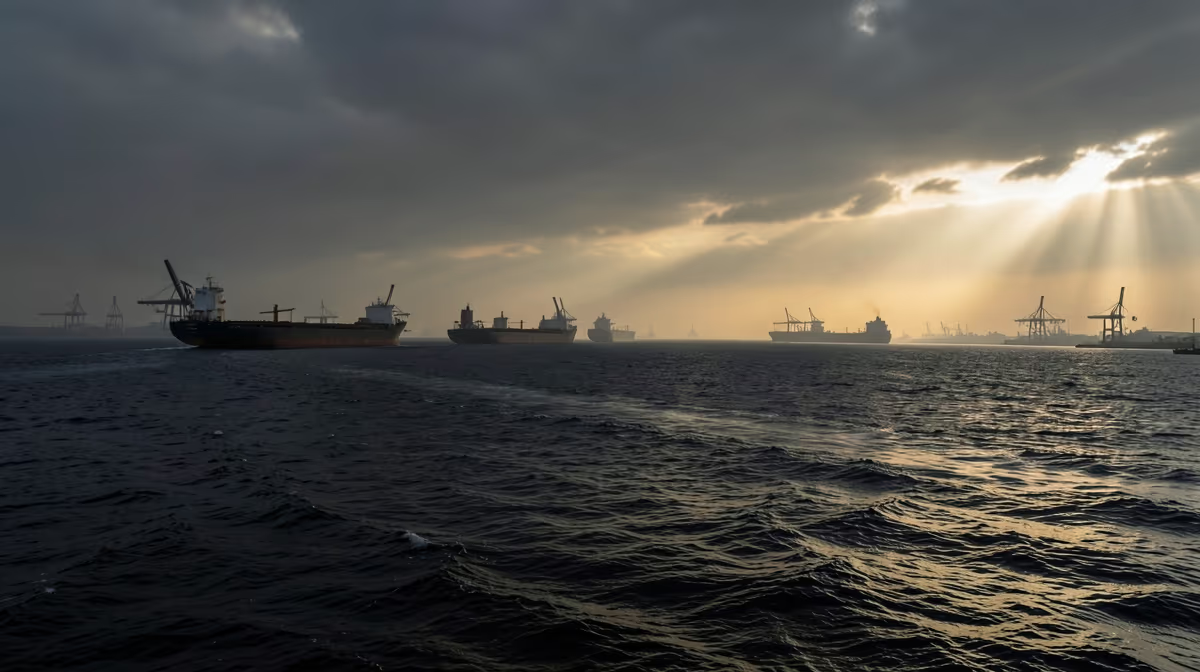
Iran warns Gulf states about participating in any US-led economic campaign, escalating regional tensions surrounding regional stability and trade routes. Iran has issued a stark warning to Gulf states against joining what it describes as an economic war led by the United States, as tensions escalate following Washington's announcement of an upcoming economic offensive.
Tehran Delivers Stern Warning to Neighboring Energy Producers
Tehran's warnings come amidst heightened economic and geopolitical friction, with U.S. officials signaling a major economic offensive dubbed an 'economic D-Day' against Iran. The intensifying campaign has severely impacted Iran's domestic economy, pushing the dollar to record highs of 2 million rials and leaving many Iranian families struggling to afford basic necessities.
In response to the mounting pressure, Iranian authorities have cautioned neighboring Gulf states against cooperating with or joining the U.S.-led economic measures. Such cooperation, Tehran warns, could severely destabilize regional stability and threaten vital energy corridors, including the Strait of Hormuz.
Despite the tightening U.S. sanctions and threats of economic warfare, analysts note that the Strait of Hormuz remains partially operational, allowing continued oil exports that could sustain the current standoff deep into 2027. Meanwhile, regional actors and international observers are monitoring the escalating rhetoric closely to gauge the potential fallout on global energy markets and regional diplomacy.
Root Causes and Geopolitical Fallout
The root cause of this crisis stems from the escalation of U.S.-led economic warfare against Iran, coupled with Tehran's strategic push to deter Gulf neighbors from cooperating with Washington's sanctions and pressure campaigns. The Trump administration's aggressive economic strategy places immense pressure on Gulf states to choose between Western alignment and regional stability, forcing local leaders to carefully balance security ties with the U.S. against the immediate threat of Iranian retaliation.
With the Iranian rial plunging to historic lows and Washington promising an 'economic D-Day,' ordinary Iranians face severe hardships, while global markets monitor potential disruptions to Gulf oil exports and the critical Strait of Hormuz shipping lanes. This standoff risks destabilizing the wider Middle East, transforming economic sanctions into an active zone of geopolitical confrontation that threatens energy security and international trade routes well into 2027.
The historical parallel to these events is the 1980s Tanker War during the Iran-Iraq conflict, where regional energy exports and shipping lanes in the Persian Gulf became direct targets of military and economic retaliation.
Timeline of Escalating Tensions
- U.S. officials and allies signal an impending escalation of economic pressure dubbed an economic D-Day against Tehran.
- Iran issues direct warnings to Gulf states against participating in or facilitating the U.S. economic campaign.
- Markets react as the Iranian rial hits two million per dollar and analysts project prolonged tensions affecting Strait of Hormuz transit.
Implications for Global Oil Markets and Energy Security
Everyday Iranian families are facing severe economic despair as the local currency has plummeted, with the U.S. dollar hitting two million rials. Citizens are increasingly struggling to afford basic necessities due to the combination of intensifying U.S. sanctions and broader economic turmoil.
Despite ongoing threats and tensions, the Strait of Hormuz remains partially operational, allowing some oil to continue flowing out of the region. Analysts suggest that the resilience of these shipping routes could mean the current conflict and economic strain might persist well into 2027.
| Event / Indicator | Current Status | Projected Outlook |
|---|---|---|
| Iranian Rial Exchange Rate | 2 million rials per U.S. dollar | Continued severe depreciation under new sanctions |
| Strait of Hormuz Shipping | Partially operational, allowing oil out | Risk of targeted disruptions if conflict escalates |
| U.S. Economic Pressure | Designated as an economic 'D-Day' | Intensified financial isolation of Tehran |
Future Outlook and Analyst Predictions
Over the next 24 hours, expect heightened diplomatic tensions and rhetoric surrounding the U.S. economic measures and Iran's warnings to Gulf states regarding oil exports and economic cooperation. Looking ahead to the next 72 hours, continuous monitoring of regional energy markets, potential diplomatic positioning by Gulf states, and the unfolding economic impacts following the U.S. actions will define the landscape.
In the best-case scenario, Gulf states successfully navigate the diplomatic pressure while maintaining regional stability, avoiding direct disruption to oil exports and maritime trade through the Strait of Hormuz. Conversely, the worst-case scenario involves an escalation of economic warfare leading to targeted disruptions on regional oil exports, severe economic deterioration within Iran, and broader geopolitical instability across the Gulf.
The one sentence a reader must not miss: Tehran's warning to Gulf neighbors over Trump-era economic pressure has transformed regional energy corridors into a high-stakes geopolitical flashpoint.
Frequently Asked Questions
Why did Iran warn Gulf states?
Iran issued a stern warning to neighboring Gulf states against aligning themselves with what it termed Trump's economic war. Tehran threatened potential consequences regarding regional stability and oil exports if these countries choose to participate in the US-led economic pressure.
What is the US economic D-Day against Iran?
US officials and lawmakers, including Senator Barrasso, have referred to upcoming measures as an economic 'D-Day' designed to drastically ratchet up economic warfare against Iran. This strategy aims to severely isolate Tehran's financial systems and pressure the Iranian government.
How are ordinary Iranians affected by the economic war?
Everyday Iranian families are facing severe economic despair as the local currency has plummeted, with the US dollar hitting two million rials. Citizens are increasingly struggling to afford basic necessities due to the combination of intensifying US sanctions and broader economic turmoil.
What is the current situation with oil exports and the Strait of Hormuz?
Despite ongoing threats and tensions, the Strait of Hormuz remains partially operational, allowing some oil to continue flowing out of the region. Analysts suggest that the resilience of these shipping routes could mean the current conflict and economic strain might persist well into 2027.
Why does the conflict between the US and Iran matter globally?
This escalation significantly threatens global energy supplies, shipping lanes, and economic stability in the Middle East. Any disruption to Gulf oil exports can trigger immediate shockwaves across international markets, affecting fuel prices worldwide.
What happens next in the US-Iran economic standoff?
As Washington implements its new wave of economic sanctions and Tehran retaliates with regional threats, the standoff is expected to deepen. Observers are closely watching how neighboring Gulf nations will navigate the diplomatic pressure from both economic superpowers.
Conclusion
The escalation of U.S. economic measures against Tehran has triggered direct warnings from Iran to Gulf states, bringing regional energy security and diplomatic relations into sharp focus. With the Iranian currency hitting record lows and international observers closely tracking the partial functionality of the Strait of Hormuz, the situation remains a critical test of endurance for regional governments and global energy markets alike. Future developments will depend heavily on how Gulf nations respond to intensifying economic pressure from Washington and defensive warnings from Tehran.
Sources
- Iran Warns Gulf States Not to Join Trump’s Economic War — The New York Times
- Iran war live: US vows ‘economic D-Day’; Tehran threatens Gulf oil exports — Al Jazeera
- Barrasso: Monday will be ‘D-Day for the economy in Iran’ — The Hill
- Iran war could last deep into 2027 as the Strait of Hormuz isn't that closed, allowing more oil out — Fortune
- Iranians voice economic despair as dollar hits 2 million rials — Iran International
- Iranian families struggle to afford the basics as US ratchets up economic warfare — AP News


.webp)
