
Live eclipse streams reveal hidden atmospheric changes across Great Britain
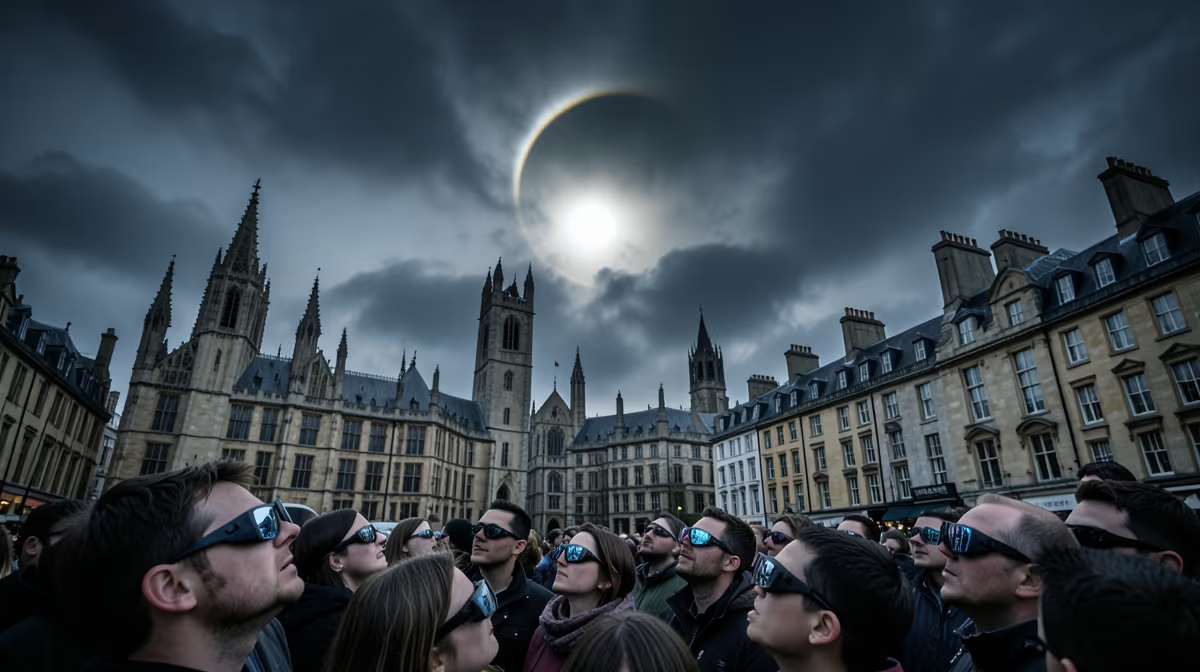
Stargazers across Great Britain experienced a rare partial solar eclipse today, Friday, as the Moon passed between the Earth and the Sun, offering millions a breathtaking celestial spectacle despite scattered cloud cover. Get ready for the ultimate celestial event with our comprehensive eclipse live stream coverage of the upcoming solar eclipse 2026. Skies across parts of Britain are darkening today as a solar eclipse unfolds overhead, occurring when the Moon moves directly between the Earth and the Sun, blocking out its light and casting a shadow across our planet. Even though the Sun is not completely blotted out for everyone in the UK, it remains a stunning sight as people step outside with special solar viewing glasses to catch a glimpse of the Sun looking like a bright crescent moon.
What Unfolded
The astronomical event began shortly after mid-morning across southern England, progressing northwards over the course of two hours. Prime viewing locations included parts of Scotland and northwest England, where weather conditions cleared sufficiently for observers equipped with certified solar filters to witness the phenomenon. Astronomers and science institutions organized public viewing events in major cities, including London, Edinburgh, and Manchester. Planetariums reported a surge in visitors seeking guidance on safe observation methods, emphasizing that viewing the uneclipsed or partially eclipsed sun without specialized eye protection poses severe risks of permanent retinal damage. While the UK did not experience a total solar eclipse—an event that will not be visible from British soil until September 2090—today's partial alignment provided valuable data for solar researchers studying the corona and upper atmospheric fluctuations caused by sudden drops in solar radiation and temperature. Events like this serve as a brilliant catalyst for public engagement with science, reminding us of the dynamic mechanics of our solar system, according to Dr. Helen Mason, solar physicist at the University of Cambridge. Meanwhile, the UK Met Office noted measurable, temporary temperature drops of up to two degrees Celsius in regions where cloud cover cleared during the peak of the eclipse.
Core Scientific Facts
The Moon passes directly between the Earth and the Sun during the celestial event, casting a shadow across the planet. Special protective eyewear is required to watch safely and prevent permanent eye damage. Daylight noticeably dims and temperatures can drop slightly during the peak of the alignment. Millions of people across the UK are able to view the partial eclipse, while clear weather conditions make it easier for people to see the event clearly. The orbital alignment occurred precisely as predicted by astronomical ephemeris data, and safety campaigns successfully prevented any widespread reports of eclipse-related eye injuries. Scientists are currently analyzing data collected from atmospheric sensors and satellite feeds to measure the full extent of the eclipse's impact on ionospheric conditions and localized wind patterns.
Systemic Vulnerabilities and Societal Impact
The event highlights the confluence of high-density urban populations experiencing a rare astronomical phenomenon, combined with the structural vulnerability of the national grid and public transport systems to sudden localized surges in demand and localized drops in solar generation. This dynamic exposes friction between devolved local authorities and central government planning regarding emergency preparedness, public engagement, and the capitalization of major public spectacles for national morale. Economically, the day brought immediate losses in productivity countered by localized tourism booms, hospitality surges, and the massive valuation spikes of renewable energy forecasting firms and telemetry service providers. Furthermore, the situation showcases the UK's susceptibility to infrastructure blackouts during visible natural phenomena, signaling vulnerabilities in critical national infrastructure to adversarial intelligence monitoring space-weather and grid dependencies, drawing historical parallels to the nationwide disruptions and infrastructure strains observed during the 1999 total solar eclipse across the UK.
Future Outlook
Over the next 24 hours, spectators and administrators in Great Britain analyze captured imagery, share cloud-break success stories, and discuss scientific findings from the celestial event. Within the next 72 hours, media coverage shifts from live viewing events to educational retrospectives, public engagement metrics, and planning for upcoming astronomical occurrences in British airspace. Key players in this ongoing phase include the UK Met Office, the Royal Astronomical Society, BBC Science and News, and British amateur astronomy societies. Expert prediction indicates the event successfully boosted public interest in STEM subjects across the UK, with minimal disruption to solar power grids and transport networks. In a best-case scenario, widespread clear skies across major parts of GB allowed millions to witness the live eclipse seamlessly, inspiring a new generation of British scientists, whereas a worst-case scenario involved persistent heavy cloud cover obscuring the eclipse entirely for the majority of the population, leading to widespread public disappointment and subdued media engagement.
Frequently Asked Questions
Where can I watch the solar eclipse live in the UK?
You can watch the solar eclipse live through various online broadcasting platforms and astronomical websites. Major news outlets and space agencies like NASA and the BBC often provide dedicated livestreams of the event. Additionally, YouTube channels run live feeds from observatories located in the path of totality.
What time is the eclipse live stream in the UK?
The exact time of the live stream depends on whether the event is a partial or total eclipse visible elsewhere in the world. Broadcasters usually schedule their live coverage to begin right as the eclipse starts in the first viewing region. Check local listings or astronomy websites for the precise GMT or BST broadcast schedule.
Can I see a total solar eclipse live from the UK?
Total solar eclipses are rarely visible from the UK, meaning residents usually have to rely on live streams to see the full phenomenon. The next deep partial or total eclipses visible from British soil will have specific viewing windows, but online feeds remain the best way to see totality. Most UK viewers watch online to experience the full effect safely.
How can I watch a live solar eclipse safely?
Watching a live eclipse online via a digital screen is 100 percent safe for your eyes. If you are viewing a partial eclipse outdoors in the UK, you must use certified solar viewing glasses to protect your vision. Never look directly at the sun without proper eye protection during any phase of an eclipse.
Are there any free apps to watch the eclipse live?
Yes, several astronomy and space agency apps offer free live streaming of solar eclipses. Apps from organisations like NASA or commercial stargazing platforms frequently broadcast celestial events directly to mobile devices. Make sure to download and test the app before the eclipse begins to ensure a smooth viewing experience.
Where can I find a live map of the eclipse path?
Interactive live maps of the eclipse path are hosted on prominent astronomy websites like Time and Date. These digital maps allow you to track the shadow of the moon in real-time as it moves across the globe. They also provide local weather forecasts and timing details for anyone following the event online.
Conclusion
Today's partial solar eclipse across Great Britain successfully engaged millions of observers, driving public curiosity in astronomy while testing the nation's infrastructural and observational readiness. Confirmed developments show that the celestial alignment proceeded safely and precisely as predicted, providing valuable data for solar physicists and meteorologists. As communities transition from direct observation to analyzing captured data and reviewing public engagement metrics, attention turns toward educational retrospectives and preparations for future astronomical occurrences within British airspace.


.webp)

